Get Full Government Meeting Transcripts, Videos, & Alerts Forever!
Get email alerts on the Water Rights Well Drilling topic
No spam. Unsubscribe anytime.
Panel weighs bill to require surety bond and closure rules for new wells; commissioners split on using state engineer for enforcement
Summary
A draft bill to change well‑drilling procedures drew testimony on Oct. 14 as legislators and industry debated requiring a surety bond and earlier start‑card timing for new wells.
A draft bill to change well‑drilling procedures drew extensive testimony and divided comments Oct. 14 as the Legislative Water Development Commission considered a proposal to require a surety bond and to tighten start‑card timing.
Representative (presenter identified in transcript as) introduced the draft and said it would require the person requesting a well to post a bond or surety held by the state engineer and would change timing so a start card must be requested 90 days before drilling. The draft would also require that when a replacement well is drilled the old well be properly closed.
Paul Johnson, a licensed well driller who said he has drilled since 1976, told the commission the current business model is “truly flawed” and recounted repeated cases in which drillers were not paid. “When these people decide not to pay you, there's nothing you can do,” Johnson said, describing attempts to use liens, collections and legal action without reliable recovery.
State Engineer Teresa Wilhelmsen and the agency’s groundwater manager, Jim Goddard, described the existing permitting and start‑card process. Wilhelmsen said a basin can become “fully appropriated,” which limits new appropriations; Goddard explained that a start card is issued after a water‑right order and that the bond in the draft would need to be posted when the start card is issued and therefore during the water‑right application process.
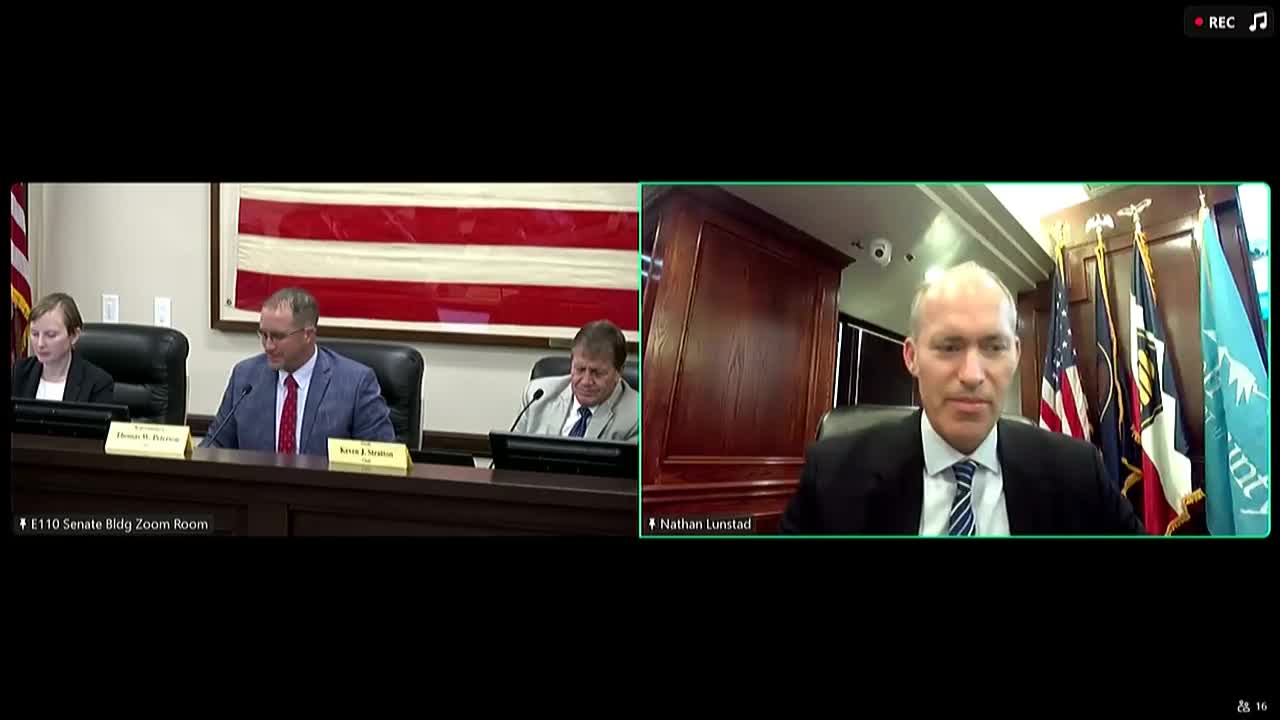
Opponents argued the bill would impose an inappropriate enforcement role on the state engineer. Attorney and former legislator Steve Clyde said the office is staffed with hydrologists and is not set up to serve as a collections or lien‑enforcement agent; Representative Ryan Peterson (remarks captured in the transcript) and others echoed concerns that existing Title 38 lien and Department of Commerce processes are the proper remedies. Chair Stratton and several members said they sympathized with drillers but questioned whether a statutory change is the best fix.
The commission considered a motion to issue a favorable recommendation on the draft. Representative Owens moved for a favorable recommendation; Representative Chu brought a substitute motion to “move on to the next item” (effectively pausing formal endorsement) and argued the proposal would place the state engineer outside its regulatory role. The substitute motion carried by voice vote, and the commission took no favorable recommendation at this meeting.
Clarifying details in the draft and hearing: the draft would tie a surety bond to the start card issuance (start card issuance tied to an approved water right), require a 90‑day timing for start‑card requests mentioned in sponsor remarks, and include a closure requirement for replacement wells. Supporters argued the bond would protect drillers from unpaid work; opponents said existing mechanics‑lien and court remedies should be used.
Commission staff did not adopt new statutory language during this meeting; members asked staff and the sponsor to continue discussions and to consider alternate approaches that do not expand enforcement duties at the state engineer’s office.