
Committee advances geothermal amendments to clarify ownership and shorten proprietary hold on data
Get AI-powered insights, summaries, and transcripts
Subscribe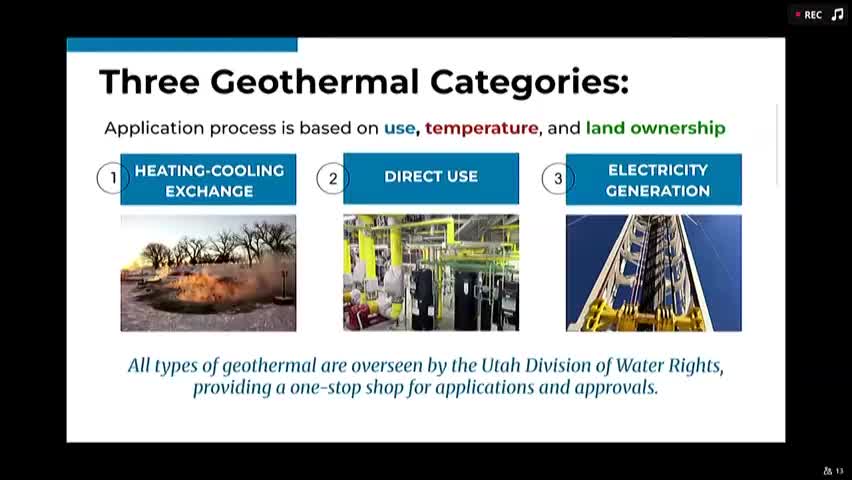
Summary
Lawmakers recommended statutory amendments that clarify geothermal resource ownership (linked to surface interest), shorten the period that proprietary exploration data must be kept from public release, and preserve Utah’s streamlined permitting process to encourage development.
The committee advanced proposed changes to Utah’s geothermal code intended to reduce uncertainty for developers and codify long‑standing agency practice that ties geothermal rights to surface interest while preserving Utah’s relatively fast permitting process.
The draft clarifies language about who holds an interest in geothermal resources (generally the surface-owner unless another geothermal interest is recorded), shortens the period during which exploration data may be proprietary (from five years to one year), and reaffirmed that water-right processes remain central when geothermal development involves water. The bill was described by the Utah Division of Water Rights as intended to reduce conflicts and limit regulatory complexity that deters investment.
Regulatory context: state staff described three categories of geothermal use: closed-loop ground-source heat-exchange systems (no consumptive water use, typically no water right), direct-use systems and traditional hydrothermal electricity generation. The bill focuses on the electricity-generation category and code definitions for who holds resource rights.
Industry and agency input: presenters said Utah’s permitting approach is quicker than many Western states because the division can handle water-right and geothermal permitting in a single office; industry representatives told the committee they welcome clearer ownership rules and predictable timelines. The committee approved the draft as a committee bill with the sponsor’s request that it receive at least one recorded opposing vote during session committee processing so the measure enjoys fuller scrutiny.
Ending: Committee members directed sponsors and agency counsel to continue stakeholder work; the measure will be carried forward as a committee bill for the legislative session.