
Committee files bill to prohibit deliberate large‑scale atmospheric geoengineering; cloud seeding exempted
Get AI-powered insights, summaries, and transcripts
Subscribe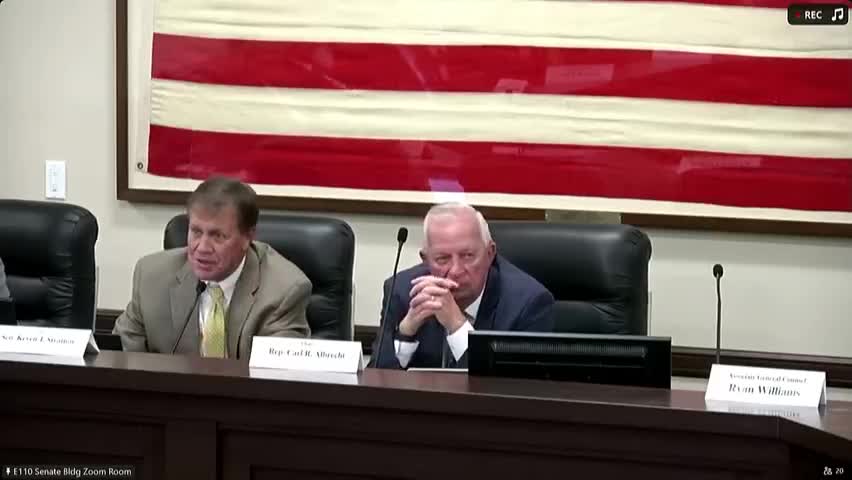
Summary
The committee recommended draft legislation that would prohibit intentional releases of substances into the atmosphere for solar geoengineering and create a reporting path for suspected incidents; the bill explicitly exempts the state cloud-seeding program and was advanced as a committee bill.
A bill that would criminalize deliberate, large-scale releases of substances into Utah’s atmosphere for the purpose of solar geoengineering was advanced by the committee after discussion and public comment.
Sponsor Senator Winterton told the committee the draft forbids intentional releases from aircraft or other methods that would modify weather, block sunlight or alter climate conditions and creates a public reporting portal and a process for state agencies to refer credible reports to the attorney general. The draft expressly excludes activities described in Title 73 (the Utah cloud seeding statute), preserving the state’s licensed cloud-seeding program.
Meteorological context: Jonathan Jennings, meteorologist for the Division of Water Resources, briefly distinguished between the state’s licensed cloud-seeding program — which the division describes as targeted, orographic and microscale precipitation enhancement using silver iodide or (in one Central Utah project) liquid propane — and broad “geoengineering” concepts such as stratospheric aerosol injection or marine cloud brightening. Jennings said cloud-seeding operations are governed by Utah’s cloud-seeding act (1973) and licensing, and he noted ongoing environmental monitoring studies into trace silver levels.
Public testimony was strongly mixed. Several residents said they had observed persistent aerial trails and asked lawmakers to take action; other committee members and staff cautioned that many persistent contrails have meteorological explanations and that the EPA and FAA say contrails do not indicate deliberate dispersal of harmful chemicals. Committee members discussed practical enforcement burdens and the need to distinguish routine contrails from credible reports.
Committee action: after discussion, the committee voted to make the draft an official committee bill and forward it with a favorable recommendation. Sponsors and staff said the draft is intended as a precautionary measure that would preserve state authority to investigate credible, large-scale atmospheric modification while making clear that licensed cloud-seeding is not prohibited.
Ending: Sponsors asked agencies to develop reporting and investigative procedures and indicated they will continue stakeholder engagement. The bill will proceed as a committee measure for further consideration during the session.