Get Full Government Meeting Transcripts, Videos, & Alerts Forever!
Get email alerts on the Property Tax topic
No spam. Unsubscribe anytime.
Audit: residential property values and statutory freezes drove much of recent property tax growth
Summary
Legislative auditors reported that taxing entities generally set certified tax rates correctly and held required hearings, but statewide residential property value increases, a five-year basic rate freeze and local tax decisions shifted a growing share of tax burden onto residential property owners. The committee referred the
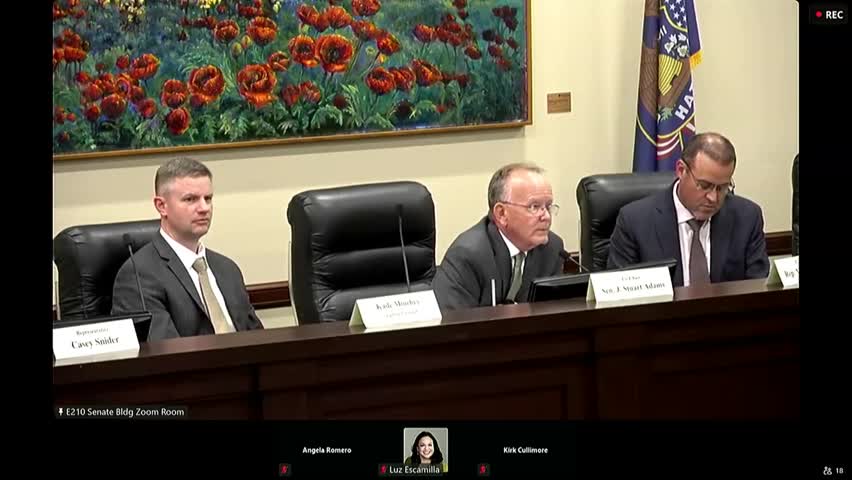
Auditors told the Legislative Audit Committee on 2025-09-25 that a performance audit of local authorities’ property tax systems found most taxing entities calculate certified tax rates correctly and hold truth-in-taxation hearings when required, but statewide and county-level shifts in taxable value have moved more of the property tax burden onto residential homeowners.
The auditors examined statewide datasets and a six-county sample to identify causes for higher property tax bills. They said taxing entities mostly collected within 10% of budgeted revenue in a given year and that outliers often reflected collection timing for personal property rather than rate-setting errors.
Why it matters: Auditors identified several systemic contributors to higher residential property tax burdens, including rapid increases in residential taxable value in many counties, the Utah basic rate freeze that held portions of state support constant for five years, and cases where centrally assessed commercial valuations were adjusted downward after appeals, shifting the distribution of tax burden onto homeowners.
Key findings
- Certified rates and hearings: Auditors found the certified tax rate process broadly works; most entities adjusted rates to hold revenue constant and held hearings under truth-in-taxation where required.
- Residential value growth: In the six‑county sample, residential taxable values increased markedly over the last decade in most counties; in one sample county residential values rose faster than commercial and centrally assessed properties.
- Centrally assessed property appeals: Auditors noted that centrally assessed (large commercial and utility) valuation adjustments after multi-year appeals can produce large retroactive shifts that reallocate tax burden to local (residential) taxpayers. The audit cites Emery County as an example where a centrally assessed appeal produced a significant redistribution.
- Primary vs. secondary residence mix: In five of six sampled counties, the tax burden is concentrated on primary (owner-occupied) residential properties; one county in the sample (Kane) is dominated by secondary residences.
Responses and possible policy options
Auditors recommended the Legislature consider whether the existing statute that allows counties to adopt a primary-residence exemption should be made statewide. Tax Commission and Property Tax Division staff said they support clarifying statute language, including exploring whether virtual participation options in tax hearings should be updated and whether the Tax Commission’s authority under Utah Code §59-2-919 (truth in taxation) should be broadened.
Local government and county appraisal representatives told the committee that a recent multi‑year centrally assessed appeal can create large, disruptive shifts in small counties and that some counties are using memoranda of understanding with commercial brokers to obtain valuation information, with mixed results.
Action taken
The committee voted to refer the performance audit of local authorities’ property tax to the Revenue and Tax Interim Committee as the lead committee and the Economic and Community Development Appropriations Subcommittee as the review committee. The referral passed by voice vote.
What’s next
Auditors said further work could quantify per-household impacts of the basic-rate freeze and other factors; committee members requested follow-up data on per-household dollar impacts. The Tax Commission asked the Legislature to consider clarifying statutory language around new growth and the Tax Commission’s authority to deny tax increases under existing law.