
Committee ideas: workforce, mobile clinics, pharmacy interoperability and local capacity top list for rural health application
Get AI-powered insights, summaries, and transcripts
Subscribe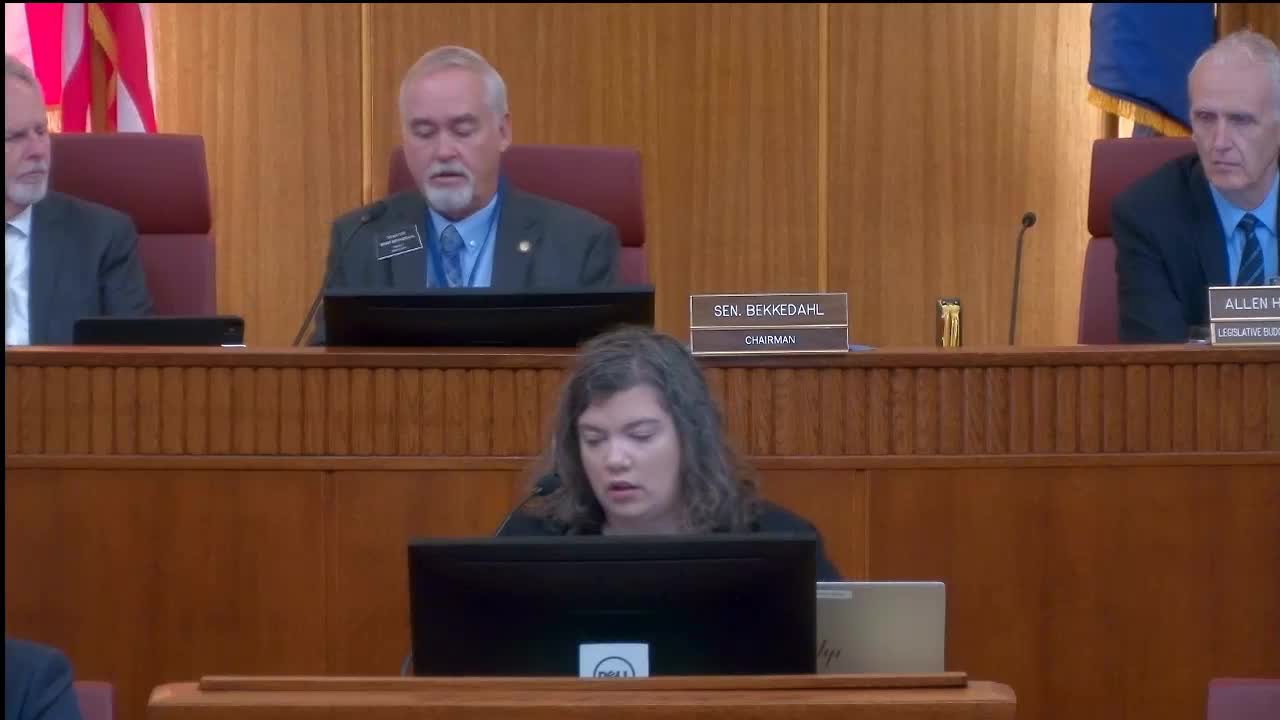
Summary
Members of the Rural Health Transformation Committee and Department of Health and Human Services staff discussed a broad menu of program ideas for a CMS rural health transformation application, emphasizing workforce, mobile services, pharmacy/EMR interoperability and sustainability.
Committee members spent the reconvened session presenting and discussing program ideas to be included in the Department of Health and Human Services’ rural health transformation application to CMS. The conversation combined suggestions from listening sessions, provider and local-government outreach, and committee members’ local experience.
Key ideas and how DHHS said they would treat them - Nutrition and rural food access: Members asked DHHS to expand support to rural grocery stores and convenience stores to increase healthy food availability, and to explore point-of-sale changes for SNAP so smaller outlets can accept benefits. DHHS said that SNAP point-of-sale work and cooperative purchasing are allowable in the plan and that the department will consult the Department of Agriculture on costs and vendor approaches. Senator Mather and others noted existing ties to the Great Plains Food Bank and cooperative produce purchasing in Park River.
- Dentistry, optometry and workforce supports: Legislators pressed DHHS to explicitly include dental and vision provider workforce strategies — mobile clinics, school-based sealant/cleaning programs, outreach and equipment modernization — and asked whether scope-of-practice changes (for hygienists) were allowed. DHHS said dentist and optometrist inclusion in workforce, mobile clinics and equipment strategies fits the current framework, but clarified that changing licensed scopes of practice is outside the department’s authority and would require separate policy action.
- Scholarships, recruitment and relocation: Multiple legislators proposed targeted scholarships and other incentives to recruit health professionals to rural communities, and asked whether those uses would be allowable or treated as supplanting. DHHS said it had raised education/scholarship questions with CMS and would return with guidance; the state also discussed potential relocation support, recruitment grants and a “grow your own” approach tied to service commitments.
- Mobile clinics and Medicaid billing: Legislators asked whether mobile clinics and “clinics without walls” are billable under Medicaid. DHHS replied that the state’s Medicaid program already reimburses for mobile clinics and that a recent state plan amendment clarified services outside four walls are reimbursable; DHHS said additional payer rules may vary and suggested considering other payers in sustainability planning.
- Pharmacy connections and expanded pharmacist roles: The pharmacy association asked that the plan support stronger electronic connectivity between pharmacies and clinical electronic medical records to enable bidirectional data exchange. DHHS agreed and noted interoperability is in the framework. Pharmacy representatives urged statutory changes to allow pharmacists to order specified rapid tests and, in limited circumstances, initiate or dispense a limited set of medications; the committee later asked Legislative Council to draft that bill.
- FQHC expansion, local public-health mobile units and transportation: Members urged funding and incentives for FQHCs to expand to new locations, and to support local public-health mobile units and shared vehicles for nonemergency medical transportation. DHHS said it would include those possibilities and would seek to design grant processes to favor sustainable proposals that can bill Medicaid or otherwise demonstrate long-term viability.
- Equipment modernization and ventilators: The committee discussed replacing outdated telehealth equipment (including equipment for tribal partners) and possible purchases of ventilators that provide remote monitoring. DHHS confirmed Medicaid already allows ventilator coverage at home and said remote-monitoring-capable ventilators could be allowed in the plan if consistent with sustainability.
- Emergency communications and air ambulance support: Lawmakers raised compatibility gaps in emergency radio and communication systems (SIREN network coverage and local cost shares), and suggested the application could support upgrades to local emergency response equipment; DHHS said it could include such items but asked the committee to consider sustainability. Members also proposed incentives or start-up support for fixed-wing and rotor-wing air ambulance coverage in western parts of the state.
- Nursing home renovations and equipment: Committee members asked whether targeted renovations (locked dementia units) and procurement of bariatric lifts and beds would be allowed; DHHS said such renovations for allowable care improvements and durable medical equipment are within the plan’s framework.
- Senior meals funding shortfall: Representatives raised a federal reimbursement shortfall in senior-meal programs (a shortfall described by a member as “less than $2 million”); DHHS said it would review whether relief would be considered supplanting and consult CMS.
- Glucose monitoring pilot and prevention: A pilot to provide remote glucose monitors (through local pharmacies or clinics) and linked nutritional coaching was suggested as a prevention strategy; DHHS said remote-monitoring and telehealth items fall within the plan’s framework and would be examined.
Sustainability, procurement and next steps Legislators repeatedly emphasized sustainability: whether the investments (mobile clinics, new equipment, or a new clinic) would have ongoing operating support after federal funds end. DHHS said it expects the application to describe sustainability plans that include Medicaid billing, local funding and partnerships. DHHS and Legislative Council staff noted the state’s procurement and IT procurement rules can be time-consuming; committee members asked Legislative Council and OMB to work with DHHS to identify narrowly tailored procurement or implementation waivers to speed rollout if funds are awarded.
Representative Murphy and other members pressed for flexibility: several legislators said local communities should be able to choose the natural local provider (FQHC, hospital, public health unit, private clinic) for mobile and outreach services.
Ending: DHHS will return next Tuesday with CMS clarifications on whether certain categories (scholarships, relocation/recruitment, transportation stipends, fuel stipends) are allowable and with a proposed application allocation framework. The committee also asked DHHS to share program materials and listening-session inputs (subject to confidentiality redactions) and to outline outreach plans for ensuring broad awareness and access to grant opportunities if funds are awarded.