Committee backs DHHS rural health plan with clarifications; asks legislative council to draft four bill proposals
Loading...
Summary
The Rural Health Transformation Committee voted to endorse the Department of Health and Human Services’ preliminary rural health application with 23 clarifications and asked legislative staff to draft bills on school fitness testing, nutrition continuing education for physicians, joining the physician assistant compact, and expanded pharmacy authority.
The Rural Health Transformation Committee voted to endorse the Department of Health and Human Services’ preliminary rural health application, asking the department to incorporate 23 clarifications and additions into the state’s application to the federal Centers for Medicare & Medicaid Services (CMS).
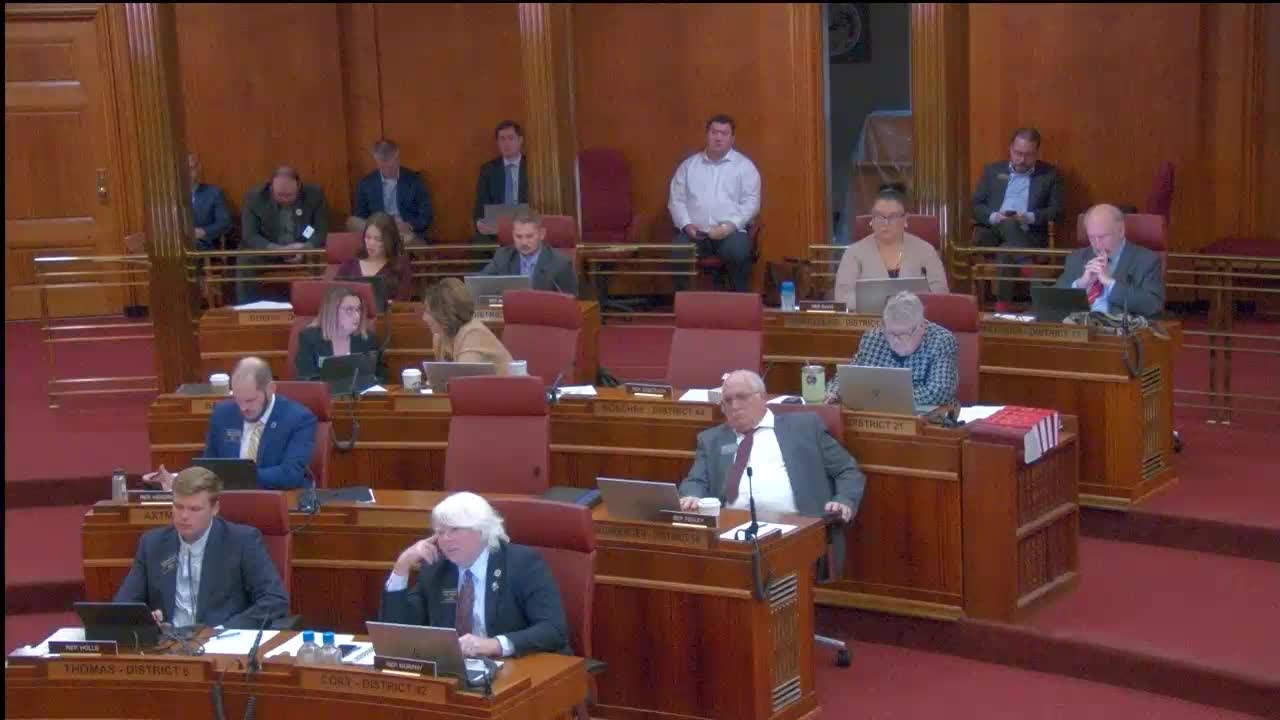
The motion, read by Legislative Council fiscal staff Alan Knudson and moved from the floor by Representative Steven, passed after a roll-call vote. Chairman Beckettall summarized the committee’s intent: the motion “supports the department’s preliminary plan for initiatives to include in the state's rural health transformation application as presented to the committee with the following clarifications or additions, all of which must consider the sustainability of the initiatives.” Sarah Aker, DHHS, confirmed the department will integrate the committee’s clarifications into the application materials and continue discussions with CMS on outstanding questions.
Why it matters: The committee’s endorsement directs DHHS to submit an application that explicitly includes the items on the committee’s list. CMS awards for this federal opportunity weigh both program design and state-level policy commitments; committee members said drafting follow-up legislation or policy changes can increase the state’s score in CMS’s evaluation.
Votes at a glance (formal actions taken in the meeting) - Committee endorsement of DHHS preliminary plan with clarifications (motion text read by Alan Knudson). Mover: Representative Steven; second: Senator Hogan. Outcome: approved (motion carries). The list of clarifications and additions included items spanning nutrition, workforce, telehealth and infrastructure (full list below). - Legislative council directed to draft bills (separately voted) for the following distinct policy actions to be considered next week: (1) require North Dakota schools to adopt the Presidential Fitness Test; (2) require nutrition continuing medical education (CME) for physicians; (3) enact legislation to join the Physician Assistant (PA) Compact; and (4) expand pharmacy authority to allow specified lab-test exemptions and limited prescriptive authority for pharmacists. Outcome: approved (committee vote carried; roll call recorded). - Motion to not pursue elimination of the nursing home/basic-care bed moratorium as part of the state’s policy commitments: approved (committee declined to include that change in its request for bill drafts). - Motion to not pursue a proposal to expand dental hygienist scope of practice (i.e., committee did not request a bill draft for that change): approved (committee declined to include that change). - Telehealth licensure/registration policy: the committee deferred a firm bill draft and asked staff to consult further with boards and stakeholders; no bill draft was forwarded at the meeting.
Full list the committee asked DHHS to include in the application (read by legislative staff and adopted as clarifications/additions): expansion of rural grocery/food bank programs and SNAP-related point-of-sale changes; add dentistry and optometry in workforce/mobile clinic/equipment strategies (including school-based services); explore grant structures that provide upfront funds rather than reimbursement-only; enhance pharmacy–medical record interoperability; expand federally qualified health centers (FQHCs) and mobile units including local public health unit participation; use metrics to prioritize underserved areas; modernize clinical equipment (including ventilators with remote monitoring); upgrade emergency response communications; explore helicopter air ambulance support or start-up incentives; permit IT equipment for disability services; consider scholarships for targeted health-care workforce pipeline with rural-service commitments; provide recruitment/relocation supports for rural hiring; explicitly include tribal colleges and tribal health systems; expand nonemergency transportation options or mileage/stipends; include cultural programming and tribal data safeguards; authorize targeted nursing-home renovations (dementia units, bariatric equipment); review senior meal funding shortfalls; pilot glucose monitoring with nutrition coaching via pharmacies; expand extension service nutrition work; and related items to strengthen sustainability and interoperability.
Directions and next steps: DHHS agreed to (1) follow up with CMS on questions about allowable activities (for example, whether scholarships and relocation/recruitment costs are allowable or would be considered supplanting); (2) provide the committee a draft of planned metrics to prioritize underserved communities; and (3) return next Tuesday with clarifications and, where possible, preliminary funding allocation scenarios for committee review. Legislative Council staff were also asked to meet with OMB and DHHS to evaluate whether narrowly tailored procurement or implementation waivers would help timely program rollout if funds are awarded.
Selected attributions (from the meeting record): - “We do have 23 items that we have as additional items,” read Alan Knudson, Legislative Council fiscal staff, before the committee vote. - “Yes. We'll ask CMS and bring that back next week,” Sarah Aker, Department of Health and Human Services, said when several members asked for clarification on allowable uses. - “The motion carries,” Brady Larson (role-call) announced after the committee vote.
Ending note: The committee voted to return next Tuesday at 12:30 p.m. for DHHS follow-up on CMS questions, a high-level review of the department’s application, and final consideration of bill drafts the committee asked Legislative Council to prepare.