Get Full Government Meeting Transcripts, Videos, & Alerts Forever!
Get email alerts on the Rural Health Transformation topic
No spam. Unsubscribe anytime.
ND health officials outline application, limits and risks for federal Rural Health Transformation funding; application due Nov. 5
Summary
The North Dakota Department of Health and Human Services presented a draft plan and priorities for the federal Rural Health Transformation Program and called for legislative input. Officials warned of tight timelines, federal spending limits and potential clawbacks if the state commits to policy changes it does not enact.
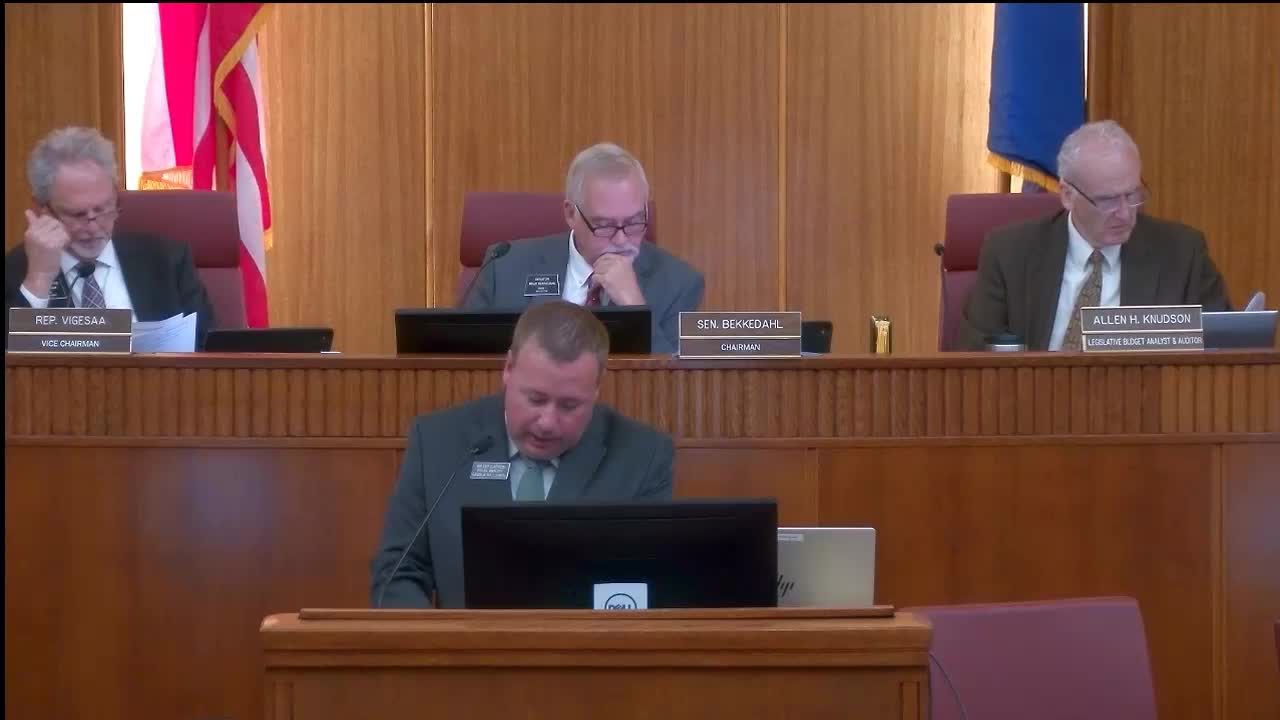
The North Dakota Department of Health and Human Services outlined its planned application and spending priorities for the federal Rural Health Transformation Program during a Legislative Management interim committee meeting, saying the state’s application is due Nov. 5, 2025 and that federal awards must be approved by the Centers for Medicare & Medicaid Services by Dec. 31.
The plan, presented by Sarah Aker, executive director of the Division of Medical Services at ND HHS, uses the public survey and three recent listening sessions as the basis for priorities that emphasize workforce stabilization, prevention and chronic-disease management, right‑sizing local health delivery and investments in technology and data. Aker told the committee the federal program authorizes $50 billion over five years, split into a $25 billion baseline (distributed equally to states) and $25 billion of competitive “workload” supplemental funding.
Why it matters: North Dakota is guaranteed baseline funding but may receive a larger share of the supplemental pool based on a technical scoring system that factors in rural population, facility measures and a set of state policy and application initiatives. Aker warned the state “is starting from behind” on the supplemental scoring and urged the committee to advise on policy commitments that could raise the state’s technical score.
What DHHS proposed and what is allowed
Aker said the department condensed more than 1,200 public survey responses and about 350 listening-session attendees into four major investment buckets: workforce; prevention and chronic-disease programs (branded in the presentation as “Make North Dakota healthy again”); bringing high‑quality care closer to home (telehealth, mobile units and “rightsizing” facilities); and technology/data infrastructure to support interoperability and population health. Examples included expanded residency rotations, mobile primary-care units, telehealth hubs in schools, community health-worker training, cooperative purchasing for EMRs and grants for remodeling limited to program needs.
Federal rules in the CMS Notice of Funding Opportunity limit certain uses. Aker highlighted several constraints the department must follow: no new construction or building purchases; administrative costs capped at 10% of total funding; provider payments capped at 15% of total funding; EMR/EHR replacement limited to 5% of total budget (though enhancements may be permitted); and facility renovations capped at 20% of the budget. The department plans to use those allowable renovation and EHR caps fully, Aker said.
How the award is scored
The federal award consists of two halves. Half is baseline funding (an equal share to each state; DHHS expects at least about $100 million a year from that portion). The other half is supplemental “workload” funding scored on two broad groups of factors: static rural/facility/demographic measures and application/policy/technical factors. Aker reviewed an independent interpretation of the scoring and said North Dakota ranked about 40th nationally on the static factors used by that analysis, meaning the state may receive a relatively smaller share of the competitive pool unless it scores strongly on the technical application factors.
To raise technical scores, CMS awards points for application initiatives and for certain state policy actions. Aker told the committee CMS will give partial, conditional credit in early budget periods if a state commits in its application to a policy change, but will require the state to complete the policy action in later years to keep full credit. “If we say we are going to require North Dakota schools to adopt the presidential fitness test and then we don’t do it, we will owe back the proportion of the funding related to that policy initiative,” Aker said.
Stakeholder input and tribal consultation
DHHS ran an online survey in August–September and held three listening sessions that drew about 350 attendees; the department reported more than 1,200 survey responses. Stakeholders and tribal health directors prioritized workforce, appropriate local care availability, and prevention/chronic-disease management. Tribes told DHHS they need culturally grounded services, prenatal and postpartum supports, dental access, aging tribal telehealth infrastructure and expanded behavioral-health and respite services.
Committee questions and implementation concerns
Legislators pressed DHHS on several practical and legal points during the Q&A. Brady Larson of the Legislative Council summarized the committee’s duties and noted the Nov. 5 application deadline. Committee members asked whether funds could be paid in advance or would be reimbursement-only for subgrantees. Nana Auckland, chief financial officer for ND HHS, answered: “With a grant, that we award out to anybody, it’s a reimbursement. So we can’t generally prepay somebody ahead of time.”
Committee members also raised concerns about procurement timelines, requirements to avoid supplanting existing state or tribal funding, and whether awards could be limited to services delivered inside North Dakota. Aker said the department expects awards to prioritize North Dakota facilities and patients; she also advised caution about funding recurring salary or subsidies that would create a dependency after the five‑year grant ends.
Policy commitments, clawbacks and timing
Multiple legislators pressed whether the committee could identify policy changes now to gain CMS application points and whether failing to enact those policies later would force repayment. Aker and Larson explained states can commit to actions in the application, receive conditional points and then receive full credit once the state completes the policy action; however, if the state does not complete a committed action, CMS may recapture the funding attributable to that policy credit. The committee discussed asking Legislative Council to draft potential special‑session bills for policy items the committee supports so the state can credibly commit them in the application.
Programs DHHS is pursuing in the application
DHHS flagged specific technical commitments it plans to include or pursue to maximize the technical score: a SNAP food‑restriction waiver (department staff said they plan to submit a waiver by Nov. 5), expansion of value‑based purchasing pilots (including for critical access hospitals), support for telehealth and remote patient monitoring (with caps and licensing caveats), expansion of residency and rural training programs, technical assistance for rightsizing facilities, and cooperative purchasing for EMRs, cybersecurity and population‑health tools. Aker said the department will aim to balance immediate, implementable projects with longer-term investments that have sustainability plans.
Next steps
DHHS will finalize and submit North Dakota’s application by the Nov. 5 deadline; CMS is required to approve awards no later than Dec. 31. The department asked the interim committee for policy direction and suggested it would return to the committee as it finalizes budgeting and legislative commitments. Aker closed by reminding members of the limited time for planning: “This application is due on November 5, which will be here before we know it,” she said.
Ending note
The department’s presentation framed workforce, prevention, access and data as the priorities most likely to produce measurable improvements in rural health outcomes. Lawmakers pressed DHHS on how the state will prioritize limited allowable uses, meet federal reporting and procurement requirements, and avoid creating unsustainable dependencies once five‑year funding ends. Committee members indicated they will consider policy motions and draft bills to strengthen the state’s application before the Nov. 5 submission.