Get Full Government Meeting Transcripts, Videos, & Alerts Forever!
Get email alerts on the Dual Credit Scholarships topic
No spam. Unsubscribe anytime.
Bank of North Dakota reports steady use of dual‑credit scholarship for low‑income high‑school students
Summary
Bank of North Dakota staff told legislators the bank's dual‑credit assistance program has supported about 2,400 students over five years and spent roughly $1.76 million, with most recipients using the award as seniors to cover tuition, fees and books.
Bank of North Dakota officials briefed the Interim Education Committee on the bank’s dual‑credit assistance program, which the bank said is intended to reduce the cost of college courses for low‑income high‑school students in the state.
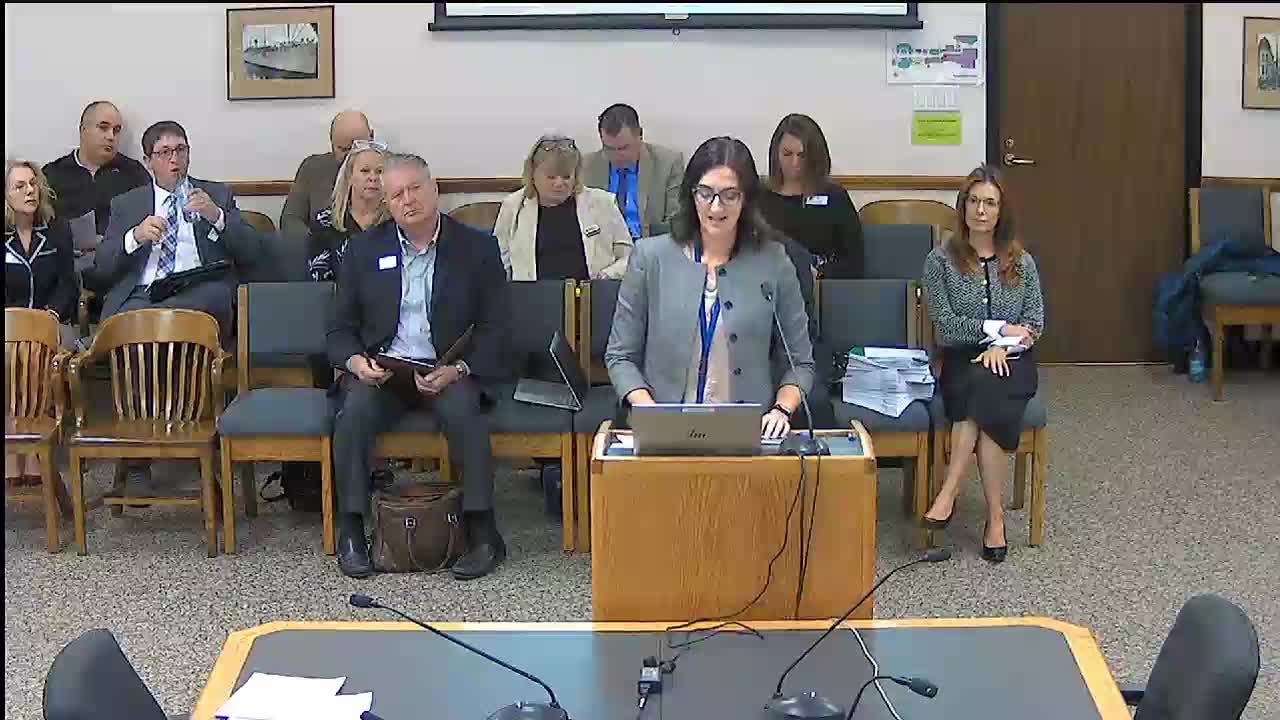
Jennifer Bickel, education market manager at the Bank of North Dakota, told the committee the program began with federal grant funding and after that initial funding ended the bank continued the program using fees earned through student‑loan guarantor activity and other bank fee income. “Bank of North Dakota will cover the cost of up to two courses per year for that student,” Bickel said, describing eligibility criteria and how the bank works with school administrators to verify applicants.
Who is eligible: The bank’s program is open to sophomores, juniors and seniors who attend a North Dakota high school and meet federal free‑or‑reduced‑price‑lunch guidelines or attend a Community Eligible Provision (CEP) school. The bank requires a school superintendent or a designee to verify eligibility during the application process.
Recent usage and costs: For the academic year July 2024–June 2025 the bank said it approved roughly 1,364 course enrollments through the assistance program and paid about $535,000 to cover course costs. Over the previous five years the bank reported it spent about $1,760,000 and supported almost 2,400 distinct students, with an average subsidy just over $1,000 per student.
Patterns and program design: Bickel said most scholarship usage is concentrated in a student’s senior year (about 80% of recipients were seniors) and that relatively few students used the benefit for all three eligible years. The bank also noted the program pays course costs only for coursework taken at North Dakota institutions; the scholarship does not follow a student to out‑of‑state institutions.
Where students used awards: The bank reported that the most common institutions served by the scholarship in recent years include Turtle Mountain Community College, Dakota College at Bottineau and Bismarck State College. The most requested courses were general‑education credits such as public speaking, introductory psychology and college composition.
Next steps and questions: Committee members asked whether the bank can track how scholarship recipients later enroll in postsecondary education; Bickel said such tracking would require matching bank records with higher‑education enrollment records and is possible but would take additional data work. The committee requested additional application and award detail for future review.
Ending: The Bank of North Dakota said the program will continue and that bank staff are evaluating whether the award structure, outreach and application tools could be adjusted to increase early‑year uptake and better serve interested sophomores and juniors.