
Interim committee reviews North Dakota dual-credit program, funding and enrollment trends
Get AI-powered insights, summaries, and transcripts
Subscribe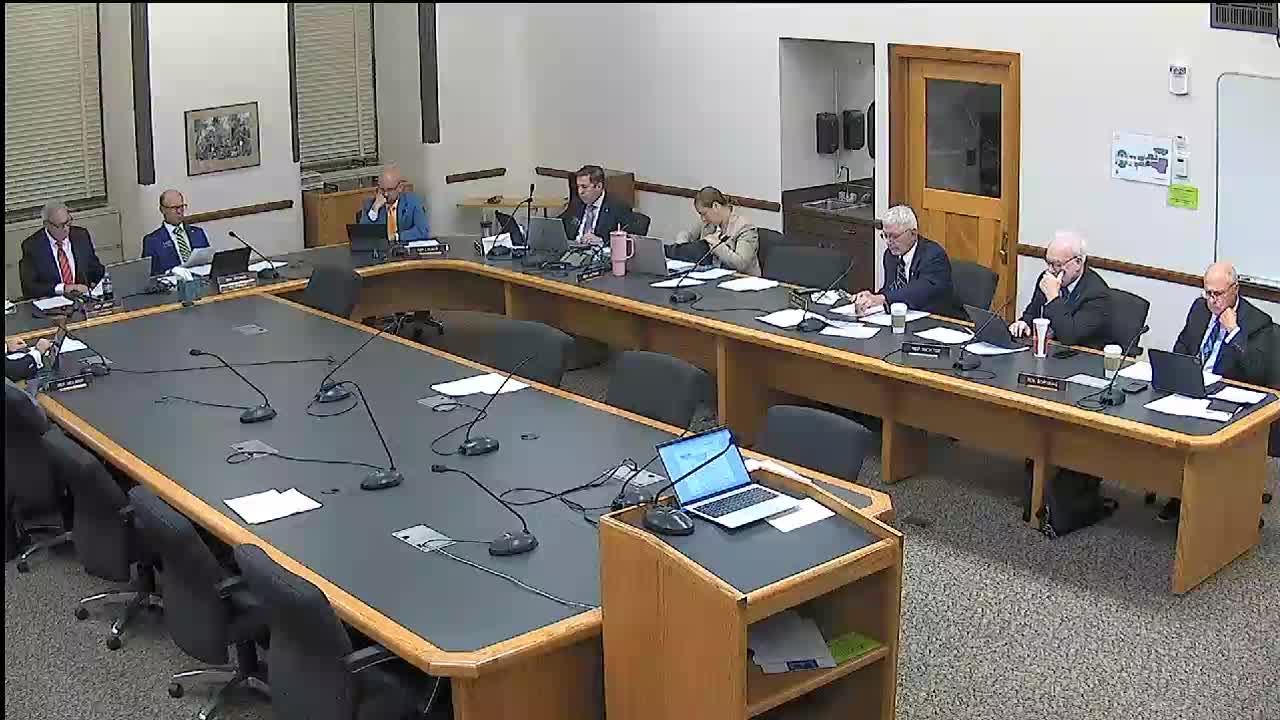
Summary
Lawmakers and higher-education officials reviewed North Dakota's dual-credit program, how credits are funded and allocated, tuition rates for subsidized vs. unsubsidized instruction and enrollment patterns that show many high‑school students earning college credit while in K‑12.
The Interim Education Committee heard an overview of North Dakota's dual-credit program, how colleges and high schools bill and receive tuition, and how those credit hours are counted in the state higher-education funding formula.
The committee’s study was assigned by the Legislative Assembly under "section 46 of Senate Bill 2,003," which directed a review of who may offer dual credit, where it may be provided and related state funding, the committee was told. Sheila (Legislative Council) briefed members on the study mandate and background materials and said the committee would continue the review in future meetings.
Why it matters: Dual-credit course completion generates student credit hours used in the university funding formula, so decisions about rates and provider authority affect institutional budgets, high-school partnerships and student costs.
How the program works: Lisa Johnson, deputy commissioner at the North Dakota University System, told the committee that dual credit is available to students in grades 10–12 and “college credit is always, awarded upon completion of the college course.” She described two main models: (1) dual credit arranged between a K‑12 school and a higher‑education institution, usually taught by an approved high‑school instructor (the subsidized model) and (2) early‑entry enrollment where a student takes regular college courses (the unsubsidized model).
Tuition and who is paid: Committee witnesses outlined two widely‑used per‑credit rates the system uses in practice. When a high‑school teacher teaches the course as part of the school’s responsibilities, the dual‑credit course is recorded as a subsidized enrollment; the higher‑education institution receives a lower per‑credit payment because the K‑12 school is paying the instructor directly. When a college provides the instructor, the higher education institution receives a higher per‑credit payment because it covers faculty salary and benefits.
Testimony and numbers: Committee documents and testimony cited a subsidized per‑credit rate repeatedly in testimony (presentation materials showed $89.43 per credit in one slide while staff discussion referenced $87.24) and listed an unsubsidized rate of about $153.96 (sometimes quoted as $154.36). The North Dakota University System reported the system recorded roughly 82,000 dual‑credit course credit hours in recent reporting periods and that completed dual‑credit hours contributed a small but visible share of total credit‑hour funding—about 3–4% of credit hours and roughly 1–2% of formula funding in the cited biennium.
How partnerships are chosen: Johnson and system staff said decisions about which institution serves a given high school are made locally: area high‑school administrators typically coordinate which of the regional institutions will deliver a course, sometimes by long‑standing informal “service regions.” The system set a single subsidized rate partly to avoid price competition among institutions and to simplify district decisions, witnesses said.
Funding formula and weightings: David Kresbach of the system office explained that the higher‑education funding formula groups institutions (research universities, four‑year colleges, two‑year colleges) and uses different base rates and completion factors for each group. Kresbach said that dual‑credit students were counted the same as other students for completed credit hours, but the lower weighting of general‑education courses (which many dual‑credit students take) and institution‑specific completion factors mean the funding share from dual‑credit hours can be less than the share of hours produced.
Enrollment patterns and transfer: System staff said many dual‑credit students earn only general‑education credits; a minority complete large packages such as certificates or, in some cases, associate degrees while still in high school. The university system reported that more than half of students who took college courses in high school later enrolled at North Dakota’s two research universities (UND and NDSU).
What the committee asked for next: Members asked for more detail on per‑credit allocations, a breakdown of which courses are taught by K‑12 instructors versus higher‑education faculty, and sample budget / cost data from institutions that administer dual‑credit programs. Chair Jonas said the committee will invite representatives from Lake Region, Valley City State and North Dakota State College of Science to present cost and operating details at a future meeting.
Ending: The committee left the issue open for future meetings, seeking more detailed cost breakdowns, the practical effects of differing per‑credit rates, and ways to ensure access in rural districts.