Native Inc. seeks state backing for $27 million cultural center to serve urban Native residents
Loading...
Summary
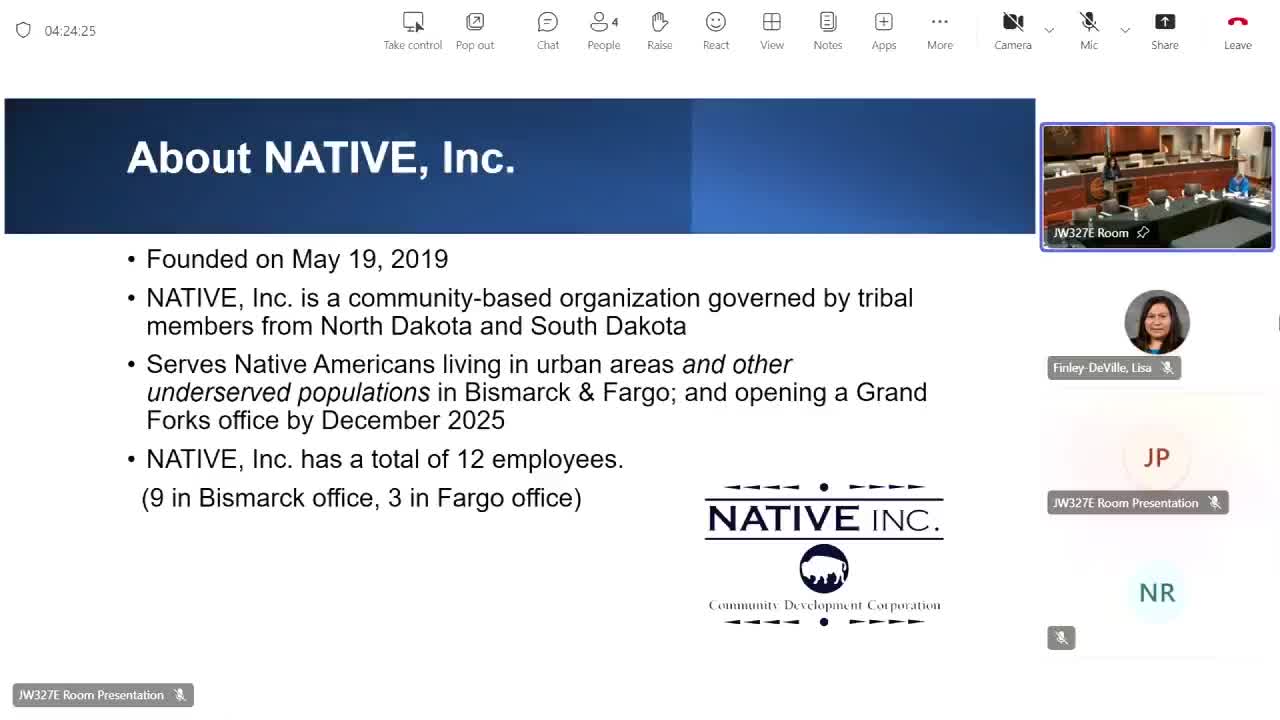
Native Inc., a Bismarck nonprofit serving urban Native communities, presented cultural, housing and economic programs to the committee and asked legislators to consider state support for a proposed $27 million Native cultural center that would include programming space, ceremonial facilities and adjacent affordable housing.
Lorraine Davis, founder and CEO of Native Inc. and the Native American Development Center, asked the committee to consider state partnership and funding assistance for a proposed cultural center in Bismarck designed to serve urban Native residents across the Great Plains.
Davis outlined services her organizations provide: housing and homeless services, workforce development, small‑business lending through the Native American Development Center (a certified Native Community Development Financial Institution), and a wide array of cultural programming — ribbon‑skirt and ceremonial dress classes, drum nights, cradleboard and hand‑drum making, powwow organization and youth programs.
She summarized a 2020 community needs assessment that found strong demand for culturally specific services: a detox/rehab facility (53% of respondents), mental‑health services (52%), youth and family counseling (55%), affordable housing with supports (78%), and a homeless shelter (50%). Davis said Native Inc. currently operates cultural programming, powwows and sweat lodges and supports returning residents with housing and employment navigation. The Native American Development Center provides microbusiness loans, credit‑builder loans and financial coaching statewide.
Davis said a proposed cultural center would cost about $27 million, sit on an 11‑acre site with room for an adjacent affordable‑housing project, and host ceremonial spaces, youth and family programs, a chapel/sweat lodge, community classrooms, elder services, and vendor spaces for Native entrepreneurs. She described a phased fundraising strategy that combines corporate sponsorships, philanthropic gifts, tribal contributions and federal programs; she said several tribes and corporate donors have been approached and that she expects support from foundations and possible federal Indian‑center funding.
The committee did not make a funding commitment but one legislator offered to work with Davis and Legislative Council to explore draft legislation or other mechanisms to support predevelopment costs. Davis said the project team is continuing private fundraising and asked the committee to consider where state support could accelerate the predevelopment stage and make the project shovel‑ready.
Davis’s presentation emphasized cultural reconnection as a protective factor for health and resilience. She said community programs increase belonging and self‑efficacy, which tribal and academic research shows can lead to improved health and social outcomes.