
Legacy Fund posts multi‑year gains; RIO outlines internal investment program and cash‑management changes
Get AI-powered insights, summaries, and transcripts
Subscribe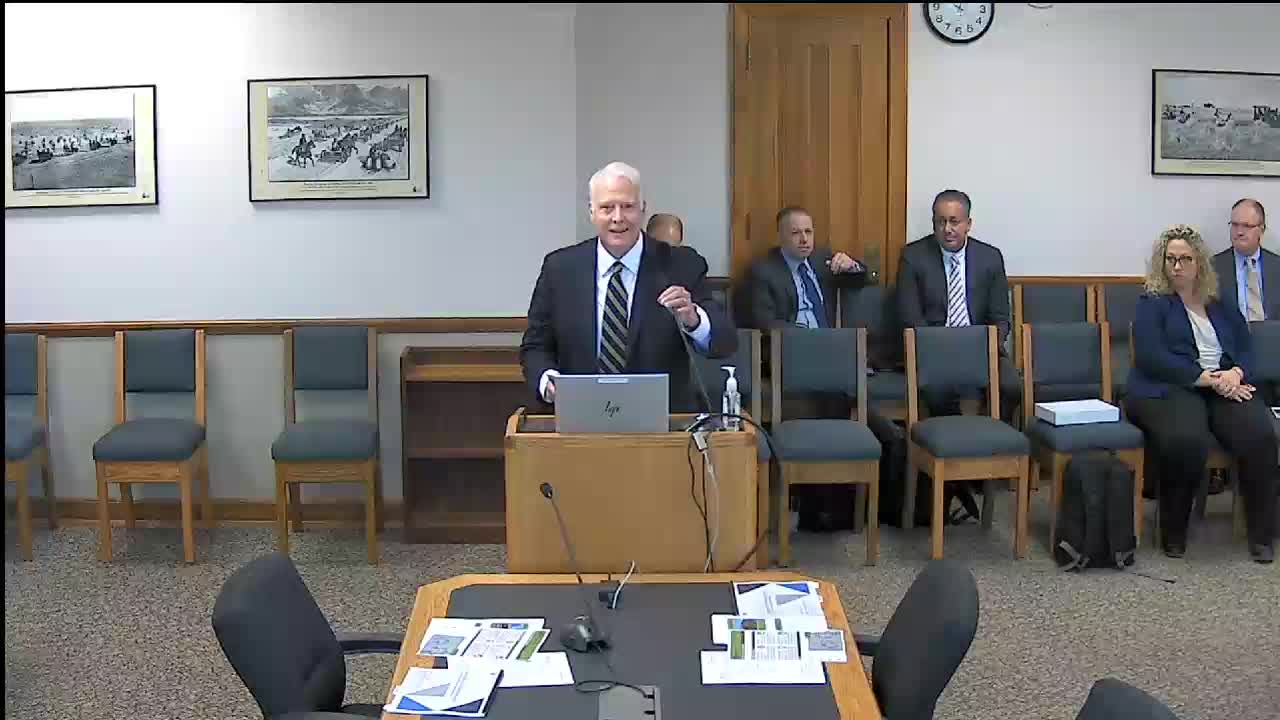
Summary
Scott Anderson, chief investment officer for the Retirement and Investment Office, told the Legacy Fund Advisory Committee the fund has outperformed policy benchmarks over multiple time frames and described an expanding internal investment program that the office says has produced fee savings and improved returns.
Scott Anderson, chief investment officer at the Retirement and Investment Office (RIO), told the Legacy Fund Advisory Committee on Oct. 13, 2025, that the Legacy Fund has outperformed its policy benchmarks over several multi‑year horizons and that RIO’s internal investment program is producing measurable cost savings and improved risk‑adjusted returns.
“The 10‑year return for the Legacy Fund was 7.1% versus the policy benchmark at 6.4%, and over shorter horizons we’ve also produced excess return,” Anderson said, summarizing performance through the June 30 reporting period. He told the committee the office beat the policy benchmark by about 70 basis points on a 10‑year basis and roughly 60 basis points in the most recent fiscal year.
Anderson described several elements of an expanding internal investment program that RIO says is designed to capture transaction cost savings and to deploy unallocated cash more quickly into asset allocations. Key components he described were a cash overlay that invests unallocated cash into risk assets until those funds are needed for distributions or other purposes; internal indexing and “enhanced indexing” that aim to capture low‑cost benchmark returns and a small amount of controlled active return; and limited internal active management in areas where RIO says it can match or substitute for external manager capabilities at lower total cost.
Anderson told the committee the internal program already manages roughly $3.6 billion in assets and that RIO expects the program to grow as the office brings more mandates in‑house. He said the cash overlay alone has generated “about $12.5 million of excess returns” relative to holding cash, and that enhanced indexing is expected to deliver roughly $2 million in annual fee savings when fully implemented. Anderson also said RIO’s internal program produces additional benefits including lower transaction costs on rebalancing and the flexibility to deploy cash quickly before scheduled payouts.
Anderson warned the committee about standard market risks, including “sticky” core inflation and high equity valuations, and described an environment with elevated valuation metrics and compressed credit spreads. “Sticky inflation, no doubt about it,” Anderson said, noting recent core inflation prints of about 3.1 percent.
Committee members pressed Anderson on details. Representative Bosch asked whether the large cash balance reported at June 30 reflected the July 1 earnings payment; Anderson said the Legacy Fund accumulated roughly $686 million to pay the fiscal‑year earnings distribution and that the June 30 cash figure therefore included that temporarily elevated balance. Representative Kempenick and others asked for additional breakouts of “in‑state” allocations embedded in broader categories; Anderson said he would provide those figures in a future presentation.
Anderson also answered questions about staffing. He said the internal program’s staffing has expanded since 2022 and that the office believes it remains somewhat understaffed relative to peer benchmarks; he said RIO plans to request additional positions in future budget cycles to support in‑house investment capabilities.
The presentation followed a short procedural vote at the start of the meeting to approve minutes from May 27. After the Anderson presentation, the committee continued to presentations from external managers and a separate discussion of the in‑state investment program.