Get Full Government Meeting Transcripts, Videos, & Alerts Forever!
Get email alerts on the Parks And Recreation topic
No spam. Unsubscribe anytime.
Consultant details Olympia Hills golf course bunker, irrigation and tree work in progress update
Summary
A consultant presented a progress report on Olympia Hills golf course renovation, highlighting a plan to reduce bunker area, replace about 800 irrigation heads, improve erosion control and prune aging trees. Council members asked for clearer estimates of man‑hours and cost benefits.
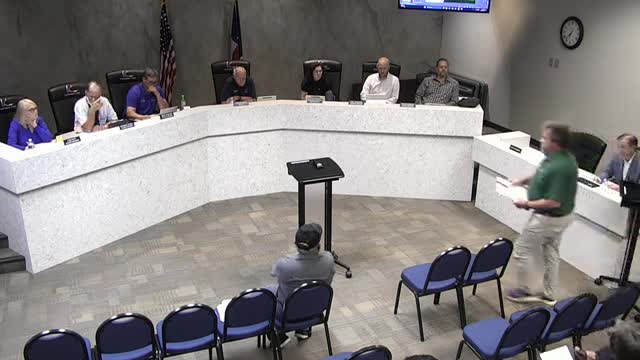
At the Oct. 21 Universal City City Council meeting, consultant Nathan Crace and golf staff provided a progress update on the Olympia Hills golf course renovation, outlining proposed reductions to bunker footprint, a complete irrigation replacement and tree management intended to improve turf health and reduce flood‑repair time.
The presentation described 86,283 square feet of existing bunker area — nearly two acres — spread across 52 bunkers. The renovation plan reduces total bunker footprint by roughly two‑thirds while removing only two bunker features; the number of bunkers would drop by two but most large bunkers would be reduced in size. Crace said the design aims to lower manual maintenance needs so staff time can shift to greens, fairways and tees.
Crace said the course currently has about 800 irrigation heads that would be replaced with new two‑wire control technology to improve coverage and efficiency, reduce water usage and make field adjustments easier during construction. He also proposed a different concrete‑based liner for low‑lying bunkers prone to flooding so contaminated sand could be replaced quickly after major storms rather than reconstructing bunker structure.
Council members pressed for quantification of the labor impact. Crace and golf staff declined to give a single dollar savings figure, saying the change is primarily a reallocation of man‑hours rather than a straightforward staffing reduction. Crace estimated that a full wash‑out of all bunkers currently may require a week of work; under the proposed design that could fall to roughly two to two‑and‑a‑half days for comparable repair effort on an equivalent rain event.
Other clarifying details noted in the presentation: - Tees: 92,478 square feet total; par‑3 tees are undersized at roughly 16,000 total square feet (~4,000 per par‑3). Crace said re‑sodding and leveling will be part of the work. - Range tee: about 21,626 square feet. - Trees: approximately nine acres (the consultant described "about 9, almost 9 onetwo acres" — staff said a significant number of older trees need pruning and thinning for safety and turf health).
Councilmember questions focused on how many man‑hours would be reallocated and how quickly the course could recover after heavy storm events. Crace said extreme flood events like a June storm that delivered 9½ inches in 90 minutes required two weeks for major repairs; smaller, typical rain events (one to two inches) usually demand a week to restore course conditions under current staffing. The proposed changes intend to reduce repair time and ease pressure on seasonal part‑time crews.
Crace closed by saying staff will return with final plans. Council thanked the presenter for the update and requested follow‑up cost and staffing estimates as the design is finalized.