Get Full Government Meeting Transcripts, Videos, & Alerts Forever!
Get email alerts on the Parking Ordinance Trailers topic
No spam. Unsubscribe anytime.
Commission defers NDOT-backed parking ordinance after broad concerns about breadth and enforcement
Summary
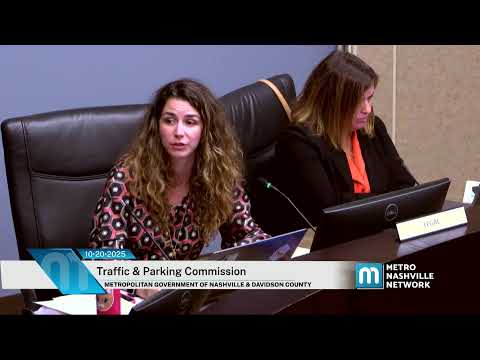
The Traffic & Parking Commission deferred for one month a proposed NDOT-sponsored ordinance that would narrow what vehicles and equipment may park in the public right of way, after commissioners and commenters said the draft was too broad and unclear on enforcement and exemptions.
The Metro Nashville Traffic & Parking Commission voted to defer for one month a proposed substitute ordinance (Metro bill BL 2025-956, substitute) brought by the Nashville Department of Transportation and the Metro Clerk’s office. The substitute would revise provisions governing parking of trailers, landscape and construction equipment, loading/unloading, and related enforcement authority.
Why it matters: Commissioners, NDOT staff and public commenters debated whether the proposed language was overly broad and whether it would criminalize common activities such as short-term parking for landscapers, contractors and food trucks. Several commissioners asked for clearer definitions (for example, what counts as a "standard-size pickup truck"), and recommended that the department adopt an administrative policy to authorize routine exceptions.
NDOT staff and sponsor: NDOT staff said the substitute was drafted after conversations with the council sponsor and that NDOT was working to address concerns. Brad Fries, Deputy Director of NDOT, told the commission the substitute originated with the council sponsor and that NDOT prepared a substitute to align language with the department’s objectives.
Key points raised: Commissioners and commenters pressed for: - Clear, enforceable definitions (vehicle classes, standard pickup truck) to avoid disparate enforcement. - Explicit exemptions or an authorization process for small contractors, landscapers and service vehicles that need short-term curb access. - Written departmental policy or guidance to accompany the code so enforcement officers and the public understand how rules will be applied. - Clarification on whether loading/unloading prohibitions would require agencies to create many new loading zones countywide.
Law enforcement perspective: An unnamed law enforcement representative cautioned that if the ordinance language was not clarified, officers responding to calls would likely issue tickets based on the plain text, potentially penalizing routine contractor activity.
What happened procedurally: After extended discussion about scope, terminology and enforcement, the commission moved and approved a motion to defer consideration of both the underlying bill and the proposed substitute for one month and asked NDOT and the sponsor to return with revised language and a departmental policy or guidance that addresses operational exceptions and enforcement. Commissioners noted timing complications with the council's "shot clock" for commission recommendations but still requested the revised language for commission review.
Next steps: NDOT and the council sponsor were asked to draft clarified language, specify enforcement procedures, and propose administrative authorization paths (policy bulletins or permits) to prevent penalizing routine contractor activity. The commission scheduled the item to return at its next meeting.