
Debate over local authority and 'nicotine‑free generation' laws dominates committee hearing
Get AI-powered insights, summaries, and transcripts
Subscribe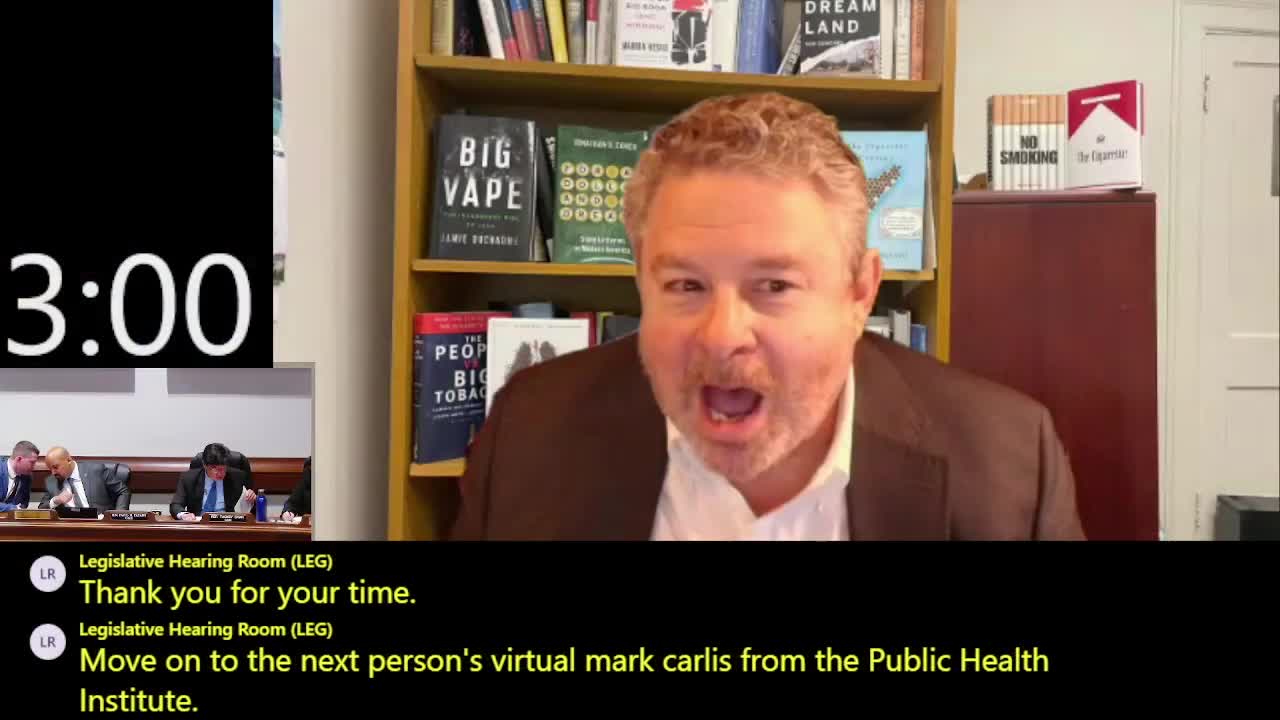
Summary
Proponents and opponents clashed over bills (H330, S221, H371) that would clarify the statewide minimum purchase age of 21 for age‑restricted products and preempt local sales bans. Public‑health advocates and municipal health officers argued local experimentation — including nicotine‑free generation policies —
Local public‑health officials, state policy experts, retailers and industry groups sparred at a joint hearing over a set of bills (House Bill 3,30; Senate Bill 2,21; and related measures) that would clarify the statewide minimum purchase age of 21 for regulated adult‑use products and limit municipalities' ability to enact stricter local sales bans.
"These bills seek to impose unprecedented local preemption in matters involving public health on the municipalities of the Commonwealth," said Mark Gottlieb, executive director of the Public Health Advocacy Institute at Northeastern University, urging the committee to oppose H330, S221 and H371. Gottlieb said the state included an anti‑preemption clause in the 2018 law that raised the tobacco purchase age to 21 precisely so towns could adopt stricter measures, and he cited Brookline and other municipalities that have pursued "nicotine‑free generation" sales bans.
Several municipal and public‑health witnesses defended local authority. Kenneth Alliston, a six‑year elected member of the Belchertown Board of Health, said the bills would strip local boards of health of powers to regulate nicotine and other public‑health hazards. "This is a slippery slope for all municipal boards," Alliston said, arguing that local experimentation has produced reforms such as tobacco‑21 and indoor‑smoking rules.
Retail and trade groups, wholesalers and some trade associations urged the committee to preserve a uniform statewide age of 21. "These bills would provide uniformity for retailers and consumers," said Tim McKinney of the National Association of Tobacco Outlets. Peter Brennan of the New England Convenience Store and Energy Marketers Association and Vijay Mayer of the Northeast Wholesalers Association said a patchwork of local rules creates compliance burdens and could shift sales to unregulated markets.
Attorney Adam Ponti, who represented the losing side before the Supreme Judicial Court in the Brookline litigation, told the committee the court framed the 2018 Tobacco Act as prohibitory rather than conferring an affirmative right, leaving room for bright‑line statewide rules. He urged the committee to create clear statewide standards to avoid confusion for retailers and consumers.
Proponents of municipal action emphasized public‑health motives. Kenneth Alliston and other public‑health witnesses said nicotine is a uniquely harmful, addictive legal product that local governments should be able to regulate more strictly. Mark Gottlieb noted that as of the hearing at least 18 municipalities had adopted nicotine‑free generation policies.
The hearing showed deep division: public‑health advocates and local elected health officials argued that local bylaws have historically allowed Massachusetts to pilot policies that later scaled statewide; retailers and trade groups argued for uniform rules and enforcement that reduce compliance costs. The committee took testimony but did not vote.