Get Full Government Meeting Transcripts, Videos, & Alerts Forever!
Get email alerts on the Aviation Fuel Taxation topic
No spam. Unsubscribe anytime.
Witnesses split on taxing jet and avgas; AOPA opposes, climate coalition supports tax increases
Summary
The Joint Committee on Revenue received opposing testimony on House Bill 4080 and Senate Bill 1924, with AOPA opposing increases to aviation fuel taxes and a climate coalition urging higher jet fuel taxes to curb emissions and fund local mitigation.
The Joint Committee on Revenue received competing testimony on fuel taxation proposals that would raise taxes on aviation gasoline and jet fuel.
Sean Collins, Eastern Regional Manager for the Aircraft Owners and Pilots Association (AOPA), testified in opposition to House Bill 4080 and Senate Bill 1924. Collins said AOPA opposes both measures because “the FAA mandates that all tax revenue from aviation fuels, both jet fuel and aviation gasoline, must return to the system of airports strictly for use in eligible aeronautical development purposes.” He added that neither bill “articulates how the new revenue would be used in any recognized aeronautical program,” and that the MassDOT Aeronautics division “has neither requested additional fuel tax revenue nor provided justification for any new or existing aviation program.” Collins said AOPA will continue to oppose the bills until “an eligible need is identified and justified, and made public to the flying community.”
Alex Chatfield, representing the statewide Coalition to Stop Private Jet Expansion, testified in support of Senate Bill 1924. Chatfield cited a recent Institute for Policy Studies report and said Massachusetts is “a state with ambitious plans to reduce greenhouse gas emissions, where aviation emissions will continue to grow and become a significant fraction of remaining emissions.” He told the committee that current CO2 emissions from jet fuel consumed in the Commonwealth are “5.9 megatons per year and growing,” and that Boston’s emissions excluding aviation total about 6 megatons per year and are falling. Chatfield argued the discrepancy means jet fuel is effectively taxed at a lower rate than gasoline and that raising jet fuel taxes is “fair and forward looking,” providing incentives to reduce emissions and revenue that could be directed to climate resilience, public transit and health mitigation projects.
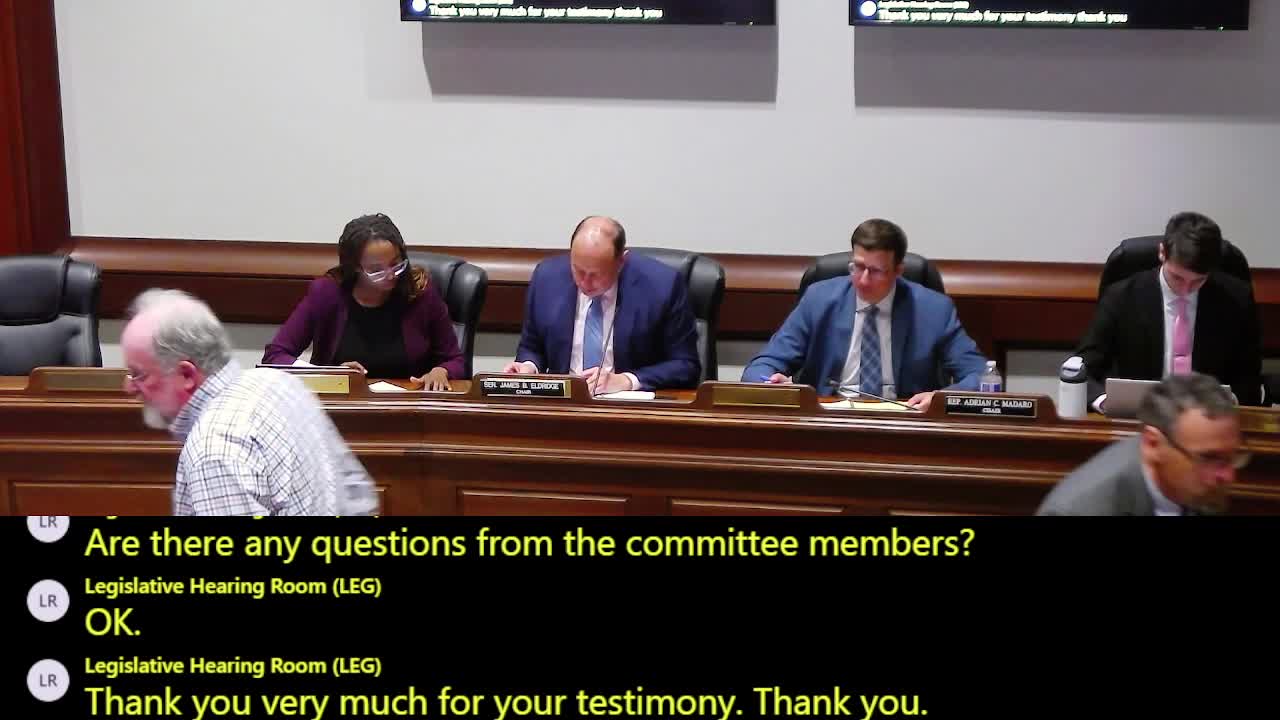
Committee members asked follow‑up questions about how other states tax aviation fuel; witnesses said comparisons vary and further research could be done. The hearing recorded testimony but no committee vote or final action on either bill was taken during the session.