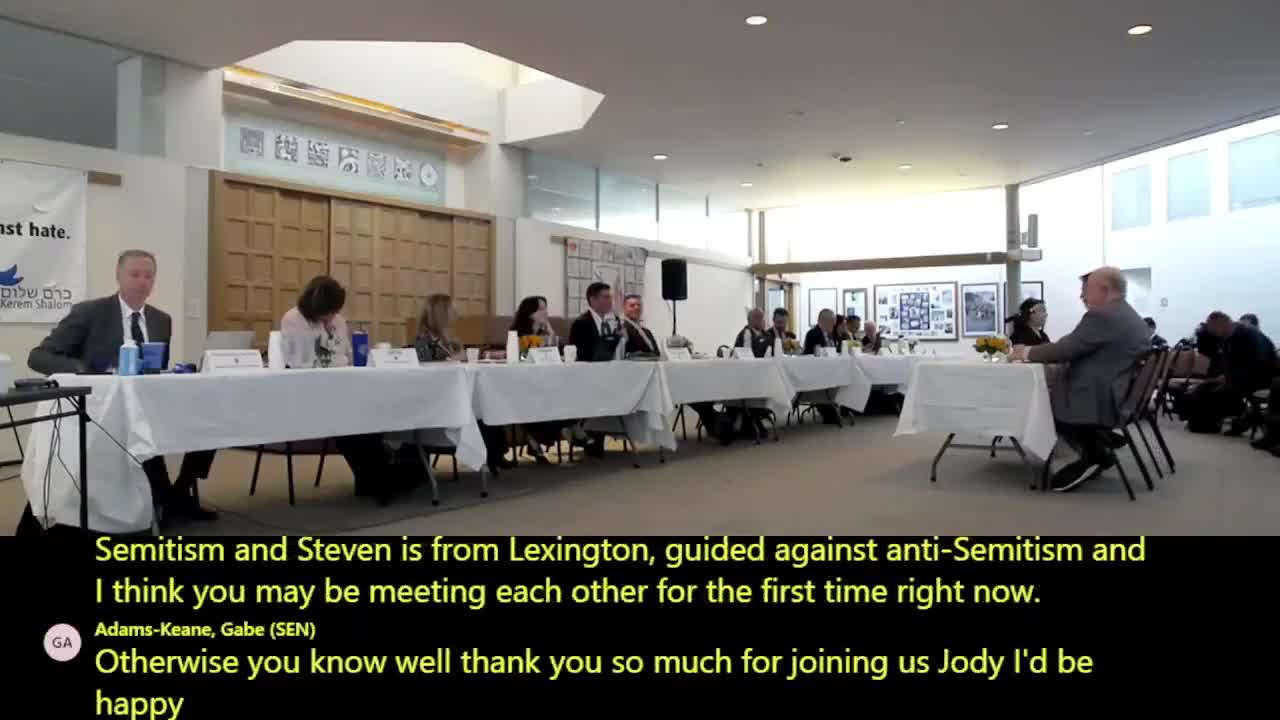
Concord and Lexington grassroots groups describe rapid organizing, rallies and playbooks to support Jewish residents
Loading...
Summary
Activists from Concord-Carlisle and Lexington described forming community groups, organizing rallies, creating guidance for residents, and partnering with school and town leaders to document and respond to antisemitic incidents; they recommended state support to scale local efforts.
Local community organizers from Concord-Carlisle Against Antisemitism (CCAA) and United Against Antisemitism in Lexington described rapid grassroots organizing after a surge in local incidents.
Jody Sperger of CCAA said the group formed after residents saw uneven institutional responses. CCAA organized a downtown Concord rally that drew more than 200 people, established communication channels to share incident reports with school and town leaders, and developed guidance to help residents write effective letters and public statements. Sperger said CCAA has worked closely with the superintendent and town officials and is exploring philanthropic support and fiscal sponsorship from local government for sustainable funding.
Stephen Van Evra (chairing a Christian-led interfaith group in Lexington) said United Against Antisemitism launched in March 2023 to mobilize faith leaders and civic partners. The group focuses on three tracks: rapid public response to incidents, broad public education about antisemitism and its historical roots (including Christian culpability), and school-focused culture change. Van Evra said the group organizes public letters-to-the-editor, film screenings and interfaith education programs and urged more Christian-led confession and education about historical Christian roles in fostering antisemitism.
Both speakers said local organizing benefits from being hyperlocal: neighbors and school leaders can act quickly, build trust and supply immediate supports. They urged the commission to recommend resources and toolkits so other towns can replicate rapid-response local infrastructure.
Ending: Organizers asked the commission to help scale local playbooks, fund community coordination and promote educational programs that teach history and present-day risks.