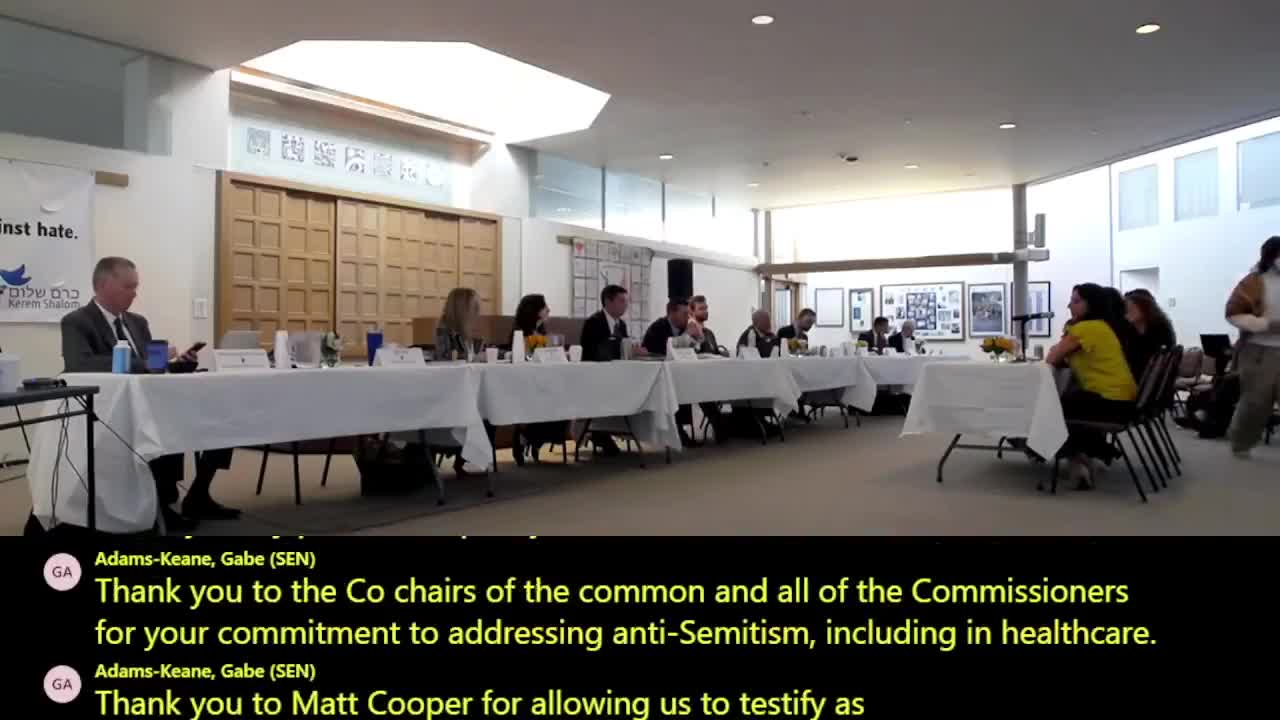
Doctors, students and staff tell commission antisemitism is affecting care, careers and workplace safety
Loading...
Summary
Medical students, clinicians and human-resources professionals told the Special Commission on Antisemitism that antisemitic incidents in Massachusetts health-care settings have made trainees and staff feel unsafe and interfered with patient care, and they urged explicit anti-bias training and consistent enforcement of workplace policies.
Medical students, clinicians and human-resources professionals told the Special Commission on Antisemitism that antisemitism is present in Massachusetts health-care settings and can harm patient care, workforce retention and workplace safety.
Key testimonies included: - A medical student described a class resource that contained false, inflammatory accusations against Israel and said a post-October 7 demonstration outside the medical school, including chalking that listed names, left Jewish trainees "terrified" and reluctant to disclose their identity. She said some classmates avoided taking elevators with her after seeing she was Jewish. - A genetics counselor described a professional-conference episode in which she received threats after objecting to an invited speaker's anti-Israel rhetoric; she said 33% of Jewish genetic counselors in a follow-up survey hid their Jewish identity at work and 52% received concerning comments from patients when asking medically relevant ancestry questions. - Employee resource-group leaders from large health systems said Jewish employees reported antisemitic comments from co-workers, political messaging in clinical spaces, and social-media posts and flyers that made staff feel unsafe. They described providing listening sessions and security when clinicians reported threats. - Human-resources and DEI professionals urged health-care employers to treat antisemitic language and symbols the same as other forms of workplace harassment: include a definition of antisemitism in anti-bias training, update codes of conduct to prohibit hostile political displays that interfere with patient safety (for example, workplace display of symbols or flags that create an unsafe environment), and fund Jewish employee groups rather than placing the burden on affected employees.
Panelists urged hospitals and medical schools to (1) expand anti-bias training to cover antisemitism explicitly; (2) enforce codes of conduct consistently, including in university-affiliated hospitals; (3) create safe, confidential reporting pathways for students and staff (panelists criticized some current complaint procedures that reveal complainant identity to the accused); and (4) support Jewish employee-resource groups with funding and security assistance.
Ending: Panelists said failing to address antisemitism in healthcare reduces trust in providers and risks patient care, and they urged the commission to recommend clear state-level guidance and training, plus support for reporting and for ERG capacity-building.