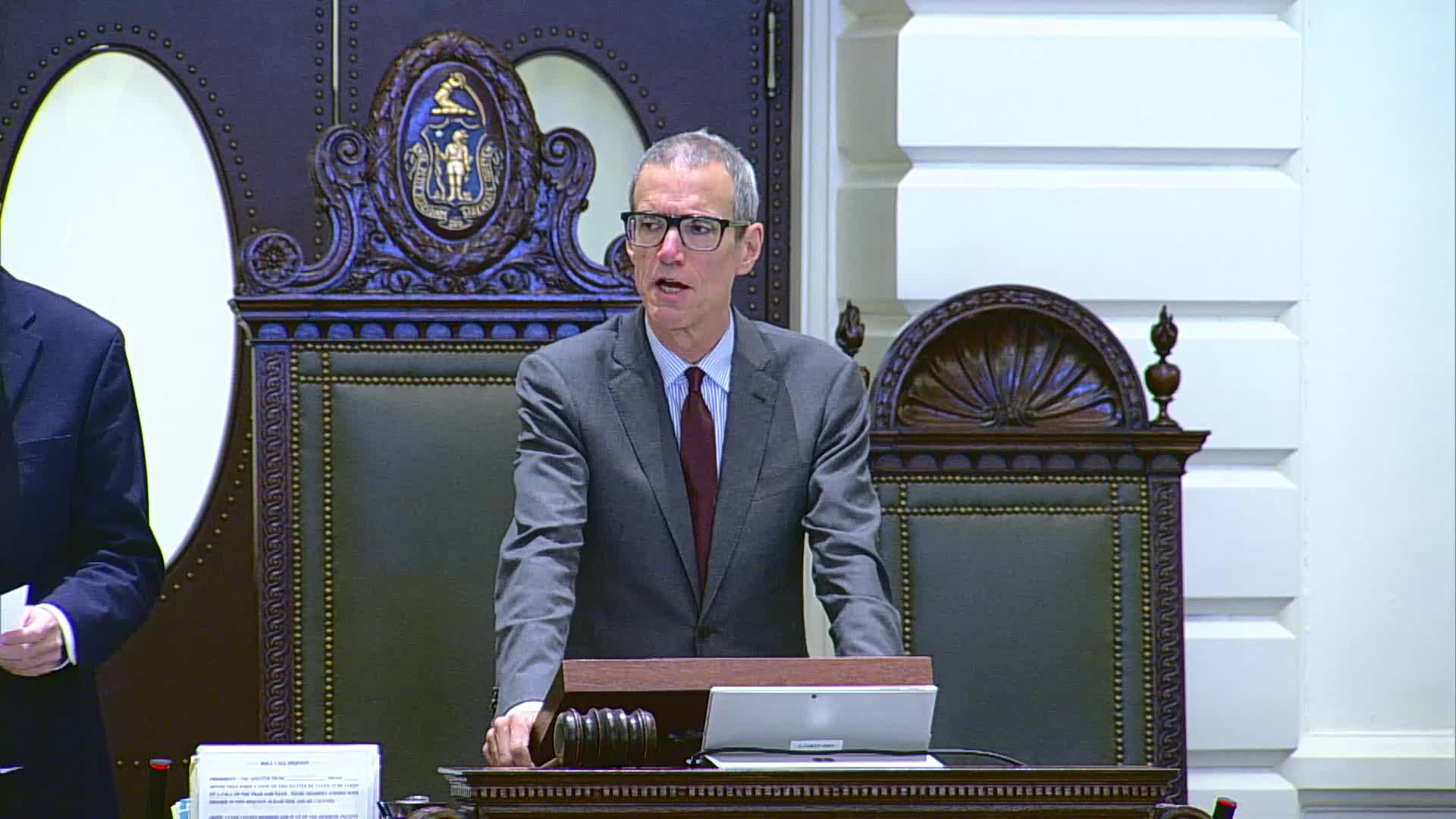
Mass. Senate approves law to provide free disposable menstrual products in schools, jails and homeless shelters
Loading...
Summary
The Massachusetts Senate passed an act to require free disposable menstrual products in public elementary and secondary schools, correctional facilities and homeless shelters, voting 39–0 to send the bill to be engrossed.
The Massachusetts Senate on Oct. 16, 2025 passed legislation to make disposable menstrual products available at no cost in public elementary and secondary schools, jails and correctional facilities and in homeless shelters.
The bill, described in the chamber as the "I Am" bill and advanced by Sen. Joanne M. Comerford of Northampton and championed in remarks by Sen. Patrick M. O'Connor of Weymouth, was ordered to a third reading as amended and then passed to be engrossed by a recorded voice vote that the clerk later recorded as 39 in favor, none opposed.
Supporters said the law aims to address disparities in access and the practical harms of insufficient supplies. "I rise happily in support of an act to increase access to disposable menstrual products in prisons, homeless shelters, and public schools," Sen. Comerford said on the floor. Sen. O'Connor described the state investments and community partnerships that helped build distribution capacity, saying, "This was also marked the largest investment a state has ever made in the history of The United States Of America in ending period poverty." The floor debate also noted the role of nonprofit organizations such as Free Period and the Massachusetts Menstrual Equity Coalition in organizing and distribution.
Legislators emphasized settings beyond schools: supporters pointed to unpredictable donation flows at homeless shelters and to restricted access for incarcerated menstruators. The Senate adopted an amendment by Sen. Roderick before ordering the measure to a third reading; the clerk later announced the final recorded vote and that the measure was passed to be engrossed and would be laid before the governor for approval.
The bill's supporters urged a formal recorded vote; the clerk's roll call shows broad bipartisan support with no recorded negative votes. The measure now moves to the governor following engrossment.
Less central procedural items on the floor included routine orders to third reading for many other bills and a brief recesses; the Senate also handled a separate sick-leave-bank matter during the same session.
The bill text and implementation timetable, including whether distribution will be run by state agencies or local providers, were not specified on the floor during the recorded debate.