Get Full Government Meeting Transcripts, Videos, & Alerts Forever!
Get email alerts on the Restorative Justice topic
No spam. Unsubscribe anytime.
Middlesex DA urges wider use of restorative justice for bias incidents, including antisemitism
Summary
Middlesex County District Attorney Marian Ryan told the commission restorative justice has raised victim satisfaction and lowered recidivism in bias- and hate-related incidents, and she urged statutory and policy changes to permit educational remedies even when a case is disposed without conviction.
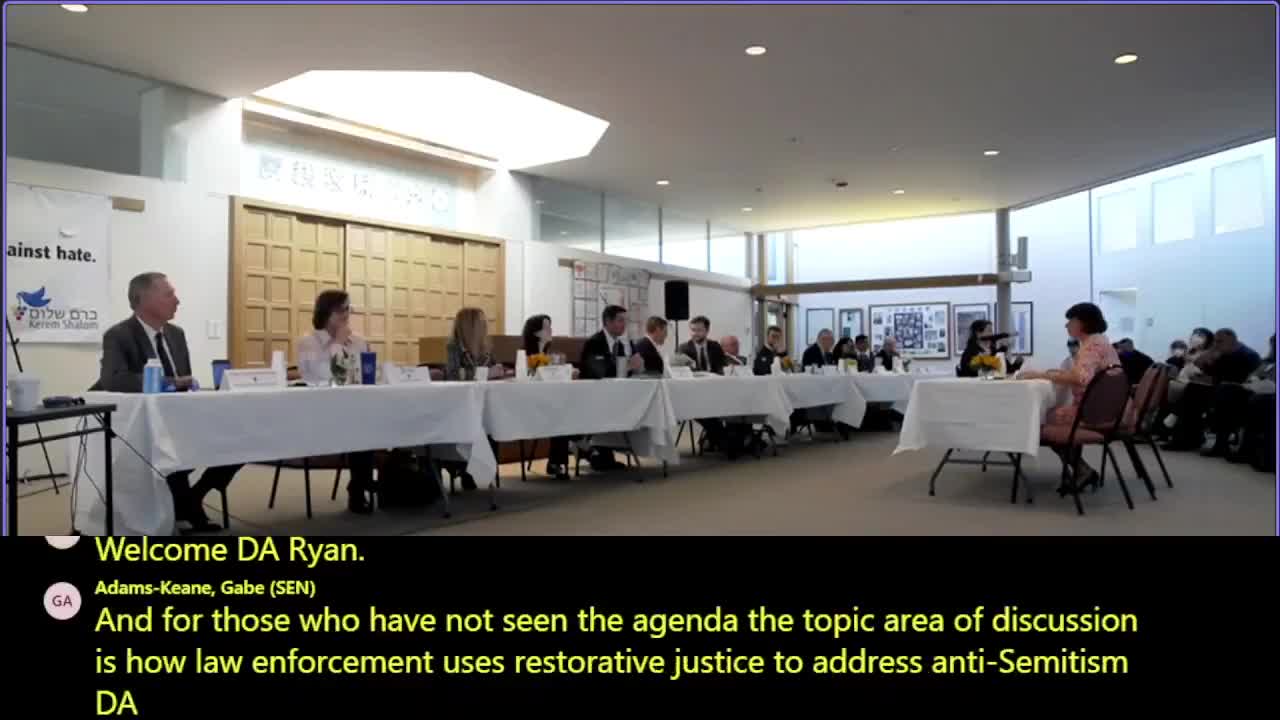
Marion Ryan, the Middlesex County district attorney, told the Special Commission on Antisemitism that restorative justice programs have been a successful tool in her office for several years and can be particularly effective in addressing antisemitic incidents.
Ryan described restorative justice circles as forums where victims can describe the impact of wrongdoing and ask questions of the person who harmed them. She told commissioners that victim satisfaction in cases that include restorative justice rose from about 57% to around 89% and that recidivism for participants fell from roughly 39% to about 16% in her office's data.
Ryan said restorative justice works at multiple stages: as diversion for younger people whose cases do not go to court; as a part of disposition for cases that do; and as a community intervention where criminal charges are not appropriate. She noted schools, community organizations and victim services can also use restorative practices outside of the criminal process.
Ryan recommended statutory changes to ensure victims can receive restitution that remedies harm and to allow education programs as a condition of some dispositions even when a formal conviction is not imposed. She explained that current statutes sometimes prevent judges from requiring educational programs when the resolution is a continued without a finding or similar outcome, and that expanding options for restorative remedies would preserve records while promoting behavioral change.
Commissioners asked for examples and model programs; Ryan pointed to work in Arlington and Lowell and offered to provide bills and statutory language to the commission for possible inclusion in recommendations.
Ending: Ryan said restorative justice is one tool among many, and that the commission's work to recommend supportive statutory language and funding for restorative programs would align with national guidance and help reduce repeat incidents.