Families, prisoners and advocates press for visitation reform, saying current rules sever family ties
Loading...
Summary
At a long public hearing, incarcerated people, their relatives and advocates urged lawmakers to pass S.1720 / H.2591 to roll back DOC visitation restrictions, arguing the current system’s pre‑approval lists, limited physical contact policies and scheduling blocks harm children, mental health and reentry outcomes.
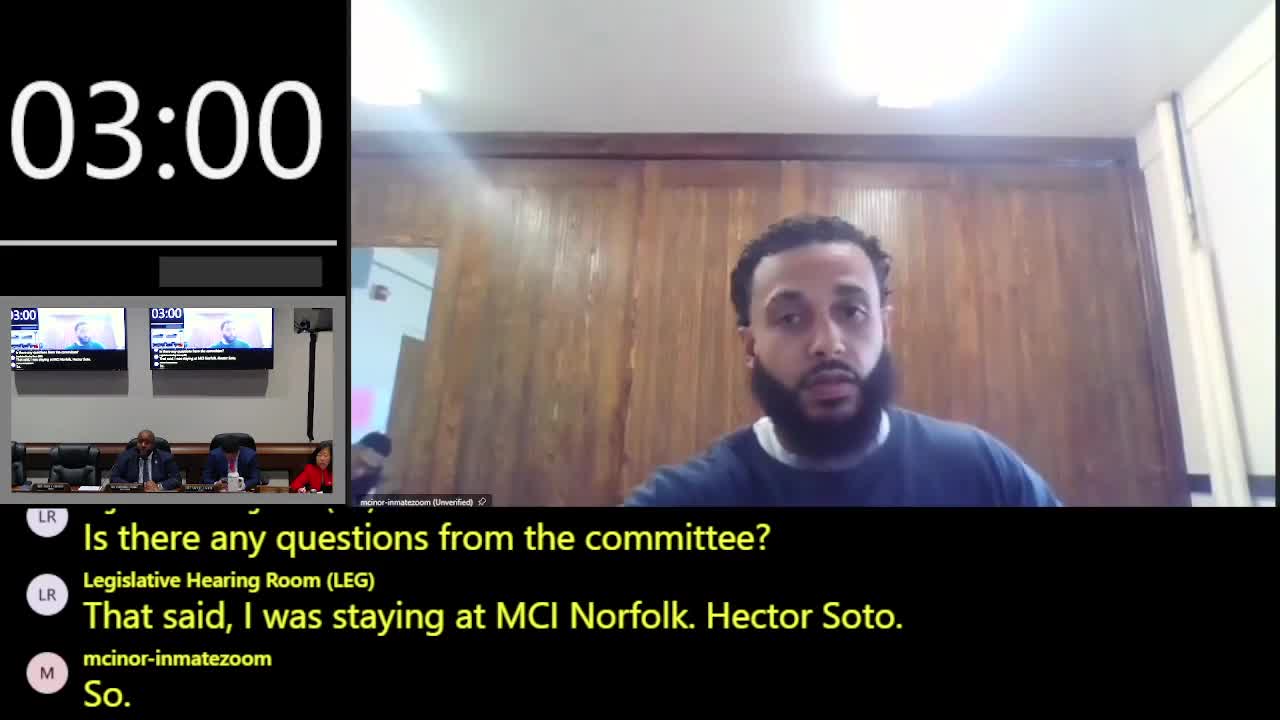
Dozens of current and formerly incarcerated witnesses, family members and legal advocates told the Joint Committee on Public Safety and Homeland Security that the Department of Correction’s visitation rules have become highly restrictive and inconsistently enforced, and that those rules undermine rehabilitation and family stability.
Testimony described a range of obstacles: caps on approved visitors, scheduled‑only visits that must be booked during business hours, shorter visit times, a shrinking children’s area in visiting rooms, and arbitrary dress‑code and search enforcement that can result in being turned away. Jeremiah Reed, an adolescent who testified with his mother, described being humiliated when staff fabricated rules barring physical contact and when his mother was temporarily banned after an officer alleged she was disrespectful.
Families and clinicians said visitation is a key protective factor against depression, substance relapse and recidivism; Prisoners Legal Services and researchers cited data showing a dramatic decline in visits since 2018. PLS and other witnesses said DOC’s visitation policy changes since 2018 corresponded with an approximately 85% decline in visits by early 2025 compared with 2018 levels, and that the restrictive policies have not demonstrably reduced contraband.
Incarcerated advocates described a “pre‑approval” list requirement that forces people to choose just a handful of visitors among larger families, creating rotating exclusions and long periods without contact for loved ones who live far away. Parents and advocates said the policy disproportionately affects children and low‑income families who cannot complete cumbersome documentation or call during weekday hours to schedule visits.
Several witnesses, including legal and clinical professionals, urged the Legislature to restore in‑person visitation access, set clear standards for visitor processing and require the DOC to collect and publish visitation data. A representative of the Keeping Families Connected Coalition described the visitation bill as restoring “meaningful human contact,” and faith and community leaders asked for a favorable committee report.
Ending: Committee members asked for precise data on visitation rates and DOC implementation; witnesses pledged to submit reports and depositions to the committee.