
Senator Driscoll's amendment orders MBTA study of local assessments; amendment adopted
Get AI-powered insights, summaries, and transcripts
Subscribe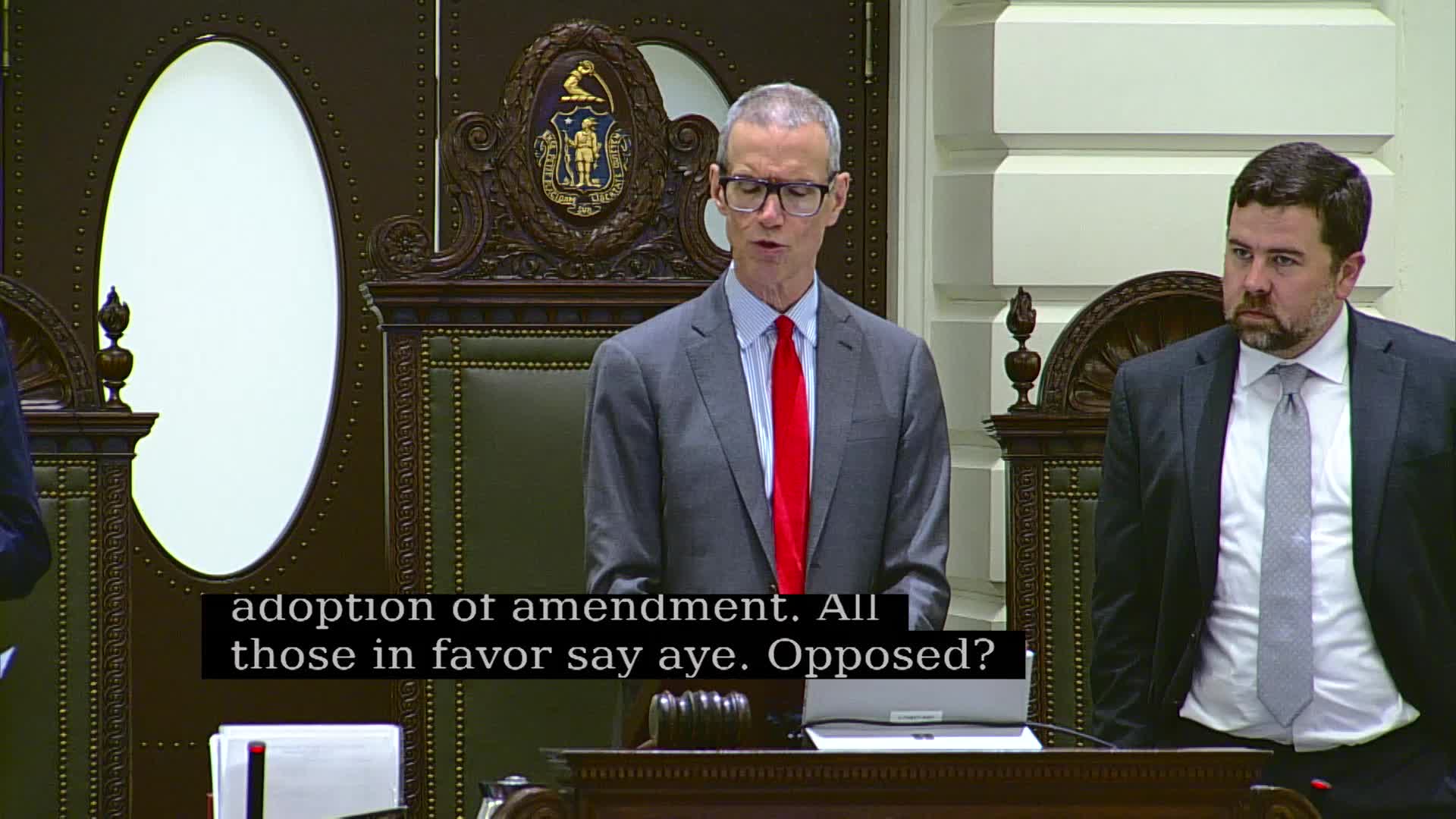
Summary
Senator William J. Driscoll Jr. secured adoption of an amendment directing the MBTA, in consultation with the MBTA Advisory Board, to study local assessments charged to municipalities and report recommendations to the Legislature and MBTA board.
Senator William J. Driscoll Jr. successfully proposed and won adoption of amendment number 34 instructing the Massachusetts Bay Transportation Authority, in consultation with the MBTA Advisory Board, to study local assessments on cities and towns and recommend changes to the assessment formula.
Driscoll told the Senate the study should examine the statutory fixed-dollar pool, the population-weighted allocation and the tiered "population multiplier" that places some municipalities in higher-cost categories. He cited FY25 figures, saying "during FY25 the pool of 128 communities is required to pay $193,000,000" and gave examples: "Milton pays $2,100,000; the city of Quincy pays $2,500,000." Driscoll argued the current system yields inequities because some longstanding member communities carry a higher multiplier despite smaller populations.
He also highlighted a service and capital gap on the Mattapan Line: promised refurbishment of eight trolleys has produced only four returned to service so far, with a fifth expected within six months. Driscoll said the upgrades and track reconfiguration needed could cost well over $120 million in 2017 dollars, and much more adjusted for inflation.
The Senate adopted the amendment by roll call; the clerk recorded the ayes and the amendment was adopted. The amendment requires the MBTA to report its findings to the clerks of the House and Senate and to the MBTA board of directors.
Why it matters: Municipal assessments are a recurring local fiscal issue; the study could prompt future statutory or administrative changes to how MBTA costs are shared among municipalities and to the prioritization of capital work such as the Mattapan Line.