Get Full Government Meeting Transcripts, Videos, & Alerts Forever!
Get email alerts on the State Budget topic
No spam. Unsubscribe anytime.
Senate debates FY25 closeout supplemental budget, Ways and Means chair outlines major allocations and oversight steps
Summary
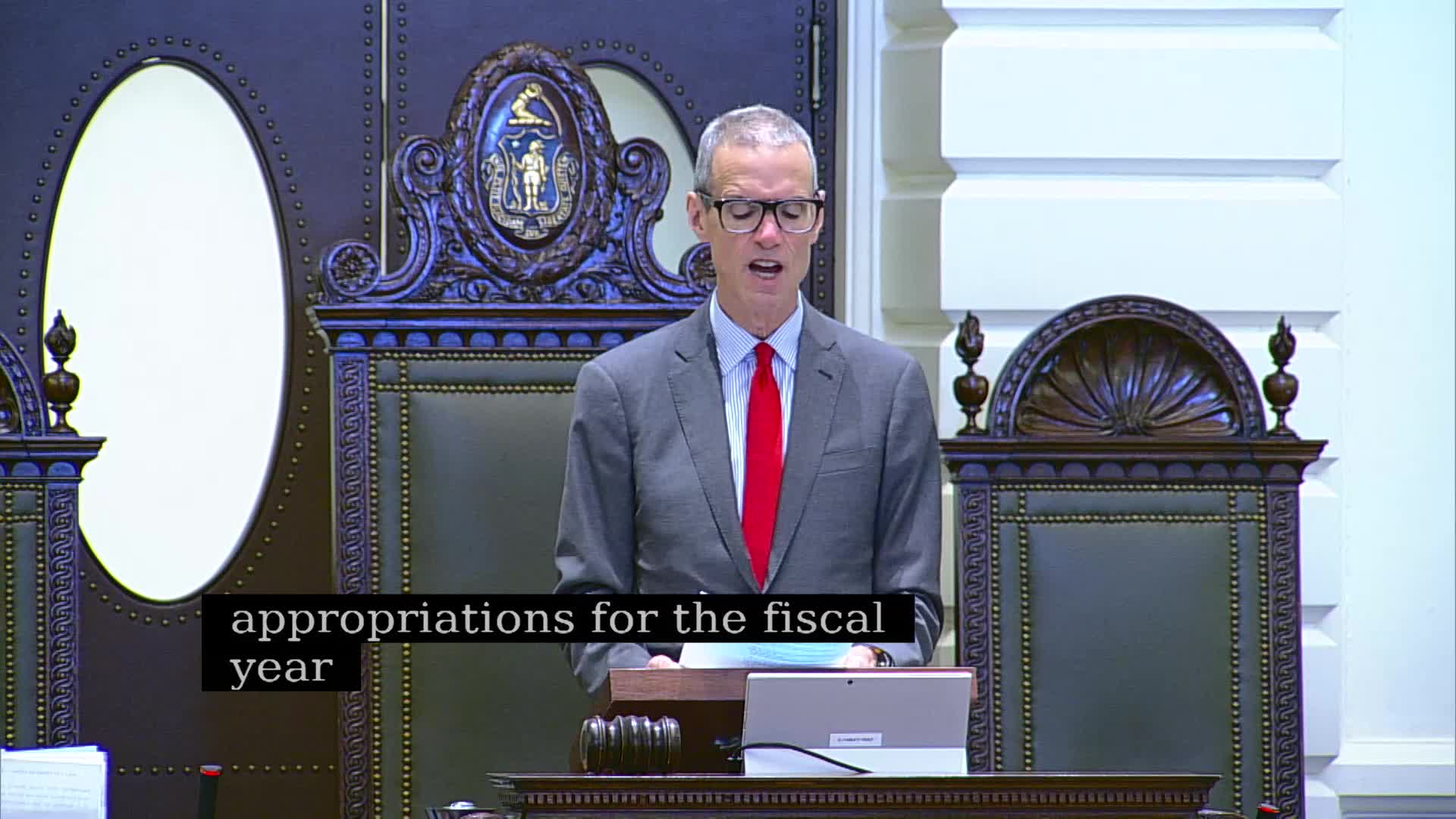
Senator Robert Roberts, chair of the Senate Committee on Ways and Means, presented the fiscal year 2025 closeout supplemental appropriations bill (House Bill 4615) and described it as “how we responsibly fulfill our duties of balancing the books, reconciling spending gaps, addressing priorities, and putting FY25 to bed.”
Senator Robert Roberts, chair of the Senate Committee on Ways and Means, presented the fiscal year 2025 closeout supplemental appropriations bill (House Bill 4615) and described it as “how we responsibly fulfill our duties of balancing the books, reconciling spending gaps, addressing priorities, and putting FY25 to bed.” The chamber debated the committee amendment offered by Roberts that would strike all after the enacting clause and insert the text of Senate document 2655.
Why it matters: The closeout supplemental is the vehicle the Senate uses to reconcile year-end deficits and one-time needs for FY25. Legislators said it contains both large spending items and policy changes that affect health care, housing, higher education and public safety oversight.
Roberts said the bill addresses what he described as a sharp rise in sheriff office overspending, noting the sheriffs “have collectively overspent their appropriations by a $162,000,000” in FY25 compared with $46,000,000 the prior year. He described a three-part strategy in the supplemental: funding key programs, directing an Inspector General review of the 14 sheriff offices’ FY25 finances, and authorizing creation of an administration-driven sheriff fiscal oversight council to review sheriff finances monthly.
Major allocations and program changes described by the chair include: - $12,500,000 for the no-cost-calls program (telephone calls from correctional facilities). - $14,000,000 for substance use and alcohol addiction treatment through Section 35 programs. - $100,000,000 to establish a public higher education student support fund and $18,300,000 to restore student financial aid at public higher education institutions. - $12,000,000 for a universal school meals program. - $18,500,000 (reported) for public health hospitals. - $10,000,000 for the Department of Transitional Assistance technology improvements intended to reduce error rates and avoid federal penalties. - $5,000,000 to reproductive health care providers to preserve access to services. - $75,000,000 for the Housing Preservation and Stabilization Trust Fund for affordable rental housing. - $60,700,000 for the Massachusetts Department of Transportation’s snow-and-ice removal expenses.
On fiscal safeguards, Roberts said the bill would invest $426,000,000 of excess capital gains into a new deficiency reserve fund and deposit $25,000,000 split across three accounts (the Commonwealth Stabilization Fund, state retiree benefit obligations/OPEB, and pension obligations) to shore up long-term liabilities. Roberts stated a gross investment figure and a net state-funded bottom line after federal participation; the transcript records those numbers as a “gross investment of $202,300,000,000” and a bottom line of $795,700,000. The presentation tied a large portion of the vehicle to federal financial participation.
Members pressed for context and called for more detail. Senator Charles (minority leader) described the bill as an important spending vehicle and asked the committee chair for an overview. Senator Rogers and others asked about how the bill treats revenues from the 4% surtax on income above $1 million (the “fair share” surtax) and how excess capital gains would be allocated; Rogers described a conservative, phased approach to spending surtax proceeds and said statute requires most of the remaining surtax revenue be transferred to education and transportation funds.
Several senators emphasized the bill’s priorities: - Senator Friedman highlighted health safety-net language and credited hospital assessments and staff who worked on the policy language. - Senator Commerford praised the bill’s investments in universal school meals, reproductive care, and DTA technology, and flagged the bill’s approach to disaster relief and public-safety provisions. - Senator Tarr and others discussed the modest size of the disaster-resiliency deposit relative to potential needs but supported creating the capability to respond.
Procedure and next steps: Roberts moved the committee amendment (strike-all, insert Senate doc 2655). The Senate then proceeded to consider amendments to that amendment; multiple floor amendments were offered, debated and either adopted, rejected, held or withdrawn during the session. Roberts asked that, when the time comes for final votes, the question be taken by the call of the ayes and nays.
What the transcript does not show: The session excerpt records debate and many first-call amendment votes (adoptions and rejections) but does not show a final recorded passage of the amended House Bill 4615 in the excerpt provided.
Ending note: Debate on the FY25 supplemental continues on the floor with senators discussing both programmatic priorities and fiscal guardrails; the committee amendment remains under consideration with multiple amendments pending.