Get Full Government Meeting Transcripts, Videos, & Alerts Forever!
Get email alerts on the Tnc Fee topic
No spam. Unsubscribe anytime.
Regional planners propose shifting TNC fee to percentage to raise transportation revenue
Summary
The Metropolitan Area Planning Council urged lawmakers to replace the state’s flat per-ride transportation network company fee with a percentage-based fee tied to the sales tax rate, saying it would better account for ride value, inflation and externalities and could boost annual revenue significantly.
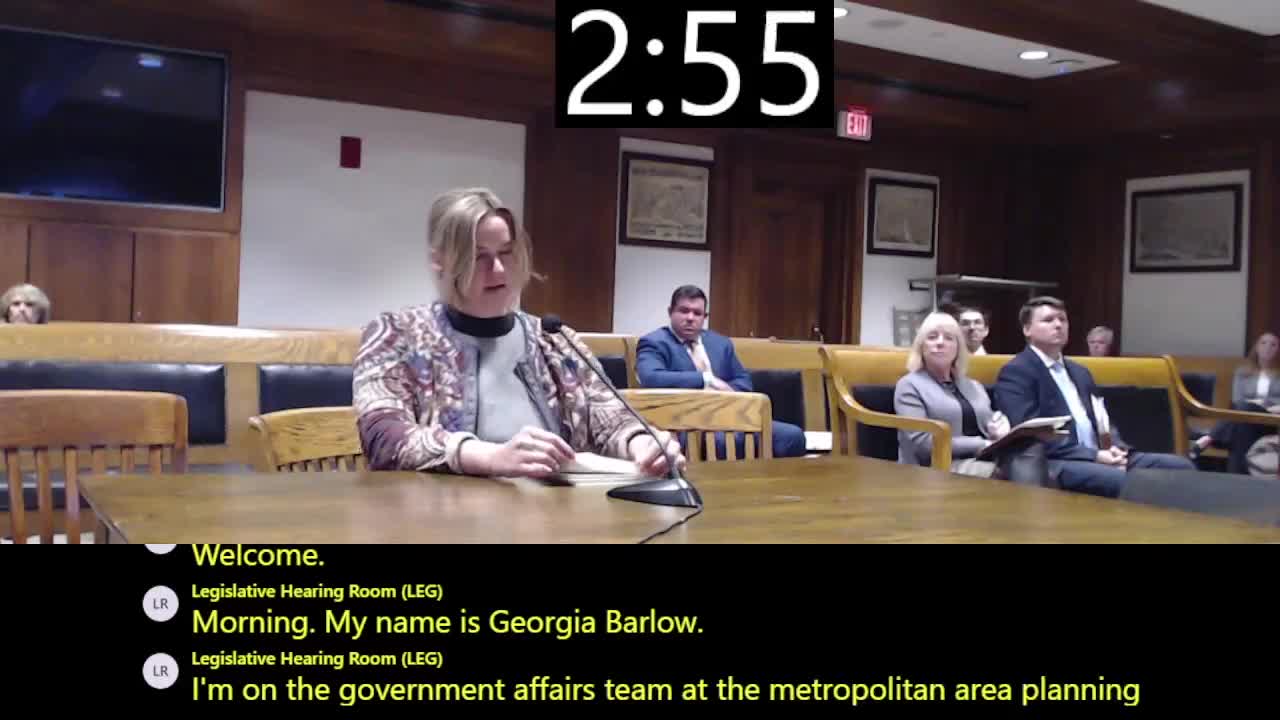
A representative of the Metropolitan Area Planning Council (MAPC), the regional planning agency for Greater Boston, told the hearing that Massachusetts' flat per-ride transportation network company (TNC) fee is now low relative to other cities and states and recommended shifting to a percentage-based fee.
MAPC said the current 20-cent flat fee per ride (split between municipalities and the commonwealth) no longer captures the scale or cost of TNC trips. "The flat assessment that we have in Massachusetts does not account for changing costs of bridal share services over time," the MAPC witness said, and recommended aligning the assessment with the state's sales tax rate of 6.25% as a percentage-based alternative.
MAPC supplied comparative examples from other jurisdictions — noting flat fees of $0.62 to $3.00 per ride in some cities and percentage-based assessments between 3% and 9% elsewhere — and estimated that a percentage fee aligned with sales tax could increase annual revenue from roughly $90 million under the current fee to an estimated $120–$140 million annually. MAPC said that revenue would be reinvested in local transportation systems and could help address backlogs in roads, bridges and transit.
MAPC also noted potential mode-shift benefits: survey data cited by the witness indicated about 60% of TNC riders would otherwise use transit, bike or walk, suggesting a higher fee could help incentivize lower-emission travel choices.
Ending: MAPC said it would submit written testimony and research to the committee; lawmakers heard the presentation and closed the hearing to further testimony at the end of the session.