Mass. committee hears hours of testimony on bill to ban vaccine or gene‑altering proof as condition of entry
Loading...
Summary
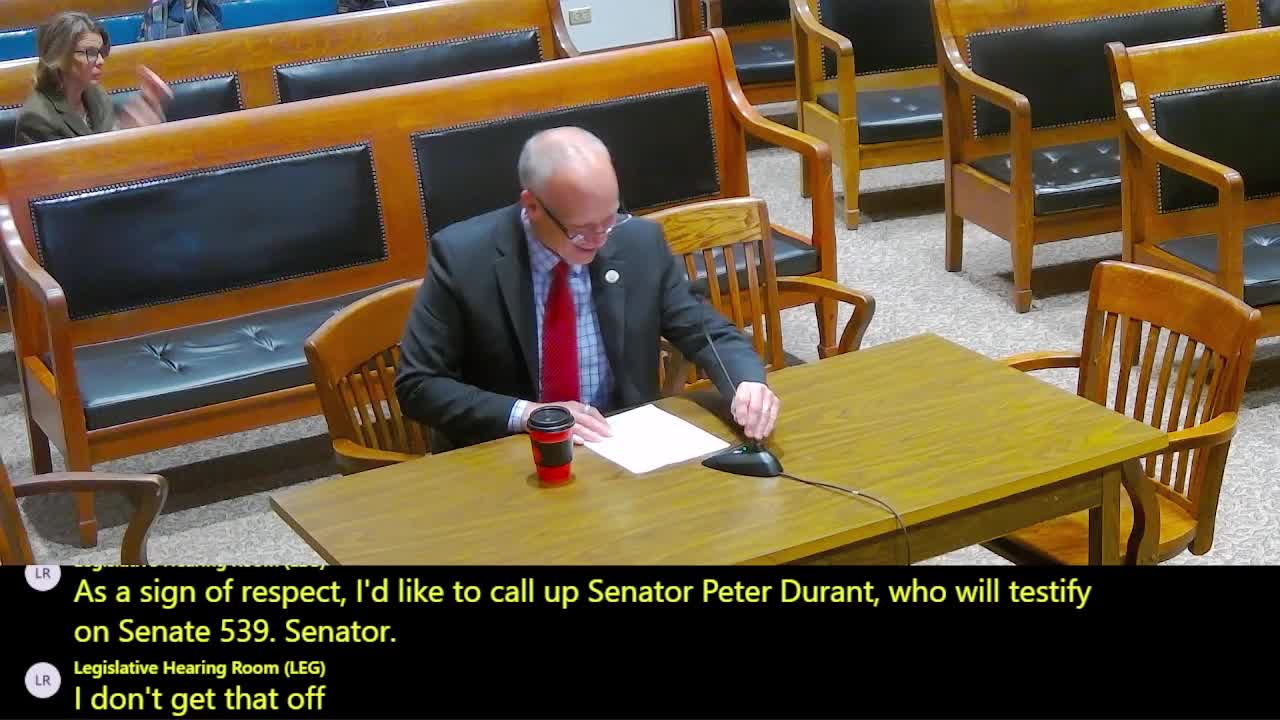
The Joint Committee on Emergency Preparedness and Management heard testimony on Senate Bill S.539, which would prohibit requiring COVID‑19 mRNA vaccination or other gene‑altering procedures as a condition of entry to public venues, education, employment or state services.
The Joint Committee on Emergency Preparedness and Management heard testimony on Senate Bill S.539, which would prohibit requiring COVID‑19 mRNA vaccination or other gene‑altering procedures as a condition of entry to public venues, education, employment or state services. The hearing included more than two dozen individual testimonies and questions from committee members.
Supporters told the committee that mandates during the COVID‑19 pandemic caused job losses, disrupted education and eroded trust in medicine and public health. “This bill would protect Massachusetts residents from being forced to receive mRNA vaccine, or gene altering procedure as a condition of entry,” said Julie Boras, co‑founder of Health Rights MA. Physician Mary Kelly Sutton said, “Medicine and the research that should guide it are in a deeply troubled state.” Multiple health‑care workers described having to seek religious or medical exemptions and, in some cases, losing employment or training opportunities.
Opponents and at least one registered physician witness told the committee the bill would unduly limit public‑health authority during emergencies. Joanne Tuller, who said she had received COVID‑19 vaccinations and boosters, testified in opposition: VAERS reports are unverified self‑reports and do not on their own establish causation, she told the committee. During questioning, Representative Swartz asked whether the bill implied there had been no emergency during the height of COVID‑19; sponsor testimony acknowledged an emergency but argued that some policy choices afterward went beyond what should be permitted.
Speakers repeatedly invoked federal and state public‑health institutions and databases when describing harms or limits: witnesses referenced the Commonwealth’s Department of Public Health, federal VAERS reports and executive emergency powers exercised during the pandemic. Several speakers urged the Legislature to reassert authority over emergency measures and to prevent future mandates that would condition civic participation on a medical procedure.
The committee did not take a vote; chairs closed the record on S.539 after the scheduled public testimony ended.
Ending: The committee declared the S.539 testimony portion of the docket closed and did not vote during the hearing. If advanced, the bill would return to the Legislature for further committee consideration and potential floor action.