Get Full Government Meeting Transcripts, Videos, & Alerts Forever!
Get email alerts on the Soft Costs Permitting topic
No spam. Unsubscribe anytime.
Industry pitches automated permitting and remote inspection to cut ‘soft’ costs for rooftop solar
Summary
Solar companies and nonprofit groups told legislators that automated permitting, remote inspections and SolarAPP+ could reduce soft costs that make U.S. residential solar far more expensive than peer countries, and urged Massachusetts to adopt statewide platforms and standards.
Installers, software vendors and nonprofits told Massachusetts lawmakers that permitting and inspection delays — the so-called "soft costs" — are a major reason rooftop solar is far costlier in the U.S. than in countries such as Australia, and that automated permitting and remote inspections can reduce cost and time to install.
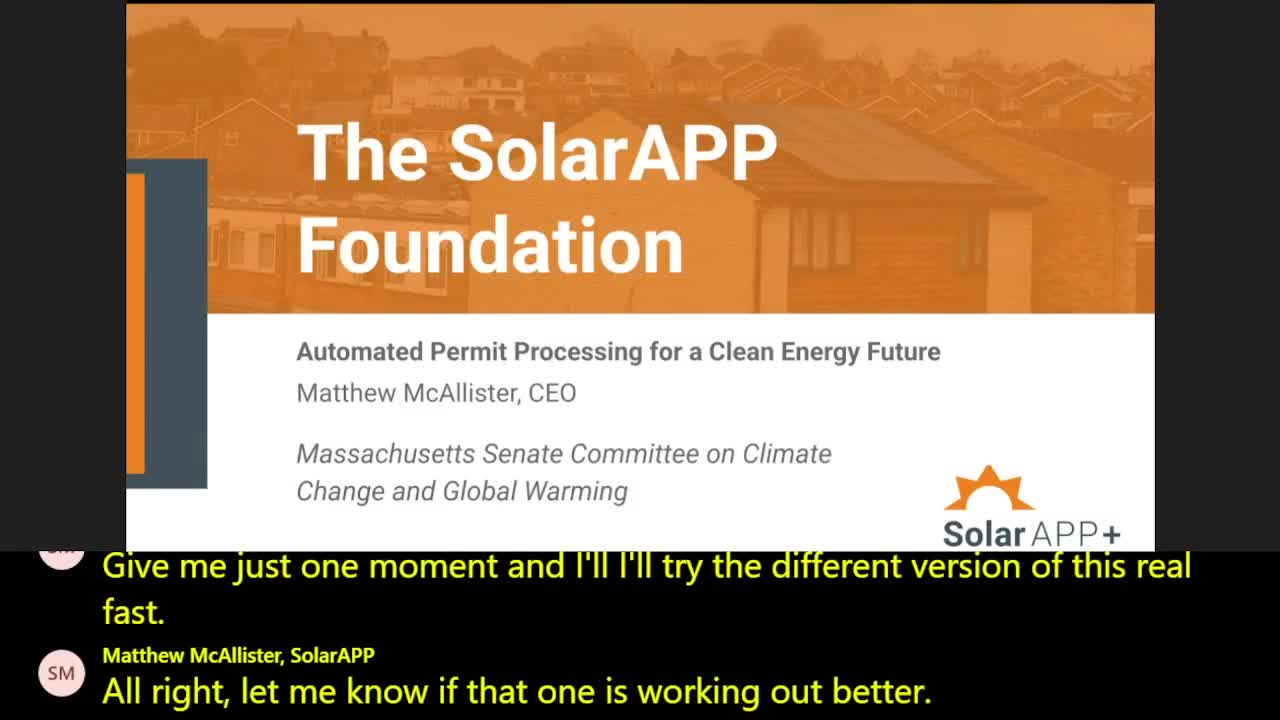
"SolarAPP Plus stands for solar automated permit processing," Matthew McAllister, chief executive officer of the SolarAPP+ Foundation, told the committee, describing software that automates local plan review and can issue instant permits. He said SolarAPP+ is free for governments and is being used in more than 320 jurisdictions in 17 states. "Our current average time savings is 3 weeks faster than the traditional permitting," he said.
Hannah Birnbaum of Permit Power and Bronte Payne of Sunrun said similar measures would cut installers' administrative burdens and consumer wait times. Permit Power presented modeling that, if adopted statewide, "has the potential to reduce the cost of a typical solar install in Massachusetts by $5,500 and could result in nearly a 120,000 more installs over the next 15 years," Birnbaum said.
Supporters also recommended remote or virtual inspections. Birnbaum said many jurisdictions require multiple in-person inspections that add cost and delay and recommended a "single remote inspection for home solar and batteries via photo or recorded video," citing National Fire Protection Association standards and International Code Council best practices.
NREL and other analysts have measured time savings for automated permitting; McAllister said observed time savings are about three weeks on average and noted many jurisdictions using automated tools process permits on weekends, further reducing calendar time.
Why it matters: several witnesses warned that federal tax-credit changes will depress residential installs unless Massachusetts reduces soft costs. Bronte Payne, a senior policy manager at Sunrun, urged the legislature to "cut red tape by streamlining the permitting process for home solar and storage" and to ensure consumer protections for residential contracts.
Ending: The witnesses asked the Legislature to consider state-level platforms or mandates for automated permitting and to authorize remote inspections and inspector standards so installers, municipalities and utilities can complete more projects before federal tax-credit windows close.