Get Full Government Meeting Transcripts, Videos, & Alerts Forever!
Get email alerts on the Aging Out Stipend topic
No spam. Unsubscribe anytime.
Attorney general and youth advocates push for cash stipend for youth aging out of foster care (S161)
Summary
The Attorney General's Office and youth with lived experience urged lawmakers to approve S161, a bill to provide a guaranteed monthly cash stipend to young adults transitioning out of foster care.
Boston — The Attorney General's office and youth advocates urged the Joint Committee on Children, Families, and Persons with Disabilities to support Senate Bill S161, which would create a guaranteed cash stipend for young adults transitioning out of foster care.
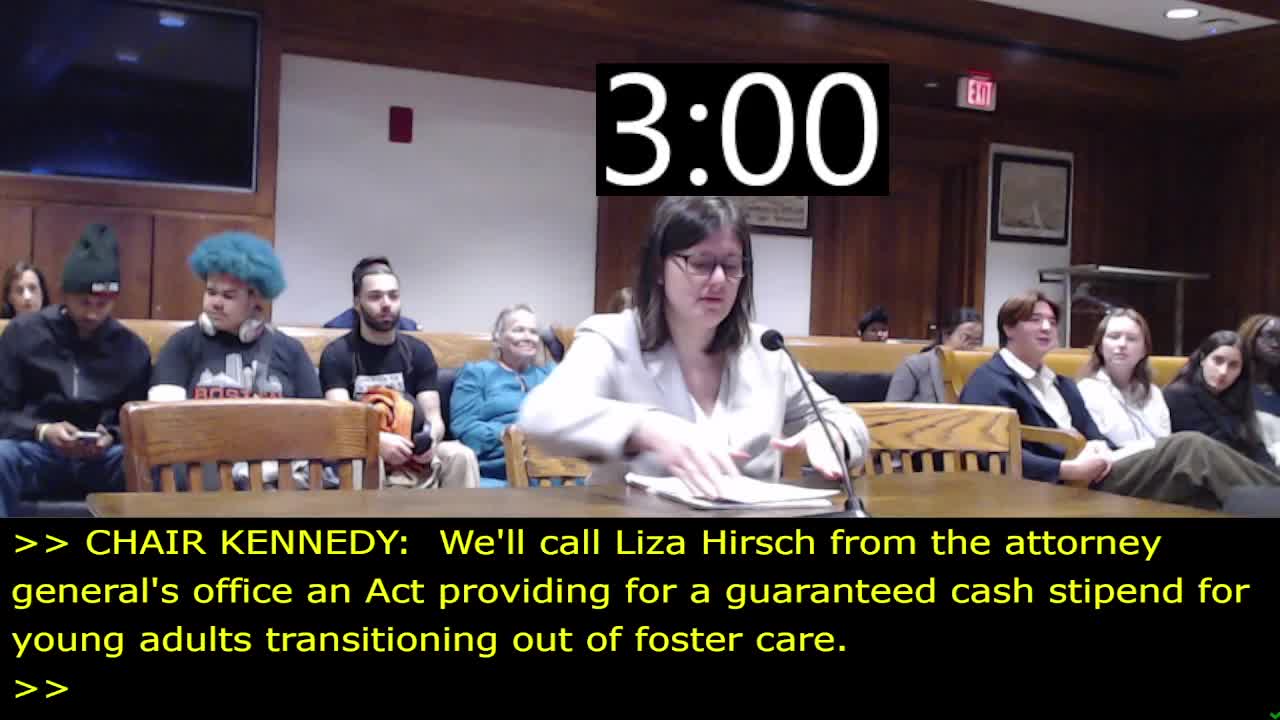
"Every year, approximately 750 youth turn 18 and age out of foster care in Massachusetts," Liza Hirsch, director of the Children's Justice Unit at the Office of the Attorney General, told the committee. "One out of every four of those youth will experience deep poverty and homelessness within their first year of exiting care." She said the state is the statutory guardian and responsible safety net for these young people.
Young people with lived experience said a monthly stipend could stabilize housing and help them retain vouchers and other supports. "These monthly payments could be the difference between a foster youth diploma or whether they wind up stuck in poverty," Reese Thompson, who testified on behalf of Power Is Yours and More Than Words, said.
Advocates linked the stipend to better outcomes and to federal programs such as Foster Youth to Independence (FYI) housing vouchers; witnesses said the stipend could help youth maintain housing offered through timed federal vouchers. Proponents asked the committee to give the bill a favorable report; no vote was taken at the hearing.
The Attorney General's office expressed institutional support and thanked the bill's sponsors and the committee for hearing S161. Youth speakers described personal experiences with withheld or misapplied money and with the difficulty of obtaining essentials while under state care. They described a stipend as a tool for saving, pursuing education and employment, and reducing the risk of homelessness after exiting care.
The bill's fiscal details — stipend amount, eligibility rules, and funding source — were not specified during the hearing and remain to be defined if the committee advances the measure.