Get Full Government Meeting Transcripts, Videos, & Alerts Forever!
Get email alerts on the County Services topic
No spam. Unsubscribe anytime.
Cheshire County officials brief West Swanzey on nursing-home, EMS and budget pressures
Summary
Cheshire County Administrator Chris Coates and county officials outlined county services, grant-funded projects and fiscal pressures — including nursing-home Medicaid rules, rising costs and grant-funded telecommunications and fire projects — at a town meeting. Representatives discussed housing, covered-bridge damage and local control of land-use.
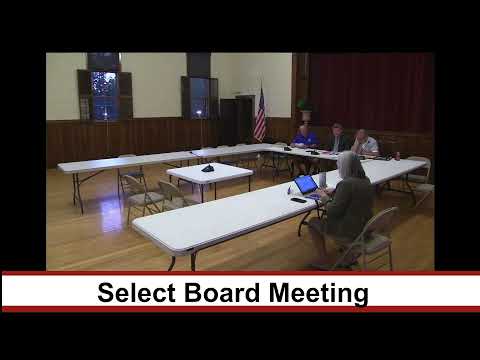
Cheshire County Administrator Chris Coates and county officials presented an overview of county programs, budget trends and recent grants at a West Swanzey meeting, telling town officials the county is balancing service demand with constrained resources and new state policy changes.
Coates described major county functions: Maplewood Nursing Home’s census runs about 112–115 residents (capacity near 150), and counties in New Hampshire remain responsible for the nonfederal share of Medicaid for people in nursing homes and home- and community-based care. He warned that a change at the state level shortening the retroactive eligibility window from 90 days to 30 days could reduce county reimbursement and estimated a potential revenue impact of “about $300,000 to $400,000” in some scenarios.
Coates said the county’s Department of Corrections had a census of about 100–110 and that federal inmate contracts generate roughly $2 million this year, offsetting county costs. Cheshire County EMS operates five ambulances and one paramedic-intercept unit; the county also partners with SmartRide to move wheelchair users, a service that grew from about 13,000 runs last year to a projected 16,000 this year.
The presentation highlighted several county programs and grant-funded projects: Connected Families (a statewide wraparound program that began as a county grant project), a handyman program for low-income home modifications, and energy and telecommunications upgrades funded with grants. Coates said the county won National Association of Counties recognition for creating a county-run EMS program and for its handyman program; the county also obtained roughly $4.4 million for a telecommunications upgrade and has pursued funds for Southwest Fire Mutual Aid (a project Coates said has a total estimated need of about $4.8 million, with $2.7 million already identified).
State Representative Barry Faulkner, who attended the meeting, discussed recent and potential state legislation, urging protection of local control on land-use issues and describing bills his office is pursuing, including measures aimed at damage to covered bridges from oversized vehicles. Faulkner and Coates discussed local options such as special revenue funds or trust funds for bridge repairs, and enforcement tools including fines and cameras if voters authorize funding for additional surveillance.
Coates and county staff also described staffing pressures — the county currently employs about 465 people and officials said they would prefer staffing closer to 500 — and noted that grant-writing training and a county grants office have helped secure outside funding to reduce taxpayer burden.
County officials did not ask the town to take immediate action on any single item; they offered to return to town meetings for further discussion on pending legislation and to coordinate with town staff on specific program details.