Get Full Government Meeting Transcripts, Videos, & Alerts Forever!
Get email alerts on the Housing Rezoning topic
No spam. Unsubscribe anytime.
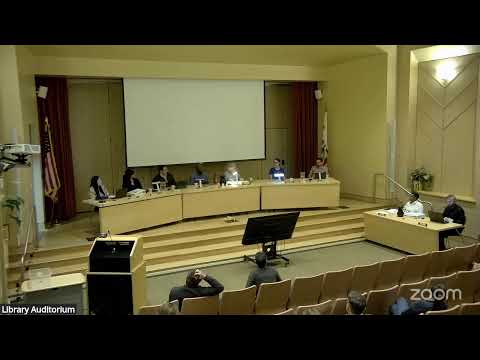
Orinda planning commission backs rezoning and downtown design standards over wildfire, traffic objections
Summary
The Orinda Planning Commission voted 4–2 to recommend city council adopt general plan and zoning changes to implement the city’s housing element, including downtown objective design standards and targeted rezones; residents raised wildfire evacuation, traffic and a contaminated Caltrans site as key concerns.
The Orinda Planning Commission on Aug. 12 voted 4–2 to recommend that the City Council adopt a package of general-plan and zoning amendments and objective design standards intended to satisfy the city’s 2023–2031 housing element. The recommendation, recorded as Planning Commission Resolution 25-06, would rezone specified downtown and non-downtown parcels and adopt objective design standards for multifamily development in downtown core and downtown general zoning districts.
The action matters because it is a planned step to show the state Department of Housing and Community Development (HCD) that Orinda has sufficient capacity to meet its regional housing needs allocation (RHNA) for the current cycle. Staff told the commission the city was assigned 1,359 units by ABAG/HCD and must show sufficient capacity by an early-2026 deadline or risk developer-driven “builder’s remedy” approvals that would bypass local controls.
Associate Planner Darren Hughes summarized the staff recommendation and the elements of the package: four new land-use categories for downtown (downtown core and downtown general, with downtown-core subzones at roughly 30 and 55 dwelling units per acre), two new residential high-density zones outside downtown (RH 25 and RH 40), rezonings for 26 downtown opportunity parcels and five sites outside downtown, and adoption by reference of the objective design standards for multifamily housing in the downtown core and downtown general districts. Hughes emphasized, “The action tonight is for rezoning. It is not that the city is coming forward right now and saying that we are going to be building these units.”
The staff presentation included site-specific proposals: partial rezonings of three church properties along Moraga Way (portions of Holy Shepherd Church, the Berkeley Korean United Methodist Church property, and St. John’s), a proposal to rezone about 9.35 acres of the 51.95-acre Miramonte High School parcel along La Venita Drive for residential high-density (RH 25), and a proposed 5-acre Caltrans gateway parcel rezoned conceptually to RH 40 to allow up to roughly 200 units. Staff also reported existing capacity accounted for in the housing-element inventory (623 units from vacant sites, accessory-dwelling-unit projections and previously identified sites) plus 90 units in approved projects (for example, Wilder Country House memory care and Vista Verde senior housing).
Staff and the certified program environmental impact report (EIR) include a monitoring and reporting program (MMRP) with mitigation measures for transportation, vehicle-miles-traveled (VMT) analysis and wildfire risk. Hughes and Planning Director LaShawn said the EIR was recirculated and recertified in March 2025 after a court challenge prompted additional wildfire analysis and mitigation. As part of a settlement tied to that litigation, staff said the city will procure evacuation-modeling tools and update its emergency operations and wildfire-evacuation plans; the city also plans further public sessions to present that modeling and the updated plans.
Public comment was extensive and split. Several speakers urged the commission to support downtown rezonings to place housing near transit and support local businesses. Supporters included Amy Hines Sheikh, who said her family has struggled to recruit and retain childcare and school staff and urged the commission to “make space for them.” Other speakers — primarily residents of South Orinda near Miramonte High School — urged the commission to reject or delay rezonings that could place many new units in locations they described as hard to evacuate and already traffic-congested. David Turner, a resident who said he lives near the church opportunity sites, told the commission: "We're in a wildfire area ... we have one road," citing what he and others described as a single primary egress on Moraga Way and warning that additional housing could heighten evacuation risk.
Speakers raised three consistent concerns about the non-downtown sites: wildfire evacuation capacity on Moraga Way and La Venita Drive; local traffic and school capacity; and the Caltrans gateway site’s environmental constraints and cost. Bob Finch and other commenters cited Caltrans records showing approximately 35,000 cubic yards of lead-contaminated material on the gateway parcel and referenced a Caltrans cleanup estimate publicly discussed as roughly $11 million. Commenters noted that because Caltrans does not currently treat housing as a public use that counts toward HCD capacity, the city cannot count that site toward RHNA for this cycle.
Commission deliberations stressed two tensions: the state-mandated timetable for demonstrating capacity, and resident safety and infrastructure capacity in South Orinda. Commissioners asked whether rezoning now gives the city more control than allowing by-right statutorily enabled projects (for example, laws allowing by-right affordable housing on religious or education-owned land). Staff responded that rezoning and objective standards are intended to create a clearer local framework and that individual development proposals would still be subject to project-level review and any EIR-level additional environmental review required by state law.
The motion to adopt the staff recommendation as modified in the staff presentation passed on a 4–2 roll call. The commission recorded the votes as: Commissioner Armstrong — yes; Commissioner Brenda Davis — yes; Chair Tara Huebner — yes; Commissioner Jelnick — no; Commissioner Marilla — no; Commissioner Schmidt — yes. The planning commission’s action is an advisory recommendation; the City Council is expected to consider the package at a noticed public hearing in September 2025.
Commissioners and staff repeatedly told the public that rezoning does not itself authorize construction and that any future project would be reviewed for project-specific environmental, traffic and wildfire impacts and mitigation. Staff noted that the program EIR and the MMRP identify mitigation measures such as VMT analyses and required travel-demand-management measures for developments that exceed screening thresholds, wildfire hazard assessments and shelter-in-place design guidelines for affected sites, ingress/egress and emergency-access improvements where required, and pursuit of development-impact fees or grants for pedestrian, bicycle and emergency-vehicular improvements between Moraga and Orinda BART.
Next steps: the Planning Commission’s resolution will be transmitted to the City Council for a public hearing; staff has said it will continue outreach, pursue interagency discussions about potential BART-area opportunities and follow through on the EIR’s MMRP items and the litigation settlement obligations regarding evacuation modeling and emergency-plan updates. The commission’s recommendation triggers the next formal review step but does not itself change land use until the council acts.