
Provo outlines steps to raise homeownership toward 50% goal
Get AI-powered insights, summaries, and transcripts
Sign Up Free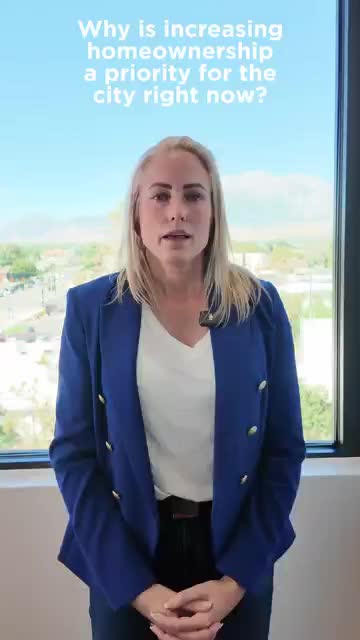
Summary
An unidentified Provo City staff member described a three-part strategy—land trusts, owner-occupancy requirements in new developments and stronger enforcement of occupancy rules—to boost homeownership from about 40% toward a stated 50% goal, and highlighted program and financing supports for first-time buyers.
An unidentified Provo City staff member outlined measures the city is taking to increase homeownership, saying about 60% of housing in Provo is rentals and roughly 40% is owner-occupied and that the city set a goal in February 2024 to move toward a 50/50 balance.
The speaker described three primary approaches: creating a community land trust, requiring owner-occupied units in some new developments, and enforcing occupancy limits to discourage investor conversions of single-family homes into dense rentals.
"Increasing homeownership is a priority for the city because of our stats right now," the staff member said. "About 60% of the city is rentals, while 40% is homeownership. That is very, very low compared to national, county, and state statistics." The speaker added that the city has been approving rental construction at a rate they described as "about 12 to 1."
On land trusts, the speaker said the city-sponsored nonprofit would hold land while buyers purchase only the home, reducing the purchase price by about 30% because purchasers would not pay for the land. "They provide perpetual affordable housing," the staff member said, describing the trusts as designed for workforce housing including fire, police and city employees.
The staff member described a forthcoming development at Buckley Draw of about 120 single-family homes that the city expects to be 100% owner-occupied. "We put in the development agreement, which is a legal binding document between the developer and the city of Provo, and it will create deed restrictions on these homes that even when they're sold, they need to be owner occupied for the first year," the speaker said.
On enforcement, the speaker noted that local occupancy rules limit single-family homes to a family or three individuals and said the city is working to enforce those limits. "Quite often, we'll get the news illegally such that we have 8, 10, 12 students in a single family home," the speaker said, adding that such conversions can encourage investors to buy homes for high rental income and thereby push up local housing prices.
The staff member also pointed to Redevelopment Agency (RDA) initiatives in East Bay as part of longer-term housing supply plans and discussed barriers to condominium production—citing national insurance and financing issues—and said the state plans policy tools to improve condo finance and insurance.
The speaker listed specific buyer-assistance options: the Provo City Home Purchase Plus program, which the speaker said has increased available assistance from $40,000 to $60,000 and added a forgiveness element; an unspecified state program that helps first-time buyers buy down interest rates and with down payments for new homes; and the private Rocky Mountain Home Fund, which the speaker said can lower interest rates, help with down payments and provide buyer education.
The presentation framed the measures as complementary: supply-side changes through land trusts and deed-restricted owner-occupied developments, regulatory enforcement to limit investor-driven conversions, and direct buyer assistance to reduce cost barriers. The staff member emphasized stability and community benefits of ownership, citing school stability and stronger neighborhood investment.
The staff member did not identify themselves by name or title in the provided transcript. Several numerical items were described in approximate terms by the speaker (for example, "about 60%," "about 12 to 1," "about 120 homes"), and legal references (for example, the local occupancy limit and the specific deed-restriction language) were described but not cited to a code section or ordinance in the transcript.
City officials or program administrators were not quoted by name in the transcript excerpt provided. For information about eligibility or application for the programs discussed, the staff member directed listeners to contact Provo City.