Get Full Government Meeting Transcripts, Videos, & Alerts Forever!
Get email alerts on the Annexation Agreement Salem Perry topic
No spam. Unsubscribe anytime.
Salem, Perry trustees advance draft annexation agreement; 30-day public review planned
Summary
Salem City Council and Perry Township trustees discussed a draft annexation agreement focused on economic development, deed‑restriction language and tax splits and agreed to circulate the draft publicly for at least 30 days while making minor clarifications.
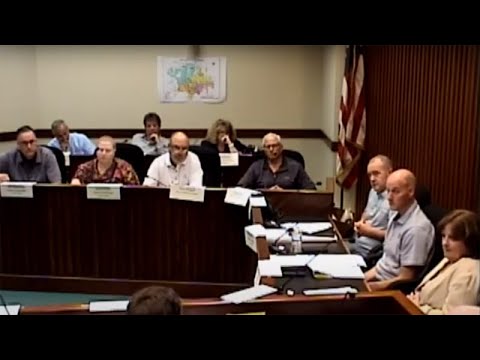
Salem City Council and Perry Township trustees on Sept. 2 discussed a draft annexation agreement intended to promote economic development by pairing Perry Township’s land with Salem’s utilities and agreed to circulate the current draft for a 30‑day public review period while trustees and council officers work through a few clarifying edits.
The draft, presented at the regular Salem City Council meeting, moves past an earlier stalemate over residential deed restrictions by proposing a 12.5‑year compromise on those restrictions and language in the agreement that treats execution of a deed restriction, in certain circumstances, as evidence of the owner’s consent to annexation. Perry Township representatives stressed the goal of creating an economic‑development framework that benefits both jurisdictions.
Perry Township representative: "we've been working on this for probably the last 2 years trying to come to some kind of agreement between the city and the township. Primarily the reason behind its economic development. As we all know, township has the land, city has utilities," said a Perry Township trustee during the discussion.
Why it matters: Council members and township trustees said the agreement is designed to clear longstanding friction and make the jurisdictions jointly competitive for business recruitment. Key outstanding issues raised during the meeting include how deed‑restriction consent is documented, the effect of the proposed 12.5‑year moratorium on residential deed restrictions, how annexations will proceed under state expedited procedures, and how tax incentives and revenue splits would affect Salem’s budget.
What the draft says and what council and trustees debated - Deed restrictions and consent: Attorney Zellers, the city law director, pointed to a new sentence in article 3(f) that reads in part that "the execution of any deed restriction for the purchase of any property containing a deed restriction require annexation... If a property becomes contiguous to the city of Salem, let's consider the owner's consent for the purchase of the city." Zellers described the clause as intended to clarify that deed restrictions do not supersede prior annexation law and to reflect the parties’ agreement as to residential deed restrictions.
- State annexation procedure: Council members noted that Ohio’s expedited annexation (type 1) requires an application by the owner and that a deed restriction alone may not substitute for the written owner application required by Ohio law. A councilmember summarized the point as: owners must still file the paperwork for a type‑1 annexation even where deed restrictions exist.
- Moratorium length and practical effect: Several council members pressed whether the 12.5‑year pause on enforcing deed restrictions would be meaningful if property owners can avoid annexation simply by not filing the application at the end of the moratorium. "If the only thing a property owner has to do is simply not file the request to be annexed," Councilmember Harrington said, "it doesn't seem to me that the 12.5 moratorium means anything." Trustees and the mayor responded that the clause was a negotiated compromise to move the broader development conversation forward and that the agreement includes conditions tying continued use of city utilities to deed restrictions in some scenarios.
- Taxes, incentives and fiscal modeling: The draft contemplates a proposed split of new revenue from annexed areas discussed informally as a 70/30 split of income tax (city/township) and a 50/50 split on property taxes. City officials presented a fiscal model focused on safety costs (police, fire, EMS) — described in the meeting as roughly 86% of current general‑fund outlays — and said the city’s model shows it would run a deficit on the income tax split if it gave the township more than about 12–17 percent of income tax receipts under the simple scenarios discussed. Township trustees countered that commercial development would change that calculus and that commercial property and business income generally generate more net revenue than residential development.
- Incentives and property‑tax abatements: Article 5(c) in the draft gives the city "final right to approval in its sole discretion of economic incentives" for income tax and other items but carves out that the township must give written authorization for city actions that would reduce property tax revenue. Council members asked for clarification about how large incentives typically negotiated statewide — such as property‑tax abatements under Community Reinvestment Act (CRA) provisions — would be handled; staff explained that CRA authority and certain millage reductions involve additional approvals (for example, school board review for major abatements) and that the draft was intended to balance negotiating flexibility with township protections.
Next steps and public review: Council and trustees agreed to circulate the latest draft to the public — posting it on municipal websites and placing a copy at the city office and local library — and to hold at least one public meeting after circulation so residents can comment. Several members urged that any substantive edits identified by council or trustees be made before starting the 30‑day public‑review clock to avoid restarting the notification period.
Quotes and attribution: All quotations in this article are drawn directly from the Sept. 2 meeting transcript. For example, Attorney Zellers explained the deed‑restriction language added to article 3(f): "the execution of any deed restriction ... require annexation. If a property becomes contiguous to the city of Salem, let's consider the owner's consent for the purchase of the city." (Attorney Zellers, Law Director.)
Meeting context: The discussion occupied a significant portion of the Sept. 2 council meeting; council members said they want the agreement to move forward but requested final clarifications on process and fiscal impacts before formally adopting any intergovernmental agreement. No final annexation or jurisdictional transfer took place at the meeting; the council and trustees agreed to public circulation and further review.
Ending: City and township leaders characterized the draft as a compromise intended to increase joint competitiveness for business recruitment while protecting local revenue streams. Officials asked residents to review the posted draft during the 30‑day period and to bring comments to the planned joint public meeting before either legislative body finalizes an agreement.