Get Full Government Meeting Transcripts, Videos, & Alerts Forever!
Get email alerts on the Human Services Fund topic
No spam. Unsubscribe anytime.
Hubbard County officials warn human services fund balance squeezed as mental‑health placements rise; budget review planned
Summary
County staff reported low human services fund balances, rising costs for out‑of‑county mental‑health placements and plans to use five‑year trends to set next year’s budget. Officials said June tax settlements will replenish some accounts and that quarterly investment reporting will resume.
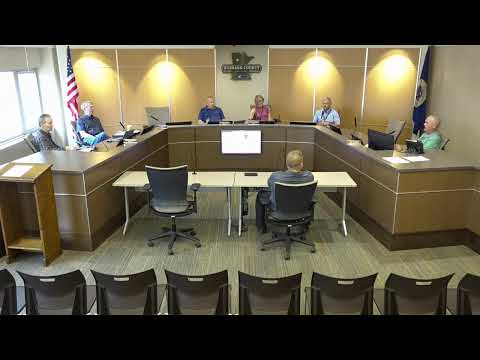
Hubbard County officials reviewed the county’s finances on an investment report and warned that the Human Services Fund balance has fallen to a low level after recent mental‑health and juvenile placement costs, and that staff will present trend‑based budgeting ahead of the 2026 budget cycle.
County staff described the county’s bank and investment positions through May 2025 and said they will resume quarterly investment updates. “We want to get back into the habit of providing quarterly investment updates for you all,” a county staff member said. The presentation showed pooled accounts at Citizens National and other investment vehicles; staff said bond proceeds and other project funds are held in longer‑term investments with Ehlers.
Why it matters: County officials said the Human Services Fund has swung from multimillion‑dollar balances in prior years to a very small balance after consecutive years of heavy service demand, and that those swings complicate budgeting for services that have widely varying annual usage.
Officials and commissioners focused on costs for juvenile and secure mental‑health placements, which staff described as both expensive and limited in‑state. “One of the bigger ones that we’ve had in the last two years is the probation, juvenile delinquency placements. Those are coming out of our budget. We don’t have a say in that,” the county staff member said. Staff said some secure placements run “1,900 a day upwards” and that out‑of‑state placements have been required when in‑state facilities will not accept children because of safety or behavioral needs.
Staff reported that at the May 2025 statement the Human Services account was down to roughly $100,000 and that June tax settlements typically restore part of operating balances. “In the June statement... we get settlements in June, we get settlements in December, and we get a small settlement in January,” the staff member said, noting that historically about 56%–62% of property tax settlements post in June and that the June settlement should return “approximately 60% of their $4,200,000.”
To address variability, staff proposed using five‑year historical trend lines for budgeting rather than single‑year estimates. “What I’m going to propose is that we take a, like, a 5 year historical look at these programs that swing and try to come up with an average to use for budgeting rather than using trying to be really lower, really high,” the staff member said. Staff said the budget package will include high‑use, low‑use and average scenarios for large swing programs such as children’s and adult mental‑health services.
Staff also noted ongoing work to update the county’s financial management plan to incorporate audited 2023 and 2024 actuals and newly issued debt. The auditor’s office deadline for department managers to return budget worksheets was given as July 18; staff said the commission will receive a 129‑page budget packet at the first meeting in August and that departmental work sessions will follow in September.
Commissioners and staff raised related operational concerns: understaffing and burnout in human services that reduce reimbursements, the need to evaluate staffing models (including the use of partial positions), and the role of state policy changes in the county’s long‑term costs. “When you get to where your caseloads are, or you exceed your expectations... then you get a higher reimbursement rate. But we, you know, we don't have that because we're understaffed,” the staff member said.
County staff also discussed other funds of concern. Solid Waste was identified as a fund that does not currently carry enough balance to pay for planned capital projects and will require a multi‑year rate and capital plan; staff said prior fee increases were smaller than consultant recommendations. Staff said capital items such as a potential North demolition landfill are still conceptual and would change operations at other facilities if funded.
On investments, staff summarized bank account balances and CD maturities and said short‑term money market and PFM accounts are earning roughly 4–4.25 percent at present. The county holds a large pooled tax collection account that is used for settlements in June, December and January.
The meeting closed after routine housekeeping; a motion to adjourn passed by voice vote.
Ending: Staff said they will return with updated financial management planning, detailed five‑year trend analyses for human services costs, and the August budget packet. Commissioners and staff asked for quarterly monitoring of funds with large moving parts so the board can see caseload and spending trends earlier in the fiscal year.