Get Full Government Meeting Transcripts, Videos, & Alerts Forever!
Get email alerts on the Fleet Management topic
No spam. Unsubscribe anytime.
District weighs Enterprise Fleet lease to replace aging vehicles; 16-vehicle recommendation proposed
Summary
Enterprise Fleet Management proposed a staged lease to replace 16 of the district's oldest vehicles, saying the plan would increase safety, cut maintenance costs and provide predictable, consolidated monthly expenses.
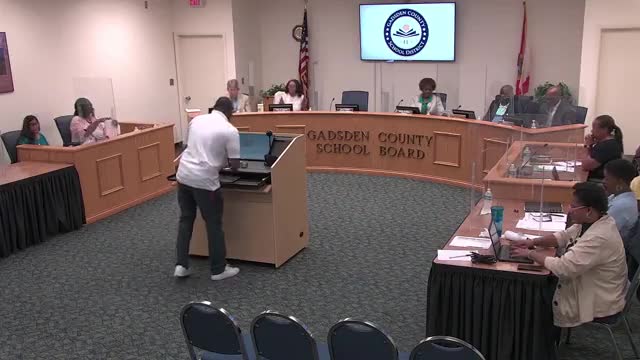
Enterprise Fleet Management representatives presented a proposed lease plan to replace the Gadsden County School District's ageing "white fleet" vehicles, recommending an initial focus on 16 of the oldest units to improve safety and lower maintenance costs.
The proposal, delivered by Simon Ortega and a colleague identified as Gene, was framed as a financial and operational alternative to continuing to operate a largely out-of-warranty fleet. Enterprise's modelling, using district data, estimated current annual maintenance at about $56,000 for the fleet and indicated the district's combined capital, maintenance and fuel spend without a leasing program would be roughly $171,000 per year. Enterprise proposed a 10-year replacement model that would shorten vehicle life cycles from the district's current average of 14.2 years to approximately five years and conserve an estimated $75,490 over ten years while freeing about $48,395 in capital from salvage in the first year.
Enterprise noted safety features would increase with replacement: the district's fleet data showed that a large share of vehicles predate safety standards such as anti-lock brakes, electronic stability control, rear automatic braking and backup cameras. The presenters said replacing the oldest vehicles would meaningfully lower maintenance and fuel costs and provide a predictable, consolidated monthly expense that includes maintenance scheduling and reminders handled by the vendor.
District staff described internal modelling and a financial comparison. Transportation and operations staff reported the district had spent roughly $50,000 on repairs this year for the white fleet and that replicating Enterprise's outsourced maintenance approach in-house would likely require two additional mechanics and about $78,000 in salary cost, which they estimated would push five-year costs to about $630,000. Staff explained the proposed vehicle payments would be staggered as vehicles arrive and that the annual payment burden would be a cost shift paid from capital outlay (vehicle purchases and maintenance historically funded from capital outlay) rather than general operating funds.
Enterprise and staff recommended replacing 16 vehicles in the program's first year; staff said the year-1 net cost would be comparable to earlier estimates once resale proceeds are factored in. The vendor said the plan was designed to work within existing budget constraints (the district's current capital budget was described as approximately $72,000, with maintenance about $56,000 and fuel about $43,000).
Board members generally expressed support for improving vehicle safety and reliability but raised several concerns: long-term dependency on the vendor and the district's ability to rebuild a municipally owned fleet if future boards or administrations choose to stop leasing; the potential impact on capital outlay funding already constrained by a state refund obligation tied to a new school project; and the need for an alternative option (purchase/finance) to be fully developed for comparison.
One board member asked whether the district could pilot fewer vehicles and then transition to locally owned purchases over time; staff and Enterprise said that is possible but would require proactive planning to rebuild a vehicle-acquisition program. Board members also discussed the contract flexibility: Enterprise staff said the company aims to provide flexibility and not to "hold vehicles hostage" if the district later decides to end the partnership.
Staff recommended the board consider a recommendation to approve a 16-vehicle program and indicated the item will be placed on the next board meeting agenda for formal consideration. No vote was taken at the workshop.