Get Full Government Meeting Transcripts, Videos, & Alerts Forever!
Get email alerts on the Emergency Management topic
No spam. Unsubscribe anytime.
Columbia County staff review storm-response changes, urge board to adopt 'blue‑skies' policy
Summary
County emergency management staff reviewed updated state requirements, new logistics and communication procedures, and operational changes to shelters, donations and supply distribution; staff will bring an opt‑in contract for the state's recovery-tracking system and a draft policy for board consideration on Aug. 7.
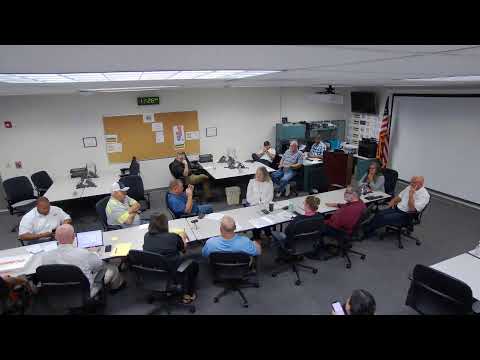
County emergency-management staff and partner agencies used a July workshop to brief commissioners on procedural changes that followed last year’s widespread storm response, to preview compliance requirements from the Florida Legislature and state emergency management, and to ask the board to adopt a written “blue‑skies” policy that would set expectations for future activations.
The presentation, led by county emergency personnel and partner agency leads, covered three near-term items staff said the board must address: (1) an opt‑in contract to the state recovery tracking system, (2) tightened procedures and staffing for the county’s Citizens Information Center and shelter/pod operations, and (3) a blue‑skies policy to define what the county will provide immediately after a storm and when the county expects state reimbursement.
Why it matters: staff said written guidance adopted before a storm will reduce confusion during an emergency, make reimbursement claims more defensible to state and federal reviewers and limit ad‑hoc last‑minute direction that expanded operations during last year’s event.
What staff told the board
Florida requirements and the state recovery system. Staff described a recent training and a state process variously labeled in the briefing as FRAC/EProck (identified by presenters as a Florida recovery allocation/tracking system that is integrated with FEMA). Presenters said Senate Bill 180 (cited by staff during the workshop) now requires counties to submit an emergency plan using the state template and requires elected officials to complete designated training. County staff said they will place an opt‑in contract for the recovery system on an upcoming board agenda; if the board approves, the county will be enrolled and renewed automatically each year unless it opts out.
Communications and public information. Jennifer Dubose, Citizens Information Center coordinator, described updates to the CIC and staffing rotations. "The Citizens Information Center is our filter for everything that is non emergent," Dubose said, and she said the CIC now collects standardized, geolocated requests for help (food, water, tarps, damage assessment) so the county can prioritize and track response. Dubose said the CIC has 17 positions authorized for call takers, 15 of those are currently trained, and staff rotate in multi‑day shifts to maintain operations during an activation. She also said the county has added a section in the CIC intake to track donated items and requests and that donations will be routed to a designated county liaison (Bethany) for coordination with nonprofits.
Shelters, pre‑staging and pods. Staff described a new logistics approach to reduce on‑scene scrambling: each shelter will have a pre‑packed cage (blankets, first‑aid, sign‑in sheets, basic supplies) ready to roll, and the county is refurbishing three trailers to deliver pre‑staged shelter supplies. Staff said the special‑needs shelter remains Westside Elementary School and that the health department will staff it and provide oxygen and other equipment for patients who are electrically dependent. Shane Overstreet and county logistics staff previewed use of the state ordering platform WebEOC for requesting state resources and emphasized that accurate, specific requests (including operator requirements) reduce delays.
Supply distribution and reimbursement window. Staff reiterated training guidance that state reimbursements for supplies and pods may be limited if big‑box retailers are open in the region; presenters said the state gives a 24‑hour window after retail re‑opening before some state support becomes non‑reimbursable. Staff urged commissioners to consider geography in a written policy, noting rural areas that are many miles from large retailers may need county support beyond a 24‑hour retail‑reopening trigger.
Improvements and staffing gaps. Staff described new inventory tracking, a plan to have a single county contact for resource requests, and a new public‑information officer post to limit misinformation. They also described persistent operational gaps: distribution teams that hauled and handed out pallets last year were small and physically taxed, and staff asked the board to authorize more site staffing, equipment (forklifts/conex boxes), and to pursue a centrally located, climate‑controlled warehouse for pre‑staged supplies.
Legal and policy guidance. County Attorney Joel Foreman (present in the workshop) reviewed legal constraints for work on private roads and restored services: life‑safety work during an emergency (removing a tree that blocks a road, making an impassable road passable) can be done without private‑property consent, but longer‑term restoration and improvements may require property owner consent and can affect FEMA reimbursement determinations. Foreman and staff urged commissioners to adopt written guidance in calm weather so decision points are clear during a response.
Board direction requested and next steps. Staff said they will return with two primary items: (1) an opt‑in contract for the state recovery tracking system and (2) a draft blue‑skies policy that codifies what the county will provide (shelters, number/size of pods, tarp distribution, prioritized areas) and how the county will weigh reimbursement risk versus immediate need. County staff asked commissioners to review the previously circulated plan, provide comments, and be prepared to vote on an updated policy at the Aug. 7 meeting.
No final votes were recorded in the workshop. Staff characterized the session as a working briefing and requested direction and feedback so they can present formal agenda items to the board.
Ending
County staff said the changes are intended to streamline response, improve documentation and reimbursement outcomes, and minimize repeated disagreements about what the county will provide during future storms. Staff asked the board to send any policy edits by email so staff can finalize a draft for adoption at the next scheduled meeting.