Get Full Government Meeting Transcripts, Videos, & Alerts Forever!
Get email alerts on the Small Business Support topic
No spam. Unsubscribe anytime.
Board members introduce Worker Opportunity to Purchase Act and small‑business protections package
Summary
Supervisors introduced legislation to give workers a first opportunity to buy businesses when owners sell and other measures to support small businesses facing displacement, including possible conditional‑use protections and a construction/relocation relief fund.
Supervisor Aaron Peskin and Supervisor Chan and others introduced a package of measures aimed at preserving small businesses and giving workers a pathway to ownership.
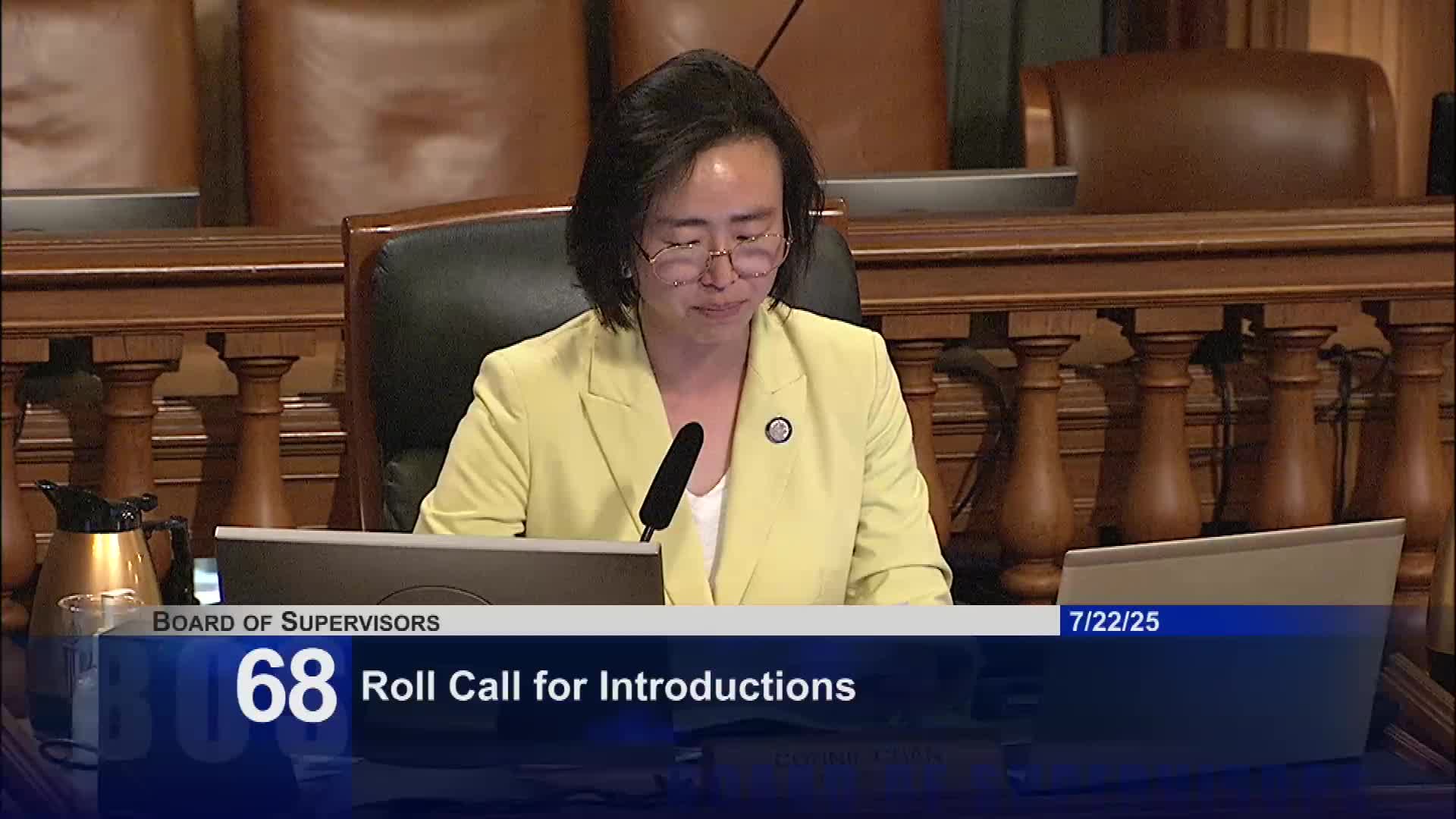
Supervisor Chan introduced the Workers' Opportunity to Purchase Act (WOPA), modeled on existing community‑purchase frameworks, that would give employees a right of first opportunity to purchase a business offered for sale and provide legal and financial support and cooperative conversion incentives. The ordinance aims to stabilize neighborhood businesses and create a succession pathway for retiring owners.
Supervisor Chan also said she intends to introduce an ordinance to convert an existing interim zoning control into a permanent conditional‑use requirement when a new business seeks to occupy premises where a legacy business could be displaced (an expansion of protections for legacy and neighborhood‑anchoring businesses). The board received public comment from multiple workers, legal practitioners and small‑business advocates who helped draft or support WOPA, including Benji Kaplan of Green Apple Books and attorney Paola Eisner (Tuttle Law Group), and representatives from the Sustainable Economies Law Center. Speakers described WOPA as a tool to prevent asset‑stripping and encourage cooperative conversions and noted that worker ownership can preserve jobs and neighborhood character.
These items were introduced and will return to committee for further drafting and public hearings. No binding vote was taken on principal ordinance language on July 22; supervisors said they expect detailed drafting and stakeholder engagement before the measures return for committee and potential adoption later in the year.