Get Full Government Meeting Transcripts, Videos, & Alerts Forever!
Get email alerts on the Parks And Recreation Master Plan topic
No spam. Unsubscribe anytime.
Elizabeth Parks & Recreation presents master plan to Elbert County; residents favor rec center, trails and open‑space preservation
Summary
Elizabeth Parks & Recreation District presented a draft 15‑ to 20‑year master plan to the Elbert County Board of Commissioners outlining resident priorities — a recreation center with aquatic facilities, connected trails and preserved open space — based on outreach to roughly 700 people.
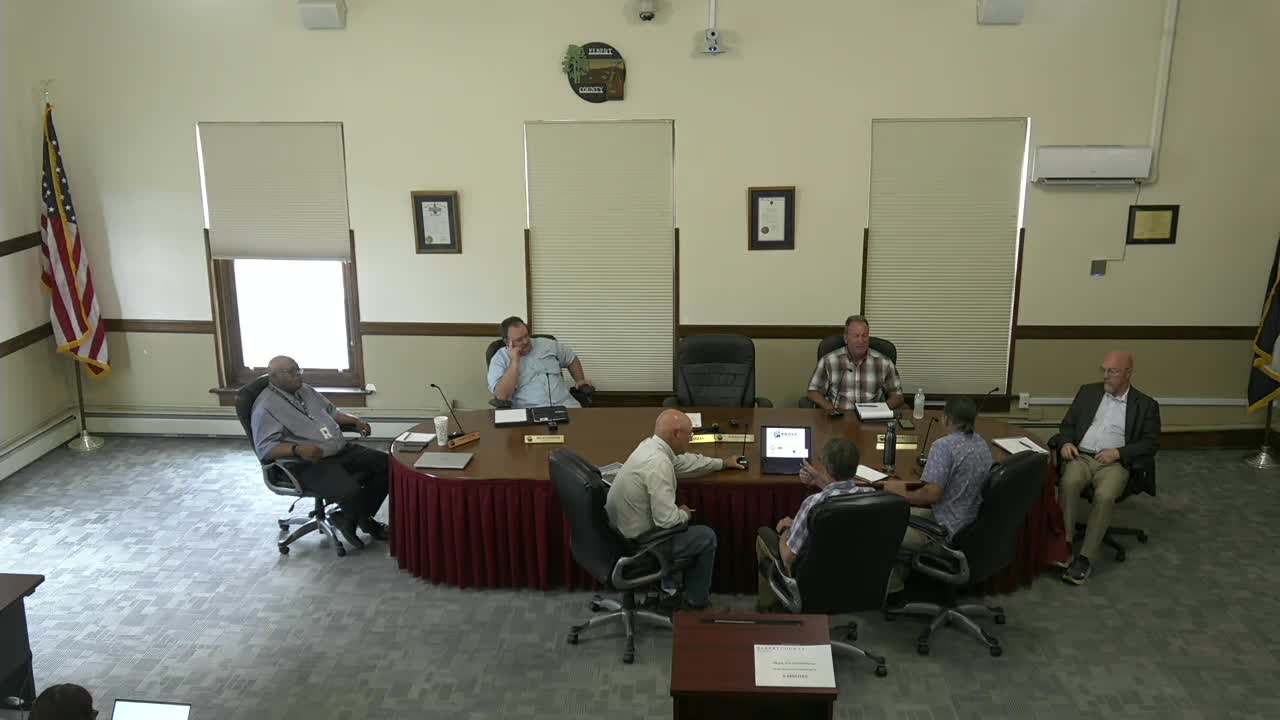
Elizabeth Parks & Recreation District Director Mike Barney and consultants briefed the Elbert County Board of Commissioners on a draft master plan for the town of Elizabeth and surrounding school district, saying the plan responds to rapid population growth in the northern part of Elbert County and to input gathered from residents.
The master plan, developed by SCJ Alliance with Catamount Studio, condenses eight months of analysis and community engagement into a 15–20‑year vision for parks, trails, open space and recreation programming, the presenters said.
The plan matters, the consultants told commissioners, because growth in the northern district is outpacing amenities: residents are leaving the area to use open space, trails and aquatics facilities, and the plan identifies gaps and near‑term projects to address them.
Consultant Critter Thompson said the outreach program reached roughly 700 people, including about 61 respondents ages 12–17 through student government activities. The outreach included stakeholder interviews and community workshops. Based on that engagement and facility inventories, the plan identifies several near‑term priorities: active play areas, community gathering spaces, a recreation center with aquatics, and an expanded trail network.
The presentation emphasized that many existing parks and school properties are concentrated in and around the town of Elizabeth, creating service gaps in outlying neighborhoods and new developments. The consultants showed maps and inventories of publicly owned parcels — including park district and county land — and noted that some county parcels could be programmed to serve northern neighborhoods.
On cost and funding, the consultants said survey responses indicated some willingness among respondents to pay for a recreation center. One slide summarized responses from about 84 participants indicating a willingness to pay roughly $24 per month in a voluntary fee model to support a rec center; consultants said that figure is consistent with earlier local efforts. The presenters also noted that previous attempts to fund a rec center by mill levy had failed in part because voters objected to ballot language stating a facility “may include a swimming pool” and because there was no sunset clause on the levy.
The plan’s stated vision calls for preserved open landscapes, connected parks and trails that “foster community, promote well‑being, and sustain our community’s unique character,” language the consultants said is meant to reflect resident preference to preserve the area’s rural character rather than pursue denser commercial development.
The consultants pointed commissioners to conceptual park designs developed with high school students and to a phasing framework that prioritizes projects in growth areas. They recommended continued coordination with Elbert County Road & Bridge on trail design along road rights‑of‑way and with land‑use review processes so trail corridors and park components can be incorporated as developments advance.
The master plan report is expected to be published in the next couple of weeks; presenters said they will deliver the final draft to the county and town staff and follow up on specific implementation questions.
For now, the plan frames priorities and near‑term projects for the district and identifies options for funding and management; it does not commit the county to specific acquisitions or capital outlays.