Get Full Government Meeting Transcripts, Videos, & Alerts Forever!
Get email alerts on the Ev Charging Infrastructure topic
No spam. Unsubscribe anytime.
Seneca County public-works committee approves amended plan to accept Power Management EV charging grant, sends resolution to full board
Summary
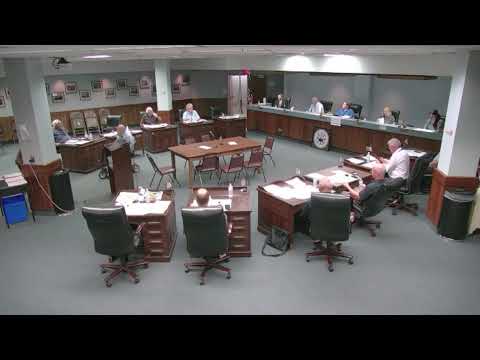
The Seneca County Public Works Committee voted Tuesday, July 22, to send to the full Board an amended resolution to accept a Power Management grant and install three new dual‑port ChargePoint electric‑vehicle charging stations at county property, after a vendor presentation and follow‑up questions about costs and timelines.
The Seneca County Public Works Committee voted Tuesday, July 22, to send to the full Board an amended resolution to accept a Power Management grant and install three new dual‑port ChargePoint electric‑vehicle charging stations at county property, after a vendor presentation and follow‑up questions about costs and timelines.
The presentation to the committee was given by Bridal Byrd of Power Management Company, who described a turnkey proposal with an equipment-and-installation price of about $54,000, a NYSEG rebate of roughly $38,000 and an available federal incentive that Power Management estimated at about $16,170 (a U.S. Treasury payment mechanism). Byrd said those amounts would reduce the county’s initial out‑of‑pocket cost to “net $0” for the installation, but that ongoing network and warranty fees would apply after year one.
Why it matters: the county’s current chargers at the electrical barn are largely nonfunctional, committee members said, and the proposal would replace six aging ports with three modern dual‑port stations (six usable parking spots). Committee members said they wanted to capture available utility and federal incentives before those programs change or funds are exhausted.
Byrd said the recommended equipment is ChargePoint brand and that the vendor includes the first year of the network cloud service and a one‑year warranty in the upfront price. She said the county would be responsible for network service fees after year one — quoted in the proposal as about $2,500 per year for the six parking spots — and that ChargePoint or payment processors would retain transaction fees (Byrd cited a roughly 10% transaction fee in the vendor’s example and an annual payment‑processing/service fee noted in the proposal).
Committee members asked how the stations would bill users. Byrd said drivers normally use the ChargePoint mobile app or an RFID card; the proposed units do not accept direct credit‑card tap payments (those units exist but are materially more expensive and would likely eliminate the proposal’s “net‑zero” upfront benefit). Byrd advised the county to check with its accountants about the federal incentive and said Power Management would apply for the NYSEG rebate on the county’s behalf.
Several supervisors raised budget‑cycle and procurement questions. The committee clarified that the vendor expects site activation in roughly two months after a “go” decision, which would put the start of year‑one service near the county’s next budget cycle; committee members noted network service costs would therefore fall into future budgets. Committee members also asked whether formal bids were required because the total installed cost exceeds $50,000; the county attorney and finance staff were asked to review procurement rules and to confirm whether the net‑out arrangement changes the bid requirement.
After discussion, the committee voted to amend the resolution’s language removing year two from the vendor‑covered network service and leaving the county responsible for any network service beginning in year two. The amendment carried on an oral vote; the resolution as amended then carried and will be forwarded to the full Board for final action.
The committee did not approve an explicit multi‑year network commitment beyond the first year; Byrd said utilities that provide make‑ready funds generally require five years of network reporting, and that, in rare cases, utilities could seek repayment if network service is discontinued before an agreed period. Byrd also noted some incentives and manufacturer promotions referenced in the vendor materials had expired (a manufacturer promotion ended July 11, she said).
Next step: the amended resolution will be placed on the Board agenda for final consideration. The committee asked staff to confirm procurement and budget treatment with the county attorney and finance office and to return any additional contract language or budget amendments to committee or the Board as needed.