Get Full Government Meeting Transcripts, Videos, & Alerts Forever!
Get email alerts on the Substance Use Recovery topic
No spam. Unsubscribe anytime.
Zoning board approves Victory Recovery Homes special exception at 3335 S. 15th St., with conditions
Summary
The Allentown Zoning Hearing Board granted a special‑exception request to operate a 9–12 month recovery program at 3335 South 15th Street, subject to licensing, code compliance and any required sewage planning review. The decision followed public comment from neighbors, the adjacent church and city staff on fire and occupancy rules.
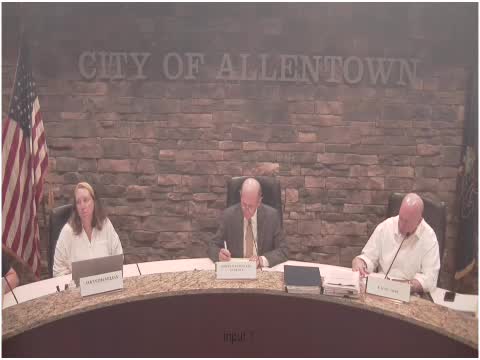
The Allentown Zoning Hearing Board on April 19 approved a special‑exception application by Living in Victory LLC to operate a residential recovery program at 3335 South 15th Street, conditioned on obtaining required licenses and meeting building, property‑maintenance and fire codes.
Matthew Catricola, introduced himself in the hearing as “a pastor and also the director of this recovery home,” and testified that Victory Recovery Homes would run a “9 to 12 month recovery program” at the property with a three‑level regimen of meetings, chores, devotions, weekly casework and drug testing. Catricola said the facility’s narrative and mission statement were included in the application packet and that the maximum planned resident capacity is about 15, with one awake house manager on site 24 hours and typically two to three staff during daytime hours.
The board’s decision follows testimony from neighbors and nearby institutions. Marlene Hernandez, assistant director of Love You More Early Learning Center, told the board parents were “a little concerned” about the proximity of the facility to the daycare and asked what background checks would be performed on residents. Carlos David, a nearby resident and parent, expressed similar worries about staffing levels and the facility’s closeness to the church and playground. By contrast, Jane Matzinger, pastor of the adjacent church, testified she welcomed the program: “Putting it next to the church, in my mind, is one of the best things that anybody could do,” and said the church could play a supportive role.
City staff and code enforcement also testified. A city representative recommended the board impose conditions addressing fire‑safety upgrades and potential sewage‑planning review. Tyler Galloway, identified as a housing inspector and code enforcement officer for the City of Allentown, said the use would likely be classified under the International Property Maintenance Code as a rooming house and summarized minimum room‑size and common‑area requirements. Galloway told the board the property “could accommodate the scribed occupancy and compliance with the IPMC” but noted staff and other occupants must be included in occupancy calculations. The fire marshal’s email (entered into evidence by city staff) advised that increased occupancy would require at least a manual fire alarm system and other upgrades.
Catricola confirmed the applicant would seek required licensing and said DDAP (Pennsylvania Department of Drug and Alcohol Programs) licensing would be required; he also agreed that approval should be conditioned on obtaining all necessary licenses and permits and on compliance with building, property maintenance and fire codes. He described intake and monitoring practices (urine testing, camera monitoring of exterior spaces) and said the program is selective in admissions.
After discussion, the board approved the special exception with conditions that the applicant: obtain all required permits and DDAP licensing before operation, comply with the city’s building/property maintenance and fire codes and submit a sewage‑planning module to PADEP or the city if required by engineering review. A motion to approve the request with those conditions passed (recorded as two ayes and one nay in the hearing transcript); a board member who voted against the motion said the objection was narrowly grounded in legal interpretation of nonconforming‑structure rules rather than the substance of the use.
The board’s file includes the applicant’s exhibits describing program rules, site and floor plans and an updated room‑by‑room measurement supplement the applicant commissioned after purchase. The city entered a fire marshal email and code guidance exhibits that staff said should inform any conditions the board attaches.
The approval allows the operator to pursue licensing and required code upgrades; the applicant and several supporters told the board they would work with neighbors and the church to monitor neighborhood impacts. The decision does not waive licensing or code requirements; city staff said inspections and rental registration would follow and any violations would have to be corrected before operation.
Votes at a glance: the motion to approve the special exception with the stated conditions passed (ayes recorded in the transcript and one opposing vote).