Get Full Government Meeting Transcripts, Videos, & Alerts Forever!
Get email alerts on the Museums Culture topic
No spam. Unsubscribe anytime.
Skagit County Historical Museum reports growing participation, inventories collection and flags radon, repair and funding needs
Summary
Museum staff told Skagit County commissioners that 3,866 people participated in museum activities since its last report, described ongoing digitization and inventory work, outlined building repairs and a radon mitigation effort, and asked for continued volunteer and donor support.
The Skagit County Historical Museum reported that 3,866 people participated in museum activities since its last update and outlined ongoing efforts to inventory and digitize its collections, repair building damage and mitigate elevated radon in a storage area.
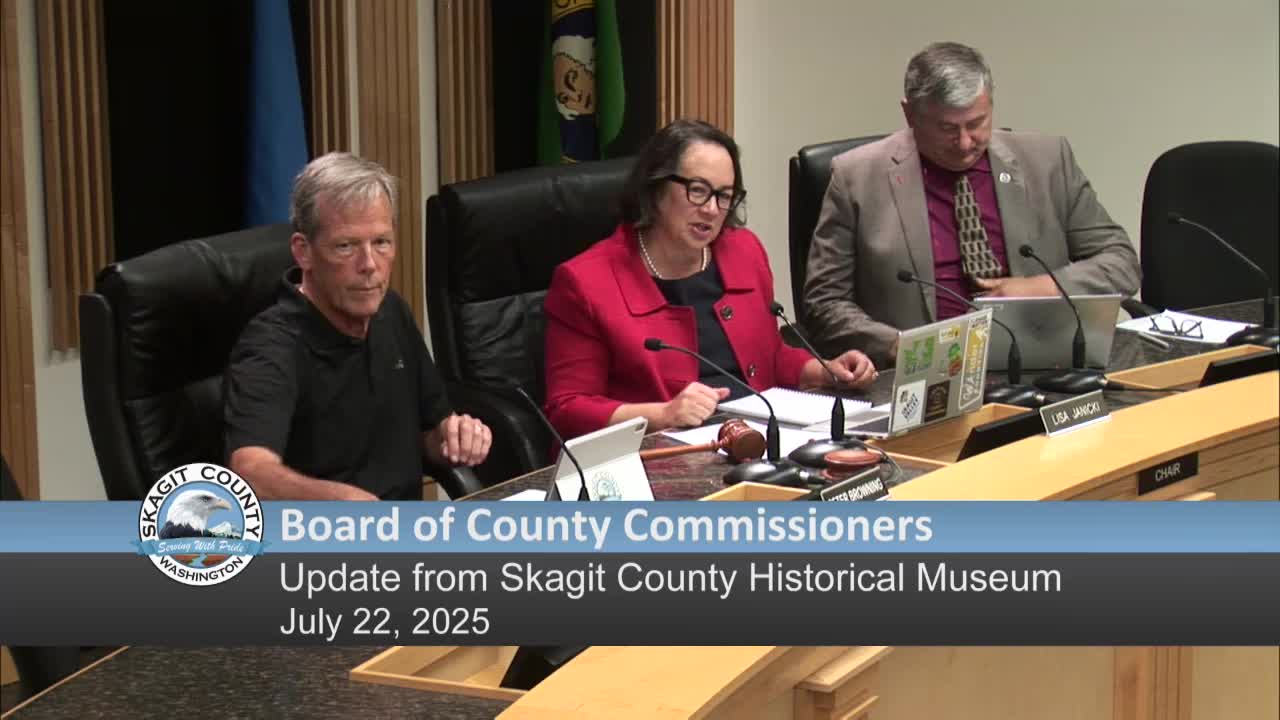
Museum staff presented the update Tuesday, July 22, during the Skagit County Board of County Commissioners meeting. The presentation described recent exhibits and receptions, volunteer-led inventory work, a digital photo project funded in part by a federal grant program, and near-term building repairs funded by local foundations.
"3,866 people have participated in museum activities since we last joined you," the presenter said, describing a string of rotating exhibits that included a rodeo-themed show and a community juried art exhibit. The museum reported 103 entries in the current art exhibit and voting open to the public through August 15, with winners to be announced in November.
Why it matters: the museum is managing a large physical collection with limited staff and storage. The presentation emphasized that completing the digital inventory will help staff and researchers locate objects without consulting paper card files and will support loans and exhibits.
Inventory, digitization and education work Museum staff said collection manager Laney and archivist Mary Densmore have focused on accessioning, cataloguing and photographing objects for the museum database (PathPerfect). The presentation said staff have entered 23,336 objects into PathPerfect and that 14,914 of those object records include photos.
The museum described a negatives collection scanned as part of a ‘‘digital heritage’’ grant administered through the Institute of Museum and Library Services; staff said about 6,225 negatives remain in the scanned set and that interns and volunteers are working to identify people, places and dates. A youth education coordinator and docent-led programs reached roughly 1,450 students in the 2024–25 school year, the presentation said.
Building repairs, radon and finances The museum reported recent exterior repairs — including replacement of a leaking back wall and windows — funded by the Skagit Community Foundation and the Sam and Collin Nunn Foundation. Staff also described an incident in which a vehicle struck the side of the building and repairs are ongoing.
Staff told commissioners they are monitoring elevated radon levels in a storage space (the museum referred to it as the "rock room"), have installed monitors and are sealing affected areas. The museum said volunteers are temporarily restricted from working in the textile and hat storage rooms until mitigation reduces the risk.
On finances, the presenter said operating expenses are rising while grant opportunities for museums and arts organizations have declined; staff asked residents to consider membership, donations or event sponsorships to support operations.
Upcoming events and volunteers The presentation listed several public events: a Public History Day at the former Northern State Hospital (the coming Saturday from 9:30 a.m. to 4 p.m.), a Pioneer Picnic on Aug. 7, and the museum annual meeting on Sept. 24 at Skagit City School. Staff credited volunteers and seven museum employees (one full-time, the remainder part-time) with keeping programs and collections work running.
Commissioners asked staff to place event dates on their calendars and thanked museum volunteers. Board members and museum board members who attended were introduced during the meeting.
The museum advised the commissioners that the research library is available by appointment five days a week and encouraged the community to visit, join and support the historical society.