Get AI Briefings, Transcripts & Alerts on Local & National Government Meetings — Forever.
Houston OEM outlines alert system tiers, urges residents to enroll in Alert Houston and STEER
Loading...
Summary
Brian Mason, director of the City of Houston Office of Emergency Management, presented the city’s three-tier communications approach—day‑to‑day outreach, enhanced pre‑incident messaging, and federal wireless alerts—reiterating that Alert Houston and STEER require opt‑in while IPAWS/WEA can geotarget phones.
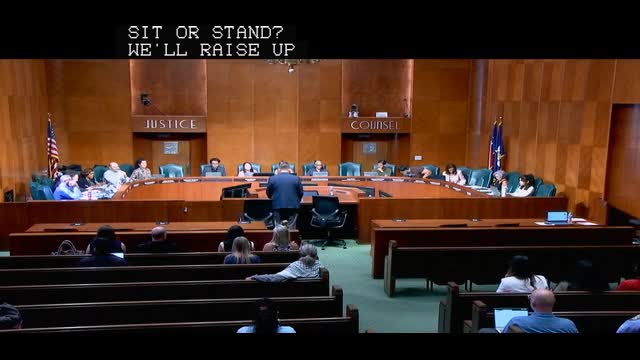
Brian Mason, director of the City of Houston Office of Emergency Management, told the council committee the city uses three tiers of public communication—“blue sky,” “gray sky” and “black sky”—to reach residents before, during and after incidents.
Mason said blue‑sky work is the day‑to‑day preparedness outreach the office performs 365 days a year, including a 2024 website refresh, multilingual content and social media. “You can simply text alert Houston, all 1 word, to 888777, and that will get you into our system,” Mason said, describing how residents enroll in Alert Houston.
The nut graf: Mason said the city supplements ordinary outreach with targeted tools: Alert Houston and the State of Texas Emergency Assistance Registry (STEER) are opt‑in services for enhanced messaging to enrolled residents, while IPAWS/WEA (the federal wireless alert system administered by FEMA) can send geotargeted emergency messages to all phones in a drawn area.
Mason described the differences and recent use: since he started in August, OEM sent five Alert Houston messages (three tied to winter weather, one for a prescribed burn, one for a severe thunderstorm) and seven STEER notices (five winter weather, two hurricane preparedness). He said STEER, managed by the Texas Division of Emergency Management, targets vulnerable residents and that OEM has about 4,600 STEER enrollments, of which roughly 1,000 are medically fragile.
On IPAWS/WEA, Mason explained why the system can reach phones that did not opt in and how it can be used for imminent threats. “Usually, when you would get an IPAWS message, especially from City of Houston OEM, that is because we are warning you to take some type of immediate action,” he said, listing examples including chemical releases, shelter‑in‑place orders and targeted evacuation messaging.
Committee members pressed on gaps and outreach. Council Member Marikayman raised the prospect of communications when cell service and telecoms are down; Mason said there is “not a real good answer” and emphasized NOAA weather radios and other lower‑tech options. Marikayman and other members discussed piloting distribution of NOAA radios, testing drone or loudspeaker pilots for immediate neighborhood‑level outreach after outages, and providing funding for pilot programs.
The committee and OEM also discussed enrollment rates and outreach strategies. Mason said about 112,000 people are enrolled in Alert Houston—roughly 5% of Houston’s 2.5 million population—and OEM is pursuing marketing partnerships and events to raise that figure. Council members asked OEM to produce shareable graphics and materials that elected officials can distribute to encourage enrollment.
Mason described internal operational items: a 24/7 duty officer program to field city department requests, monthly IPAWS credential checks required to maintain alerting authority, and the city’s practice of standing up a joint information center for unified messaging during evolving incidents.
Ending: Committee members asked OEM to continue outreach, return with possible pilot ideas (NOAA radio distribution, neighborhood loudspeaker pilots, marketing partnerships) and supply shareable materials for council offices. Mason invited council staff to provide ideas and said OEM will coordinate with media partners to remind residents how to re‑enable emergency alerts on phones.