Get Full Government Meeting Transcripts, Videos, & Alerts Forever!
Get email alerts on the Homelessness Policy topic
No spam. Unsubscribe anytime.
Residents and advocates urge council to reconsider expansion of downtown civility ordinance, warn it could criminalize unhoused people
Summary
Multiple speakers warned that the proposed expansion of the downtown civility ordinance — including bans on sitting, lying and leaving personal property on sidewalks — would criminalize unhoused people and asked the council to invest in housing and wraparound services instead.
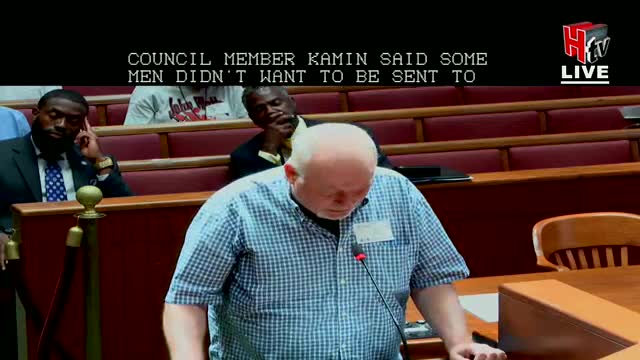
A string of public commenters on Tuesday urged Houston’s City Council not to expand the downtown civility ordinance in ways that would ban sitting or lying and would penalize people for having personal items on sidewalks.
Speakers including Alex Grandstaff, Richard Rogers and Neil Aquino said the expanded rules would criminalize people experiencing homelessness, harm people with disabilities and others already at higher risk of housing instability, and push people into courts, jails and services rather than into housing.
"This expansion is nothing more than a cruel attack on a portion of our population that never once chose to be in the situation they are in," said Richard Rogers during public comment. Several speakers echoed that enforcement without sufficient shelter or services would amount to displacement rather than ending homelessness.
Other testimony raised procedural and civil‑liberties concerns: Neil Aquino asked the council to require tracking or follow‑up on the outcomes of people HPD turns over to federal immigration authorities, saying the city currently records handoffs but not downstream outcomes.
Speakers called for council to prioritize funding for housing, mental‑health services, benefits access and job supports rather than criminal penalties. Several asked the council to pause the ordinance expansion and develop clear metrics for success, such as placements into housing and available shelter beds before citations are issued.
Council members did not take a vote on the ordinance during the public comment period; speakers said they will submit written recommendations to council offices for consideration before upcoming votes.