Get Full Government Meeting Transcripts, Videos, & Alerts Forever!
Get email alerts on the City Budget topic
No spam. Unsubscribe anytime.
Youngsville adopts record $53.7M budget for FY26; amends FY25 budget
Summary
The Youngsville City Council held a public hearing and voted to amend the FY24–25 budget and adopt a $53.7 million FY26 operating and capital budget that includes major road, utility and parks projects, utility rate increases and a 3% COLA for most staff.
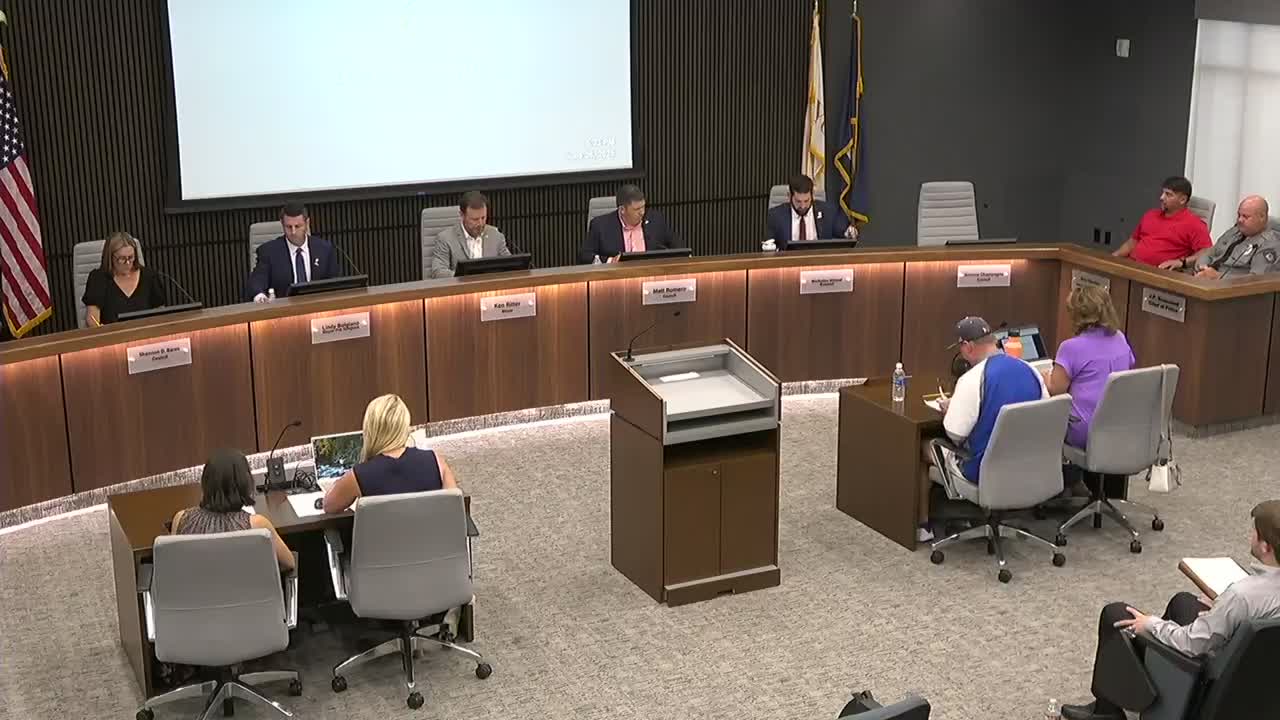
The Youngsville City Council adopted a fiscal year 2025–26 budget of roughly $53.7 million and approved an amendment to the current fiscal year budget after a public hearing Thursday evening.
The FY26 budget passed after a motion by Council Member Romero and a second by Council Member Bolgiano. The council also approved an amendment to the adopted FY26 budget to add a 3% cost-of-living increase for the mayor and city council; Chief of Police opted not to be included in that amendment.
The FY26 plan lists total capital projects of about $35.8 million, including roughly $20.8 million in street and road work, $13.1 million in utility projects (including a new water treatment plant, pump-station upgrades and wastewater treatment plant enhancements) and about $1.3 million in parks and recreation improvements, including Youngsville Park & Rec lighting and linear-park work. Brad Kolder, CPA, who presented the budget, told the council the large road projects—Highway 89 widening and Fortune Road extension/roundabout—are state capital outlay projects anticipated to be reimbursed at about 75 percent; the La Riva Road reconstruction is expected to be funded 80 percent by a Federal Highway grant.
Kolder said utility revenues are projected to rise with growth in housing and a 4% increase in utility customers effective July 1, 2025; he also noted planned rate increases of 4.8% for water and sewer and 6.1% for garbage, in line with the consumer price index. The budget includes a 3% cost-of-living adjustment for full-time, non-elected employees and a separate 3% increase for the fire department, funded by an anticipated 4% increase in ad valorem property taxes.
The sports complex was highlighted in the presentation because projected operating revenues for FY26 rise to about $1.66 million, largely driven by a new special event expected to add roughly $250,000 in revenue and $225,000 in related expense. Kolder said depreciation heavily affects the facility's reported operating loss, but when depreciation and certain transfers are considered the sports complex cash-flows.
Kolder summarized the city-wide revenue picture: total revenues climb from about $38.5 million in the current year to nearly $49.2 million in FY26 (the higher number reflects state and federal grants and other non-operating revenues counted in FY26). He emphasized the importance of grant reimbursements and noted some grants require the city to pay costs up front and seek reimbursement, which can create cash-flow demands during project execution.
The council voted to approve the amended FY24–25 budget (ordinance 5042025) on a roll call with all members present voting yes. The FY26 budget ordinance (5052025) passed on a roll call vote with all council members voting yes after the amendment to include the 3% COLA for the mayor and council was agreed.
The council also adopted related budget housekeeping motions earlier in the meeting, including approval of the June 12, 2025 meeting minutes.
Why it matters: the FY26 budget is the largest in Youngsville’s history and funds major infrastructure projects expected to be largely subsidized by state and federal grants. The adopted rate and user-count changes for utilities and the large capital program will shape city operations and cash flow in the coming year.
Council members and staff said they will continue monitoring grant reimbursements and internal transfers to manage cash flow during the capital program.
Votes referenced in this article are recorded in the meeting minutes and ordinance numbers appear on the agenda and adopted documents.