Get Full Government Meeting Transcripts, Videos, & Alerts Forever!
Get email alerts on the Infrastructure Sewer Services topic
No spam. Unsubscribe anytime.
Truckee Sanitary District GM describes sewer infrastructure, maintenance and public outreach
Summary
Sona Schlosser, general manager of the Truckee Sanitary District, summarized the district’s service area, infrastructure and maintenance work — including inspections, lift stations and public outreach — and urged residents to avoid flushing wipes and other items that damage the system.
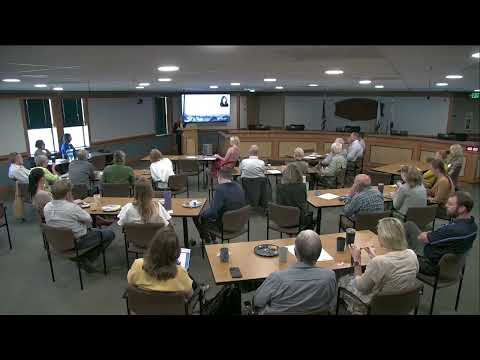
Sona Schlosser, general manager of Truckee Sanitary District, told the Truckee Chamber of Commerce the district is responsible for collecting and conveying wastewater across roughly 39 square miles of service territory and for protecting public health and the environment.
Schlosser said TSD serves primarily in Nevada County with a portion of its territory in Placer County. She described inspection and maintenance practices including camera inspection vans, Vactor trucks and high‑pressure water cleaning to remove roots and FOG (fats, oils and grease). “To do inspections, we actually use camera systems... the camera goes into the pipes and takes video,” she said. When the cameras find roots or FOG buildup, crews clean the lines and perform repairs.
Schlosser gave several operational numbers and historical notes: the district covers about 39 square miles, was formed to protect public health in the early 1900s, and turned over wastewater treatment to the Tahoe Truckee Sanitation Agency (TTSA) in 1972. She described TSD’s infrastructure as including lift stations and overflow tanks in the Donner Lake area used to protect system flow.
Public education is a major focus for the district. Schlosser urged residents not to flush “flushable” wipes, noting those items do not break down and cause blockages. She described community outreach at Truckee Day and Earth Day, and noted the district leases land to the Parks Department to support public recreation.
On maintenance, Schlosser explained the district’s use of equipment: camera inspection vans to identify issues, Vactor trucks and hydro‑excavators to scour lines, and daily locate services to protect buried infrastructure during excavation. She highlighted the district’s operations and administrative teams and thanked staff and board members in attendance.
Schlosser concluded with contact information for follow‑up questions and said the district intends to continue inspection, repair and customer education work to protect waterways and public health.