Get Full Government Meeting Transcripts, Videos, & Alerts Forever!
Get email alerts on the Public Comment Policy topic
No spam. Unsubscribe anytime.
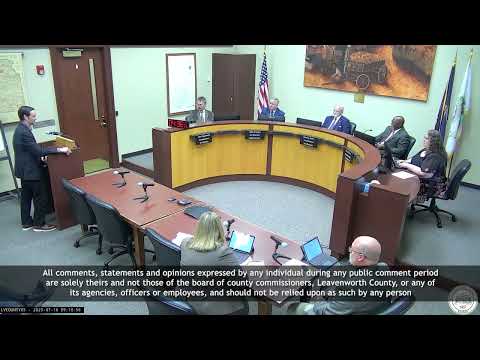
Leavenworth County to move public comment to start of meetings and keep five-minute speaker limit
Summary
Commissioners directed staff to revise the county’s public comment policy so people may speak at the start of meetings, retain a five-minute limit per speaker, and remove the 25-minute aggregate cap; staff will return a formal policy for future meetings.
The Leavenworth County Board of Commissioners gave staff direction to revise the county’s public-comment policy so that members of the public may speak at the start of regular meetings and to remove the 25‑minute aggregate cap, while retaining a five‑minute limit per speaker. The board also instructed staff to return a finalized policy for the commission’s approval.
Why it matters: Several commissioners said people travel long distances to attend weekday meetings and should be allowed to speak early rather than waiting through presentations and agenda items. Commissioners balanced that access goal against the practical risks of very large comment periods when hundreds of people attend.
Details of the direction - The board’s direction (by consensus) was to allow public comment at the beginning of the meeting, keep the five‑minute limit for each speaker, and not impose a strict total-time cap. The chair and other commissioners retain discretion to limit repetitive remarks or manage exceptionally large crowds. - The board asked staff (Mark) to draft a revised policy and bring it back for formal action. The commissioners discussed allowing limited additional comment at the end of the meeting for matters that arise later in the agenda.
Quotes - “People are driving 45 minutes to get here,” Commissioner Mike said, urging removal of the 25‑minute cap. - “We don’t want to spend four hours when 300 people show up,” one commissioner said, citing the operational challenges when many speakers repeat the same testimony.
Next steps: Staff will prepare a revised public‑comment policy that implements the board’s direction and present it to commissioners at an upcoming meeting.