Get Full Government Meeting Transcripts, Videos, & Alerts Forever!
Get email alerts on the Social Services topic
No spam. Unsubscribe anytime.
Valley County weighs contracting indigent services, seeks audit and reporting safeguards
Summary
County staff and commissioners discussed whether Valley County should contract delivery of indigent services to a nonprofit (Ignite Idaho was discussed), what auditing and repayment requirements would be needed, and whether the county can preserve liens and reporting to ensure fiscal accountability for roughly $231,000 in available funds
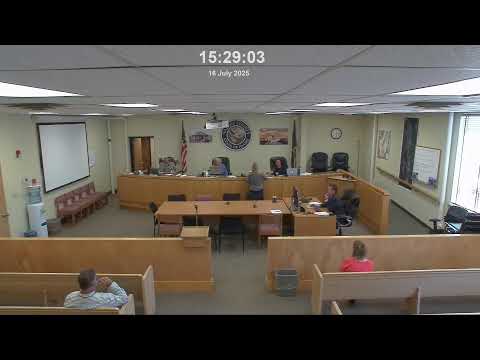
Valley County commissioners on July 16 held a workshop on whether the county should contract out indigent-services delivery to a nonprofit and, if so, under what terms. The clerk—s office, county legal counsel and potential provider representatives participated.
Deputy Clerk Candice Limbaugh summarized current practice and the county—s constraints: "Valley County currently no longer has the ability to levy property tax dollars for indigent services. However, we do have a balance, of approximately $231,000 that the county can provide to individuals requesting services." Limbaugh described the current process: applications are processed through the clerk's office, reviewed by the commissioners (often in executive session) and the county generally records a lien and requires repayment when appropriate.
Why it matters: Commissioners have asked whether contracting services to a nonprofit (Ignite Idaho was discussed) would preserve fiscal controls and allow faster delivery of assistance while avoiding duplication among churches and local providers. The discussion focused on auditability, public-records obligations, repayment enforcement, and how to structure funds and reporting to protect taxpayer dollars.
Details of the discussion - Contracting and oversight: Staff said legal counsel has been asked whether the county may contract indigent-services delivery to a nonprofit and whether the county must retain audit and lien authority. Commissioners emphasized that any contractor would need to provide documentation suitable for audit and for public-records requests; redaction rules would protect personal data while leaving an auditable trail. - Reporting frequency and records: Limbaugh and others proposed quarterly reporting and coordination between the contractor and the county so the county can respond to public-records requests with appropriately redacted records. Limbaugh said the county currently retains full documentation and would need a contractual right to receive records. - Repayment and liens: The county currently records liens and receives modest repayments (Limbaugh said the county receives between $15 and $5,000 per year in repayments from medical-indigent cases). Commissioners asked whether a nonprofit contractor would (a) be willing or able to record liens and collect repayments and (b) require the county to reserve a portion of funds for unavoidable county obligations such as cremations. - Program models: Ignite Idaho provided a business plan to county staff; participants suggested a trial or pilot with an initial block of funds (one commissioner suggested starting with $10,000) to test processes, reporting and repayment before committing larger sums. Commissioners discussed whether county staff should continue an application role (a "one-stop" model) or whether the contractor would be a direct point of entry for clients. - Confidentiality and use of county application: Staff suggested using the county application and release-of-information language so the county retains necessary permissions for audits and reporting while allowing the contractor to perform case management and client support.
Budget and administration questions Commissioners asked about contractor fees and the cost to operate a case-management function. Potential contractor representatives described a likely staffing profile (a case manager position) and discussed options for part-time or pilot arrangements. Commissioners said any agreement should specify reporting cadence, audit access, record-keeping responsibilities and whether liens/recoupment measures would be maintained.
Next steps Legal counsel is drafting opinions on whether a contracted nonprofit can record liens and whether the county—s repayment and lien practice can be preserved under a contract. Staff asked that potential contractors propose a detailed scope of work, price and reporting plan; commissioners suggested starting a pilot trial and asked staff to assess audit/reporting language and public-records handling before approving a larger contract.
Ending: No formal decision was taken. Commissioners said they were open to a pilot arrangement but required clear contractual audit, reporting and repayment terms before committing funds or delegating the county—s responsibilities.