
SB 743 would create an equalization reserve to reduce funding disparities between basic‑aid and non‑basic‑aid districts
Get AI-powered insights, summaries, and transcripts
Sign Up Free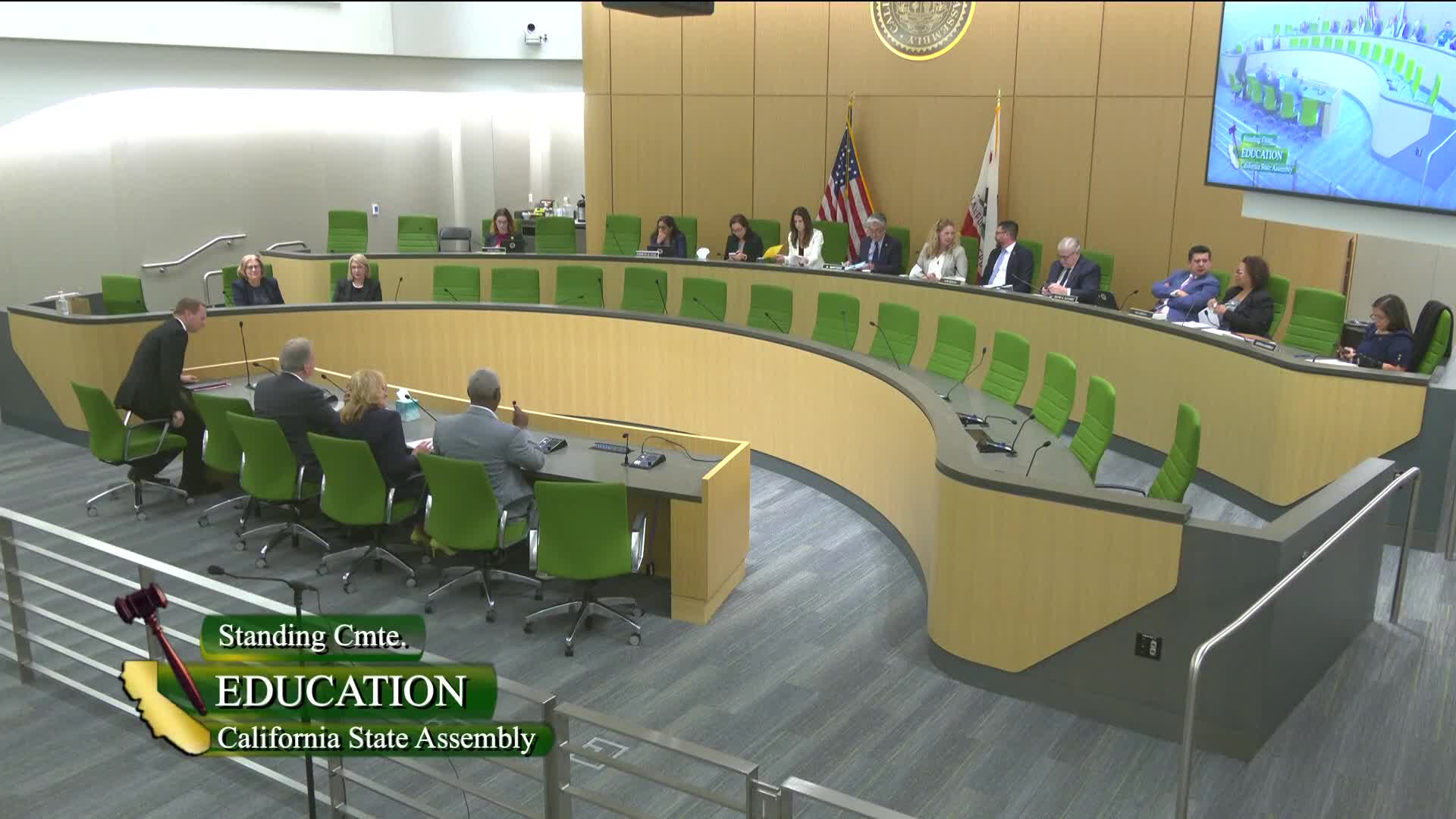
Summary
SB 743 would create an Equalization Reserve Account that invests surplus funds and uses returns to provide additional funding to districts that receive less per pupil than basic‑aid (high property tax) districts.
Sen. Dave Cortese presented SB 743, a bill to establish an Equalization Reserve Account designed to invest and distribute funds to districts that remain underfunded relative to basic‑aid districts. Cortese framed the bill as a long‑term effort to reduce funding inequities that persist after the Local Control Funding Formula and Prop 98.
Witnesses supporting the bill included Lisa Andrew (Silicon Valley Education Foundation CEO) and Chris Norwood (Santa Clara County School Boards Association). They described large per‑pupil funding gaps between basic‑aid and non basic‑aid districts — citing deltas of tens of thousands of dollars per pupil in some counties — and urged a stable, investment‑backed mechanism to generate additional dollars for underfunded districts. The sponsor’s office and committee staff explained the ERA would deposit selected surplus funds into an investible reserve (the state treasurer pool was discussed) and distribute investment returns for equalization while protecting Prop 98 guarantees.
Opponents or concerned parties — including the California School Boards Association (CSBA) and the California Association of School Business Officials — expressed concern about design choices that would place ERA monies outside Prop 98, thereby removing traditional Prop 98 protections (growth with COLA and attendance). CSBA recommended instead increasing Prop 98 or adjusting LCFF targets so the funding would be guaranteed and grow with the existing statutory mechanism. The California Charter Schools Association also sought clarification that direct‑funded charter schools, county offices and other LEAs not receiving basic‑aid status be eligible.
Committee members praised the concept and asked technical questions about sources of funds, investment management, and guardrails; a majority voted to refer SB 743 to Appropriations.