Get Full Government Meeting Transcripts, Videos, & Alerts Forever!
Get email alerts on the Economic Development topic
No spam. Unsubscribe anytime.
Consultants tell planning commission Blue Sky can grow — but capacity, slopes and utilities limit big projects
Summary
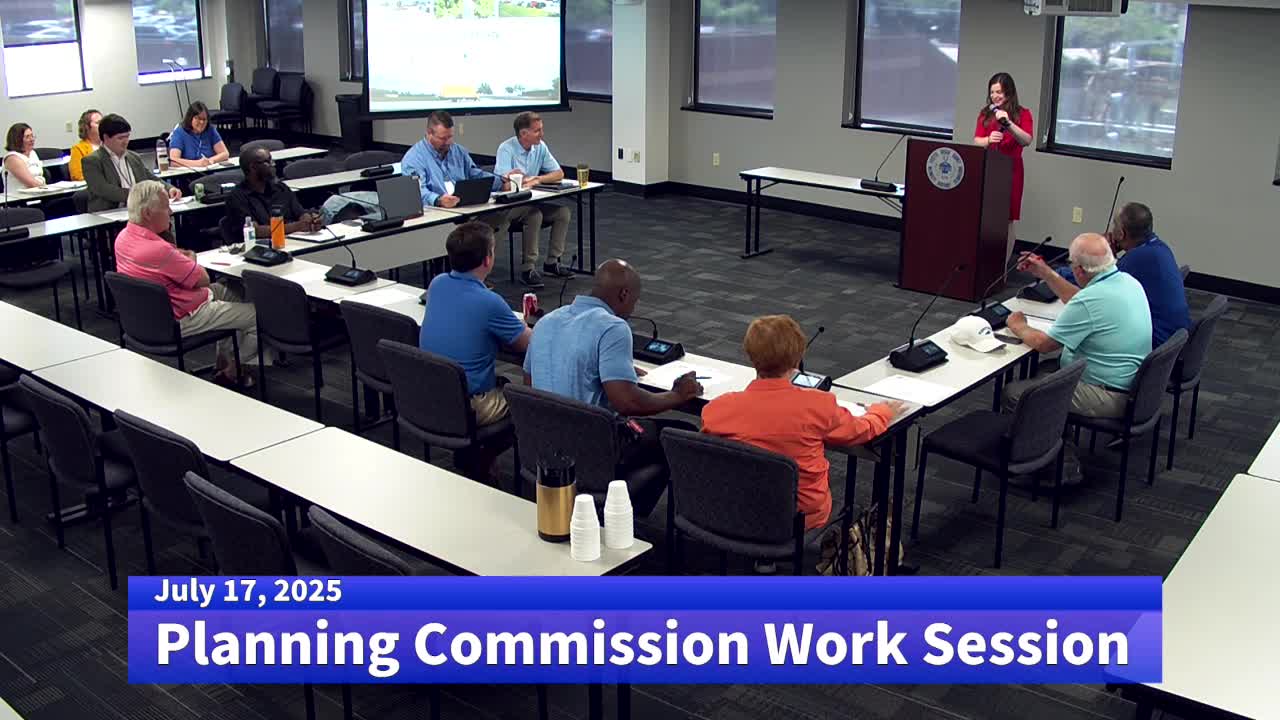
At a July 17 planning commission work session, city staff and consultants presented draft market and site findings for the Blue Sky Small Area Plan, saying the area is a functioning industrial district with roughly 140 businesses and about 1,100 jobs now — but that steep slopes, constrained utilities and limited contiguous land make it unlikely to attract many very large new facilities without public intervention.
At a July 17 planning commission work session, city staff and consultants presented draft market and site findings for the Blue Sky Small Area Plan, saying the area is a functioning industrial district with roughly 140 businesses and about 1,100 jobs now — but that steep slopes, constrained utilities and limited contiguous land make it unlikely to attract many very large new facilities without public intervention.
The Blue Sky Small Area Plan is part of Lexington’s broader 2024 urban growth master plan. “We’ve been busy since March,” Senior Planner Eve Miller said as she opened the presentation, introducing the consultant team that includes TSW Design, Gresham Smith, Partners for Economic Solutions (PES) and Strategic Location Advisors (SLA). The consultants delivered market, transportation and site-capacity analyses to inform policy recommendations that staff will bring back in coming months.
The draft findings described a study area that developed incrementally from the 1970s into the 1980s, anchored by industrial operators including Elliott Services and auto auction uses. Matt McLaren, a site civil engineer with Gresham Smith, said the area shows about 130 vertical feet of elevation change between Athens‑Boonesboro Road and the stream that forms much of the northern boundary. “A lot of the site has kind of a 10% slope, which is fairly steep. Some are 20%,” McLaren said, adding that steep grades and the single existing culvert that connects the north and south parts of the site create access and grading challenges.
On utilities, consultants said the built area has a 12‑inch water loop and natural‑gas loops that serve existing uses, and that the Blue Sky Pump Station and a force main serve sanitary sewer in the area. The consultants said existing utility capacity is generally sufficient for “replace like for like” redevelopment but that heavier process industries could face constraints and that sewer improvements are being studied regionally.
PES market analyst Abby Ferretti summarized a one‑time May field survey of 103 buildings: roughly 140 businesses, an estimated just‑over‑1,000 jobs and about 852,600 square feet of building area within the study area. PES estimated about 65% of that space is industrial/flex and vacancy in this market was very low — less than 1% at the time of the survey. Ferretti said the UPS Freight parcel is about 37 acres with roughly 26 acres judged developable; the site has been vacant since a 2018 fire and ownership has changed since UPS sold the property.
Strategic Location Advisors’ Chuck Sexton stressed the practical tests corporate site selectors apply. “Fatal flaws are things that prevent companies from coming in more often than not,” Sexton said. He listed lack of contiguous, developable acreage, limited or uncertain utility capacity, and proximity to sensitive uses (schools, sports facilities) as examples. Sexton said that while Lexington’s labor market and transport access are attractive, Blue Sky carries multiple, practical constraints that make it a more likely candidate for small and medium infill or building‑by‑building reuse than for immediate large, greenfield industrial campus projects.
The consultants’ demand projections showed regional industrial growth over the next 20 years that could generate millions of square feet of new space; PES estimated Lexington might capture roughly 35–40% of regionwide industrial growth and that Blue Sky could realistically absorb 200,000–400,000 square feet over 20 years under the region’s baseline scenario.
Commissioners asked for clarity on employment counts, parcel ownership and whether reuse of CDOT millings or other recycled materials would be feasible. Staff and consultants said the plan will add more detailed site‑level technical analysis and stakeholder outreach, and that policy recommendations — such as incentives, public land acquisition, or targeted infrastructure improvements to address the culvert or sewer capacity — will be discussed in later drafts.
Next steps include continuing interviews with employers and residents, refining the market and infrastructure analysis, and bringing draft policy recommendations back to the commission in coming months.