Get Full Government Meeting Transcripts, Videos, & Alerts Forever!
Get email alerts on the Utilities topic
No spam. Unsubscribe anytime.
Marion County Utilities proposes staff additions, says no rate increase needed for FY26 but warns of 2027 pressure
Summary
Tony Cunningham, director of Marion County Utilities, presented a FY26 budget that increases roughly 5.8%, driven by personnel and operating cost pressures (electricity, chemicals, permitting) and proposed seven new positions; an independent analysis shows no base-rate increase is needed for FY26 but warns of possible pressure in FY27.
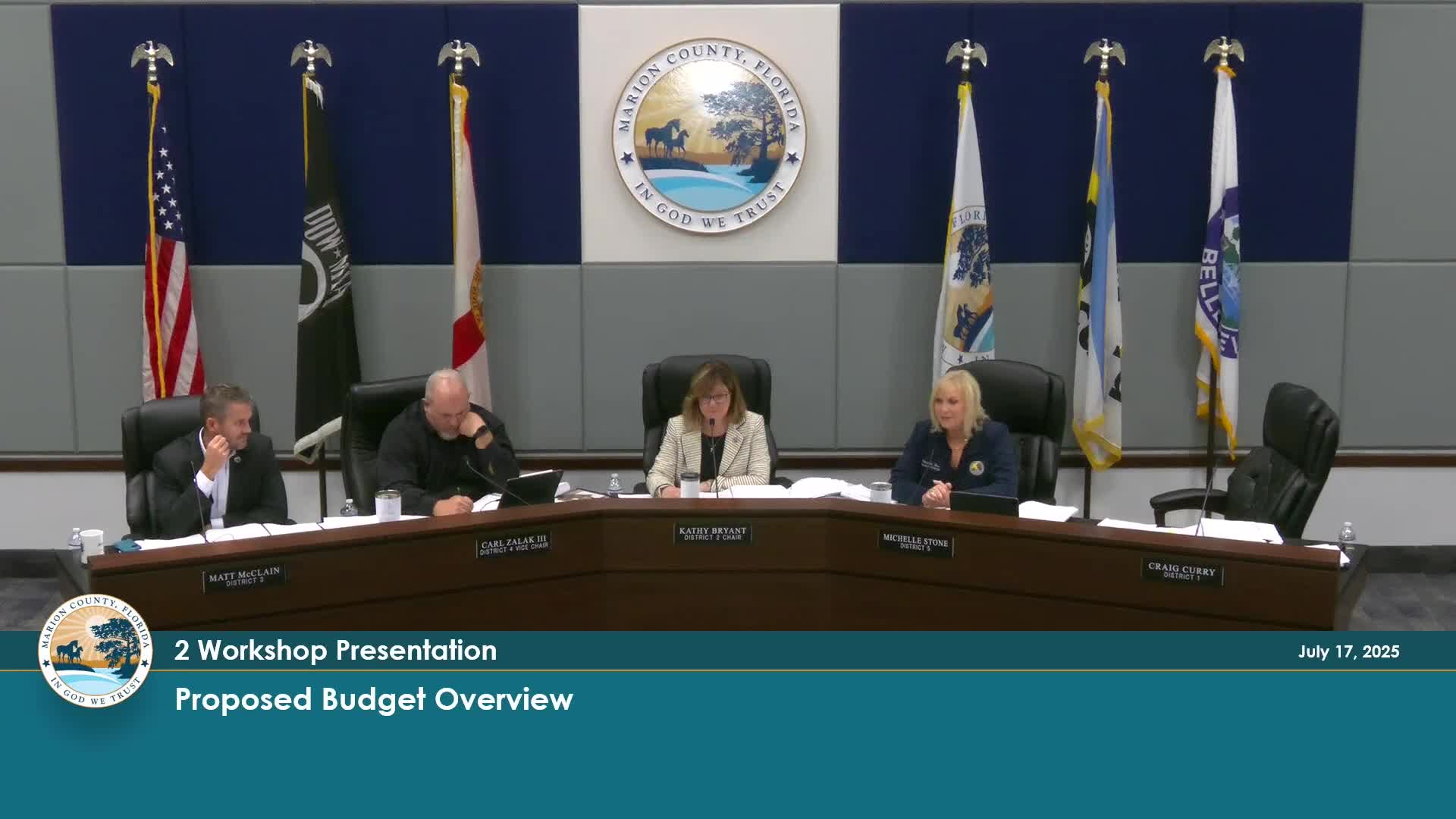
Utilities Director Tony Cunningham told commissioners the utilities enterprise budget for fiscal 2026 increases about 5.8% overall, driven roughly half by personnel adjustments (including 7 recommended full-time hires) and half by operating costs such as higher electricity bills, chemicals and consumptive-use permitting work.
Cunningham said the department is seeing upward pressure from Duke Energy's recently approved rate increases (about $500,000 of budget impact next year) and from more intensive permit work to renew the county's water-use permits. "We are attempting to get a 20-year permit; it is a significant effort," Cunningham said, noting the technical and engineering work required to demonstrate withdrawals will not harm natural systems.
Personnel changes included a recommendation to add two meter-reader positions (to reassign current meter-reading duties to lower-cost entry-level staff), an environmental compliance officer, two customer-service/billing staff, a construction inspector/coordinator, and converting a 0.6 business-technologist role to full time.
Cunningham said the independent rate-sufficiency report (Stantec) concluded Marion County Utilities does not need a rate increase for fiscal year 2026, but forecasted potential base-rate pressure beginning in fiscal year 2027 depending on how quickly CIP projects proceed and conservative growth assumptions in the model.
Commissioners asked about staffing and the long-term trajectory of rate changes. Commissioner Zalick pressed for careful moderation of personnel-driven increases; Cunningham identified earlier April pay-grade adjustments to field techs and added fringe costs as drivers of personnel expense increases and agreed to provide more detail on the personnel-cost drivers.
The department requested continued CIP funding to maintain and expand capacity (including plant projects and water tanks), and said it is monitoring growth-driven demands and procuring inspection and construction capacity internally where feasible.
Why it matters: Utilities is an enterprise fund with significant infrastructure and regulatory costs; changes in energy prices, chemical costs and large multi-year capital projects can drive rate needs. Staff said FY26 can be managed without a rate increase, but 2027 may require rate action if CIP timing or growth assumptions change.