Get Full Government Meeting Transcripts, Videos, & Alerts Forever!
Get email alerts on the Agritourism Beverage Regulation topic
No spam. Unsubscribe anytime.
Loudoun committee weighs tighter rules for farm wineries, breweries and distilleries
Summary
County staff, state regulators and residents debated how to distinguish bona fide agricultural operations from event venues, and whether to require proof of farming, building-code compliance and stricter local limits on noise, hours and parking.
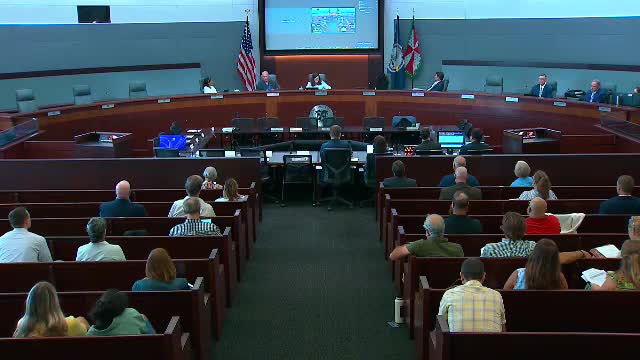
The Transportation and Land Use Committee on July 16 heard hours of testimony and technical briefings as staff and outside agencies sought guidance on zoning rules for farm wineries, limited breweries and limited distilleries in western Loudoun County.
The meeting brought presentations from the Virginia Department of Agriculture and Consumer Services, county legal staff and building and fire officials, followed by extensive comments from residents, industry representatives and county supervisors. Committee members framed the discussion around three recurring issues: how to define a bona fide agricultural operation that qualifies for farm exemptions; whether structures used for tasting and events should be exempt from building and fire-code requirements; and how to limit community impacts from hours, noise, parking and road access.
VDACS food-safety manager Karen Bergen told the committee that the state agency inspects both manufacturers (wineries, breweries and distilleries that bottle or wholesale product) and certain retail food operations. “We work to ensure that any kind of food … that are manufactured, processed, stored, or sold in Virginia are safe, wholesome, and properly labeled,” Bergen said, describing an MOU between VDACS and the Virginia Department of Health that divides inspection authority by the nature of food preparation. She and others clarified that VDACS inspects manufactured beverages and related limited retail activity, while VDH covers more complex food preparation and retail restaurants.
County attorney Jason Hobby reviewed Virginia code provisions that give farm wineries and other on‑farm beverage operations limited protection from local regulation for “usual and customary” activities. Hobby said the code recognizes different levels of protection: “Very generally speaking, farm wineries have more protection under the Virginia code from local regulations than limited breweries and limited distilleries,” he told the committee, and the statute also lists the topics localities may regulate when there is a “substantial impact on the health, safety or welfare of the public.”
County building official Raymond Rinaldi and Chief Fire Marshal Micah Kiger warned the committee that exemptions for ‘‘farm structures’’ under the Uniform State Building Code can leave gaps in fire and life‑safety review if a structure is used primarily for public assembly rather than production. Rinaldi summarized the code: a structure may be exempt if it is “used primarily for the processing of farm products grown there, sampling, sale, tasting and storage,” but an attorney general opinion has said occasional weddings may be allowed only if they do not supersede the primary farm use. Kiger said enforcement resources matter: “I don’t think that your concerns are misplaced,” he said, and asked the committee to consider practical enforcement measures if new standards are adopted.
Stakeholders delivering at‑length public comments split largely along two lines. Several residents described examples of nearby operations that they said behave as event centers rather than farms and urged limits on hours, amplified music and overflow parking. “This property cannot credibly be considered a farm operation; rather it would function primarily as a rural bar and event venue,” neighbor Richard Rasmus said of a site in his community. Another resident, Scott Seaburger, pressed for licensing and inspection that ensure ingredients are farm‑sourced and for stricter noise and hours limits to protect the Mountainside Overlay and private properties.
Industry speakers urged caution about rules that could make on‑farm businesses nonviable. Tolga Baki of Hillsborough Winery and Brewery and Lacey Huber of Stone Tower Winery said the county’s farm beverage uses already operate under many federal, state and local inspections and argued that events are central to their ability to sell product. “Events are not an ancillary use. They are a key driver to sell our farm product,” Huber said. Industry representatives and several supervisors also warned that overly prescriptive local rules could force businesses to close or move and would not necessarily stop bad actors if enforcement is weak.
Committee discussion focused on three practical options staff will draft into text for later review: (1) a formal “agricultural operation” verification that an applicant must pass to qualify for farm‑structure exemptions and agritourism allowances; (2) tightening how the building and fire‑safety exemptions apply where structures are used primarily for public assembly; and (3) use‑specific standards for hours, noise (county property‑line decibel limits already exist), parking and road access on unpaved roads, plus a clearer process for temporary special event permits.
Staff told the committee they will return with draft language and suggested next steps, including an inventory of existing operations that could become nonconforming under new setback or use rules and coordination with state agencies. The committee set a tentative schedule to continue the conversation in a later stakeholder meeting and asked staff to examine enforcement resources and options for targeted standards that reflect site‑specific variables such as distance to residences, road width and sight lines.
Ending — The committee did not adopt rules at the meeting. Members said they wanted drafts that balance protecting rural character and neighbors’ quality of life with the economic role of farm beverage businesses. Staff will prepare draft zoning amendments and more detailed analysis — including an estimate of how many existing operations would be affected — for a future TELOC session.