Get Full Government Meeting Transcripts, Videos, & Alerts Forever!
Get email alerts on the Property Assessment Appeal topic
No spam. Unsubscribe anytime.
Portland hearing on Ambassador (37 Casco St.) assessment focuses on NOI, cap rates and rent-control effects
Summary
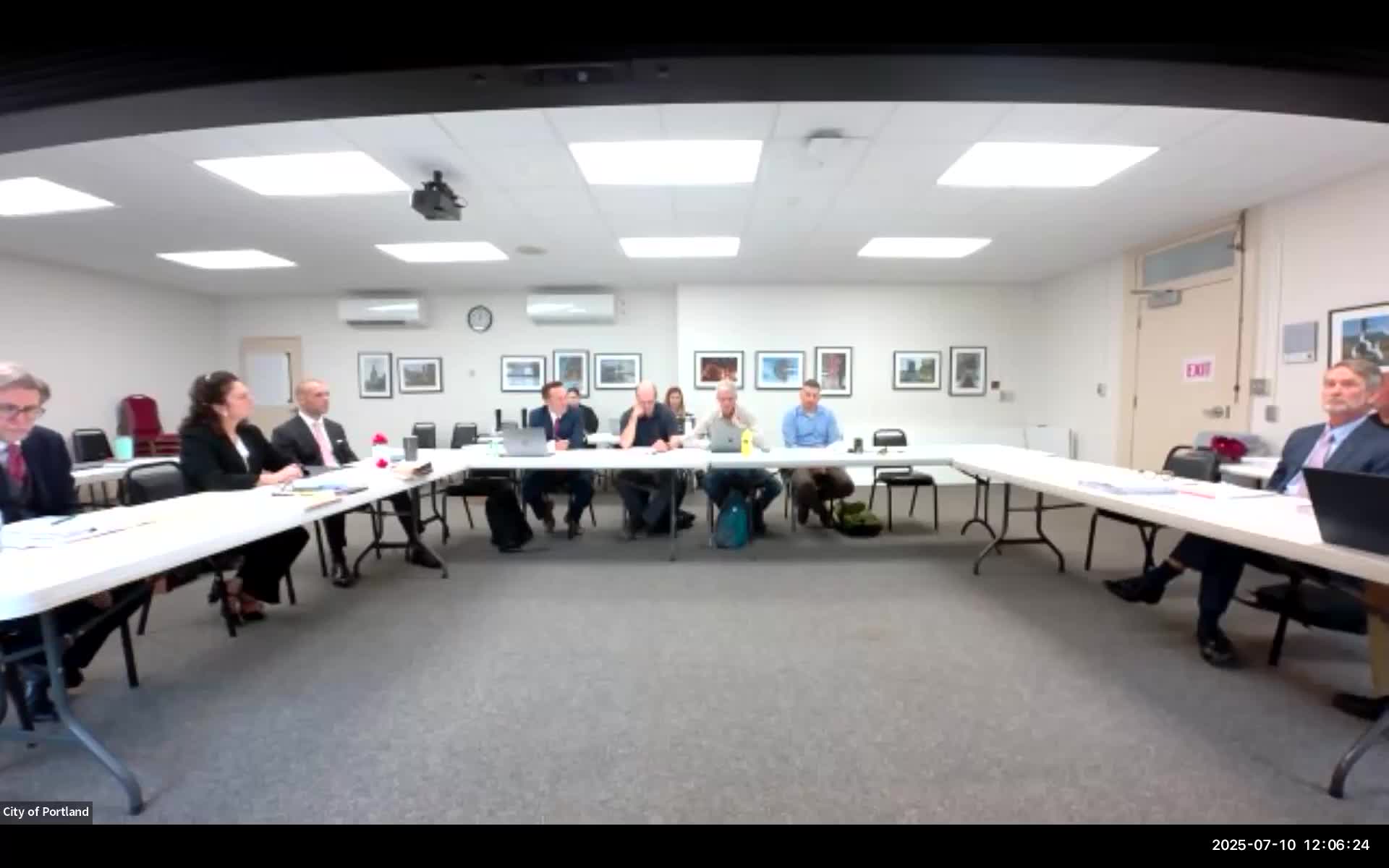
The Portland Board of Assessment Review heard an appeal over the tax assessment for the Ambassador, a 92‑unit apartment building at 37 Casco Street, where applicant Ambassador LLC asked the board to substantially reduce the 2024 valuation.
The Portland Board of Assessment Review heard an appeal over the tax assessment for the Ambassador, a 92‑unit apartment building at 37 Casco Street, where applicant Ambassador LLC asked the board to substantially reduce the 2024 valuation.
At the hearing the applicant argued the assessor’s income‑approach valuation understates the building’s operating costs and applies a capitalization rate (“cap rate”) that is too low for Portland’s rent‑controlled multifamily market. The assessor’s representative urged the board to uphold the assessment, saying the assessor’s figures are supported by market data and stressing the legal presumption in favor of the assessor’s valuation.
The applicant presented three witnesses, including David Gershwar, identified in the record as chief strategy officer at Port Property Management. Gershwar said his firm’s discounted‑cash‑flow underwriting for the Ambassador—reflecting the building’s small studio units, utilities‑included leases and older mechanicals including a steam heating system—implied a much higher cap rate than the assessor used. Gershwar said that applying his assumptions produced a valuation “in the low millions” (he described roughly $3.2 million under a roughly 14% implied cap rate) and argued the assessor’s 2024 cap‑rate input (described in the record as about 7.6%) and the assessor’s per‑unit expense assumptions were too low given the building’s actual expenses and the additional costs that come with older buildings.
Assessor’s counsel responded that Maine law presumes the validity of an assessor’s valuation and requires the taxpayer to prove manifest error. The assessor’s representative told the board the office applies standard mass‑appraisal techniques and that cap‑rate inputs and expense ratios reflect the market evidence the assessor uses for the broad inventory. The assessor noted the office had adjusted its citywide model for 2025 using a higher cap rate (the assessor’s materials cited a 9.1% cap rate in the 2025 materials) and that the assessor’s office would explain methodology to the board.
Other testimony and evidence at the hearing focused on three technical questions: (1) the correct net operating income (NOI) to use for the building, (2) the appropriate capitalization rate for an apartment building of this size and vintage in Portland’s market under rent control, and (3) whether the assessor’s mass appraisal comparables or the applicant’s investor‑underwriting evidence better reflect “just value.” The applicant relied on its audited operating statements (applicant exhibits) and industry benchmarking (including IREM and CoStar figures cited in testimony) to argue the assessor’s per‑unit expense figure (described in the assessor’s 2024 card as roughly $3,800–$3,900 per unit per year) materially understated actual per‑unit expenses (applicant testimony cited figures around $8,000–$9,000 per unit per year from third‑party sources). The applicant argued rent‑control restrictions (including a 2023 amendment that limited rent growth to 70% of CPI and narrowed special‑increase allowances) reduce future rent growth relative to expense inflation and therefore raise the cap rates investors would require.
Market broker Joseph (Joe) Laporta, called by the applicant, testified about investor demand and underwriting standards in the Portland region, saying many institutional or out‑of‑area investors prefer newer product and that some types of buyers will not pursue older, higher‑expense buildings under current rent‑control restrictions. Tom Watson, identified as related to Port Property Management and a 10% owner of the Ambassador in the record, described management and maintenance realities for the building—utilities included in rent, older elevator and steam‑heat systems and frequent repairs—and testified those operating realities are reflected in the applicant’s expense figures.
The board handled several procedural matters in open session. It approved minutes from its May 22 meeting after a brief amendment to language about procedural matters. The board also voted to find it had jurisdiction to hear the Ambassador appeal (the motion carried) and, for the record, the board designated two exhibits (identified in the hearing as assessor/applicant exhibits 20 and 21) as confidential financial information while treating other exhibits as public material for posting. Counsel for both sides confirmed the parties would attempt to stipulate to discrete jurisdictional points to streamline the proceeding.
No final decision on the underlying assessment was reached at the session. The board and parties agreed to continue the hearing; for case management the parties and the board set a continuation date and extended the decision deadline (the parties recorded an extension of the statutory decision date during the hearing). The board said it would receive additional testimony and cross‑examination at the continued session.
Next steps: the board scheduled further testimony and cross‑examination and will consider the written exhibits and live testimony before issuing a written decision. The transcript and binding exhibits for the hearing were entered into the record during the session; two exhibits were designated confidential and excluded from public posting as noted above.