Get Full Government Meeting Transcripts, Videos, & Alerts Forever!
Get email alerts on the Naming Policy topic
No spam. Unsubscribe anytime.
Committee reviews proposed city naming and renaming policy to guide future facility names
Summary
City staff presented a draft naming and renaming policy to create a formal process, require cultural‑heritage review, set categories and outline exceptions; staff plan to return with a draft ordinance in September for committee consideration and to ensure names are available for new facilities coming online.
City policy staff presented a proposed naming and renaming policy framework Wednesday intended to give Portland a consistent process for naming public assets such as streets, buildings and landmarks.
Presenter Mazi (city staff) told the Sustainability and Transportation Committee the city currently has no standing naming policy and that the draft draws on best practices from other U.S. municipalities. The proposal would classify the types of assets subject to the policy, emphasize cultural‑heritage review to document who and what a place commemorates, and formalize how major gifts tied to naming are handled.
The draft policy centers naming decisions on historical context, cultural heritage and community input. It also outlines a separate renaming track, procedures for exceptions, and a committee‑based review process aimed at balancing historical recognition with evolving community values. Staff said they surveyed seven to nine other municipalities to identify best practices and avoid pitfalls some cities have experienced when renaming civic assets.
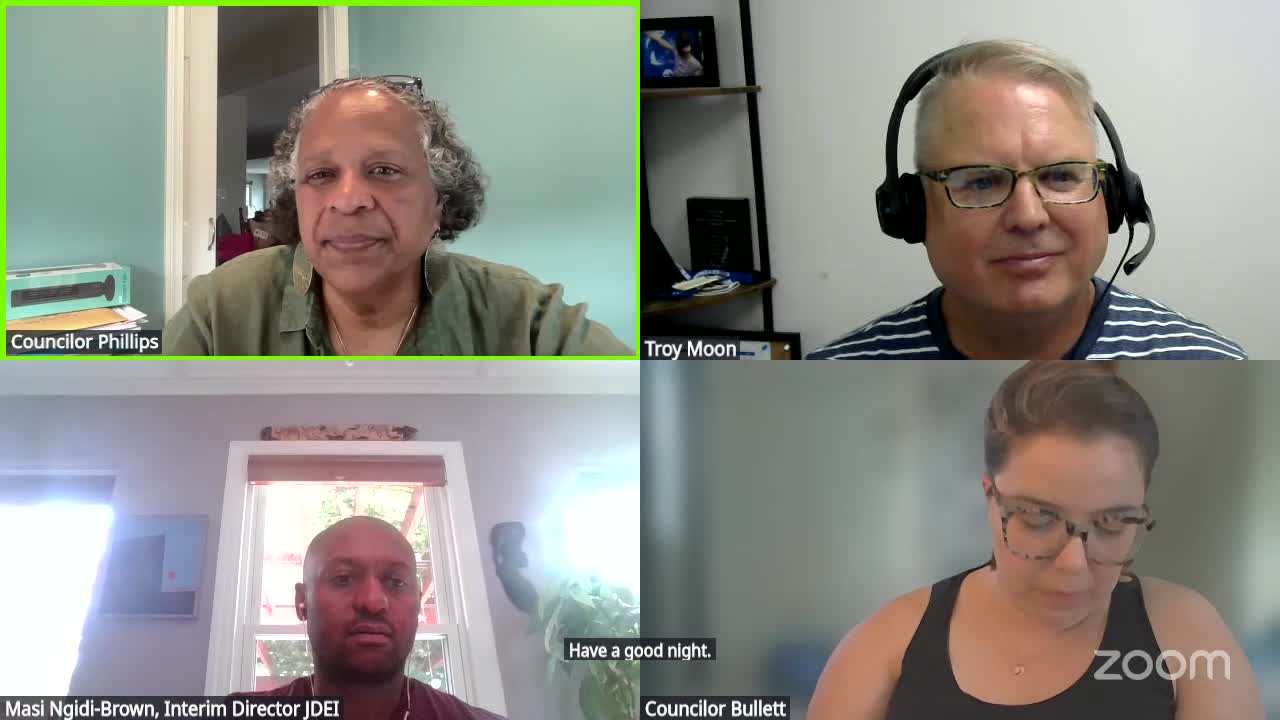
Councilors urged the policy to include robust community engagement and to work with the Wabanaki community on heritage questions. Councilor Ali cautioned that names reflect current community values but that future residents may assess historical figures differently; he argued for allowing present‑day recognition while preserving the option for future residents to reconsider names. Councilor Bullitt emphasized outreach to historically underrepresented communities and to tribal partners. Assistant City Manager Dana Lindner said staff intend to bring a draft ordinance back to the committee in September and to align the policy timing with two near‑term capital projects that will need names for facilities coming online.
Ending: Staff will revise the draft based on committee feedback, continue outreach with stakeholders including the school department and Wabanaki representatives, and return in September with a draft ordinance for formal committee review.